Air Handler Intakes
Units feeding exam rooms draw outside air, so intakes near priming or spraying are covered or shut down for a set window agreed with building staff.
Edgewood metal roof coating for clinics and offices that stay busy all day. We inspect the roof and its air intakes first, then coat with low-odor products.
 1Inspect The Roof
 2Seal And Coat

Medical offices and clinics near the St. Elizabeth Edgewood hospital campus run full days, and their rooftop air handlers pull outside air into exam rooms. Odor from a primer can travel through those intakes.
So the plan starts with the intakes: which ones get covered or shut down, for how long, and who on staff signs off. Product choice follows from that.
Medical and office roofs carry more equipment than most. These five areas shape both the leak work and the schedule.
Units feeding exam rooms draw outside air, so intakes near priming or spraying are covered or shut down for a set window agreed with building staff.
Busy mechanical roofs carry many ducts, conduits, and pipes. Each penetration is a frequent leak point and gets a brushed-in detail with fabric.
Screws around unit curbs loosen from service traffic and vibration. They are tightened or replaced and capped before the curb base is coated.
Patient and staff parking often runs right up to the wall. Edges above those rows get rolled instead of sprayed to keep droplets off cars.
Entrances for patients stay clear of hoses and equipment coming off the roof, and work near doors moves to early mornings or weekends when noisy prep is needed.
In a building that serves patients every day, coating brings these four advantages over a re-roof.
Appointments continue below while the crew works from the roof above, with each day's work zone shared with the office manager in advance.
Water-based acrylic and low-odor silicone keep smells at the intakes far lower than solvent-based roofing products.
Every duct, pipe, and curb on a crowded mechanical roof gets its own detail, closing the leak points that show up as stains in exam rooms.
Firm metal panels stay in place, so the project skips tear-off and new steel and tends to cost less than replacing the roof.
How each coating system fits the medical and office buildings we work on in Edgewood.
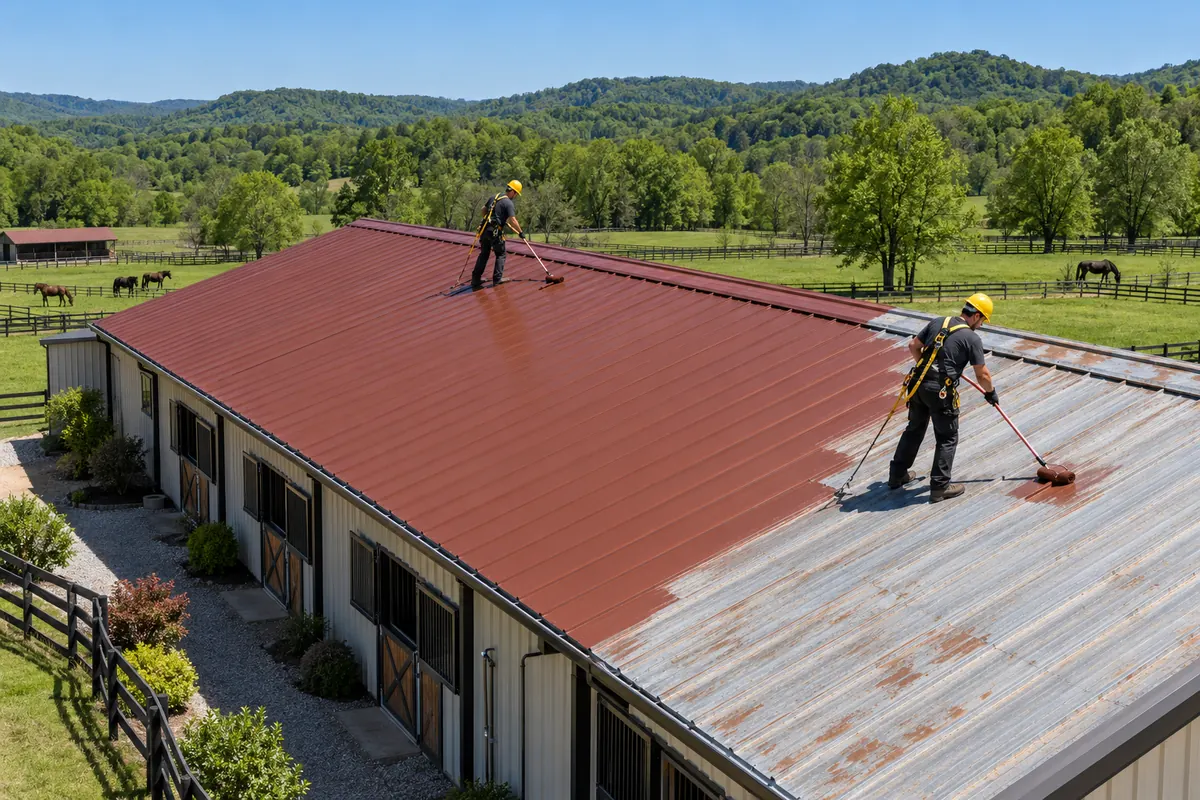
Metal service buildings and canopies on medical campuses get fastener and lap work, then a low-odor topcoat.
Our metal roof coating service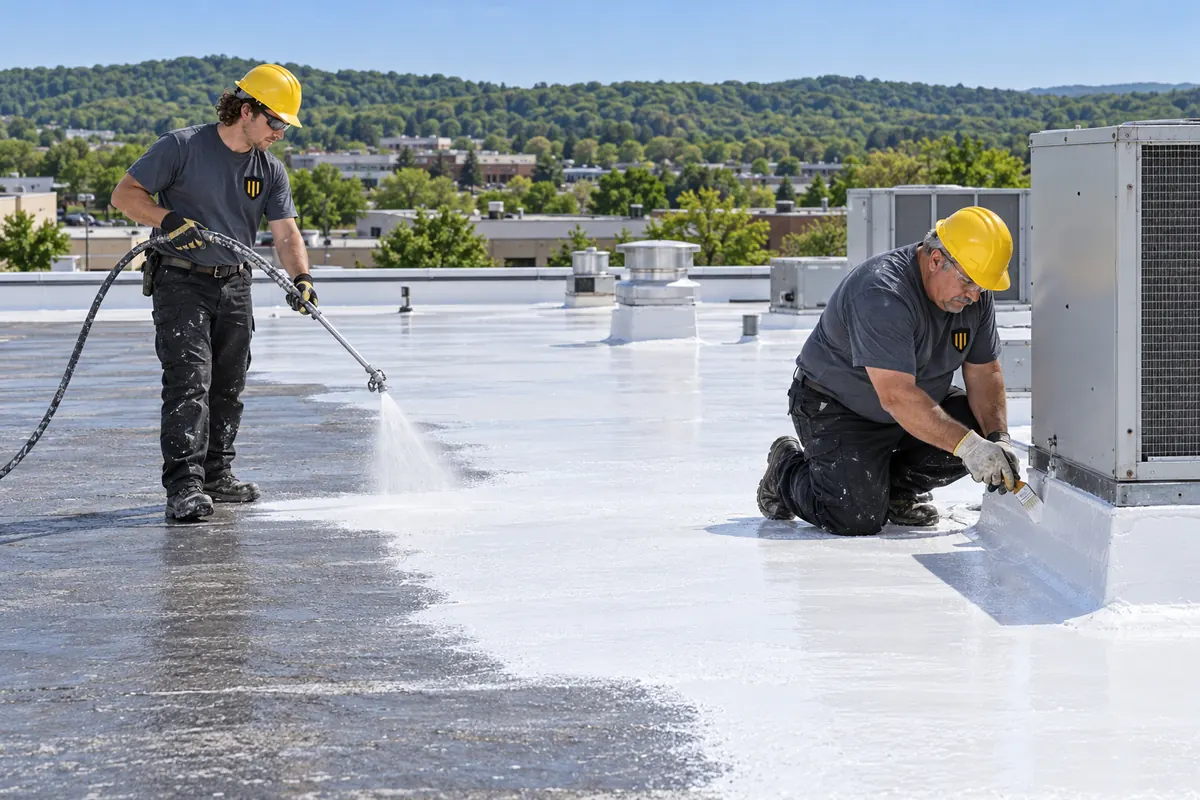
Low-slope office roofs with ponding behind air handlers suit low-odor silicone sprayed in one or two passes.
Our silicone roof coating service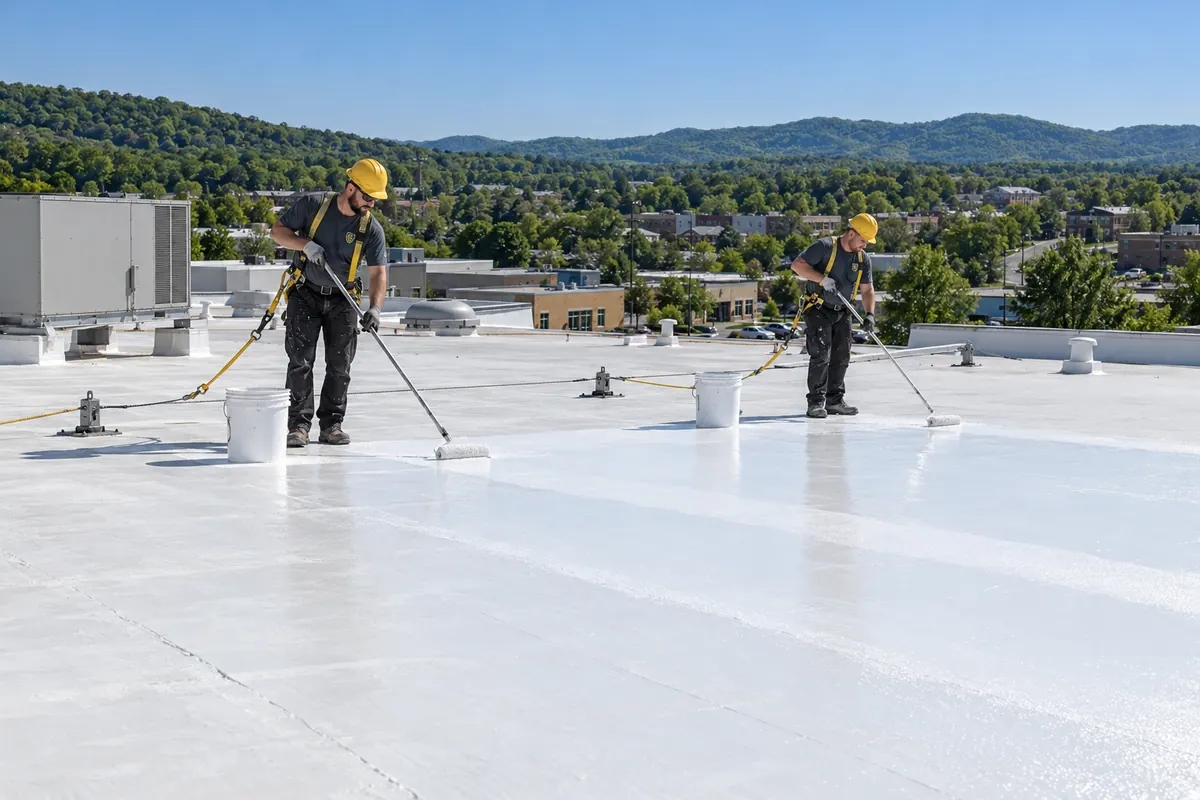
Pitched roofs over offices that drain well take water-based acrylic, the mildest-smelling option near intakes.
Our acrylic roof coating service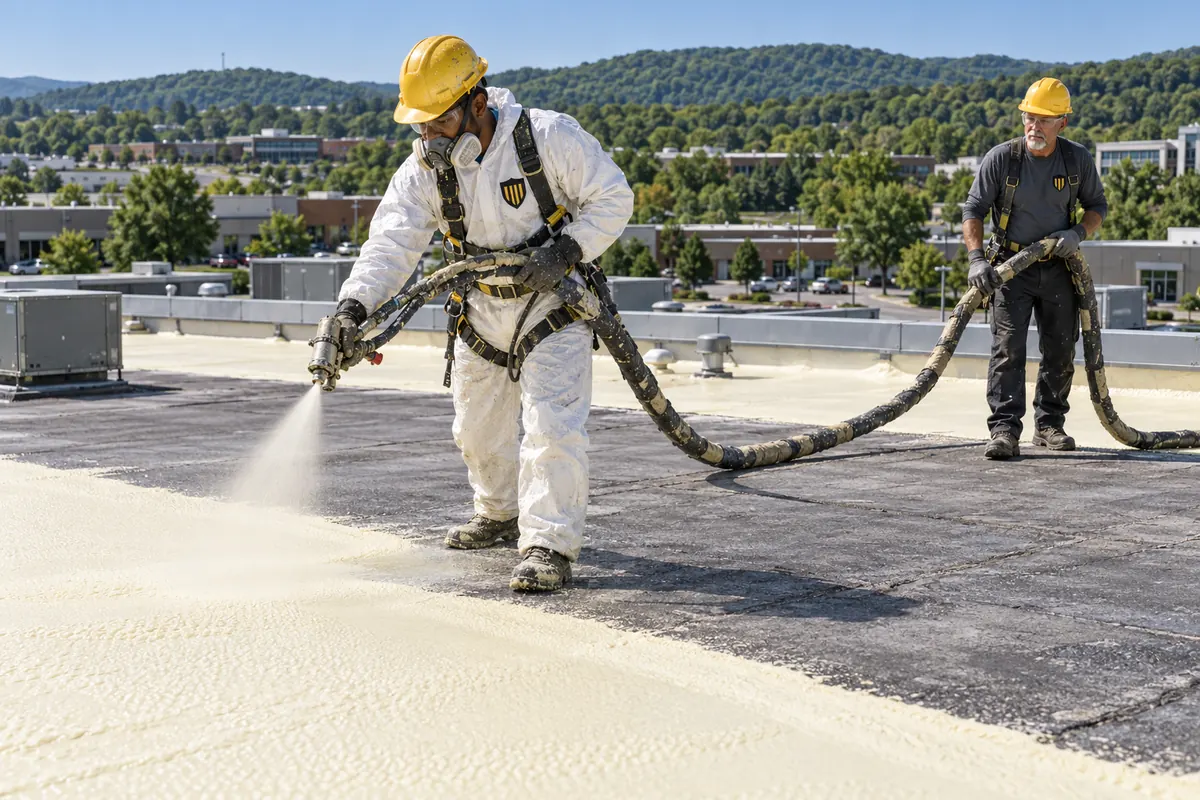
Foam suits office roofs that need insulation, sprayed only on calm days with cars and intakes covered.
Our spray foam roofing service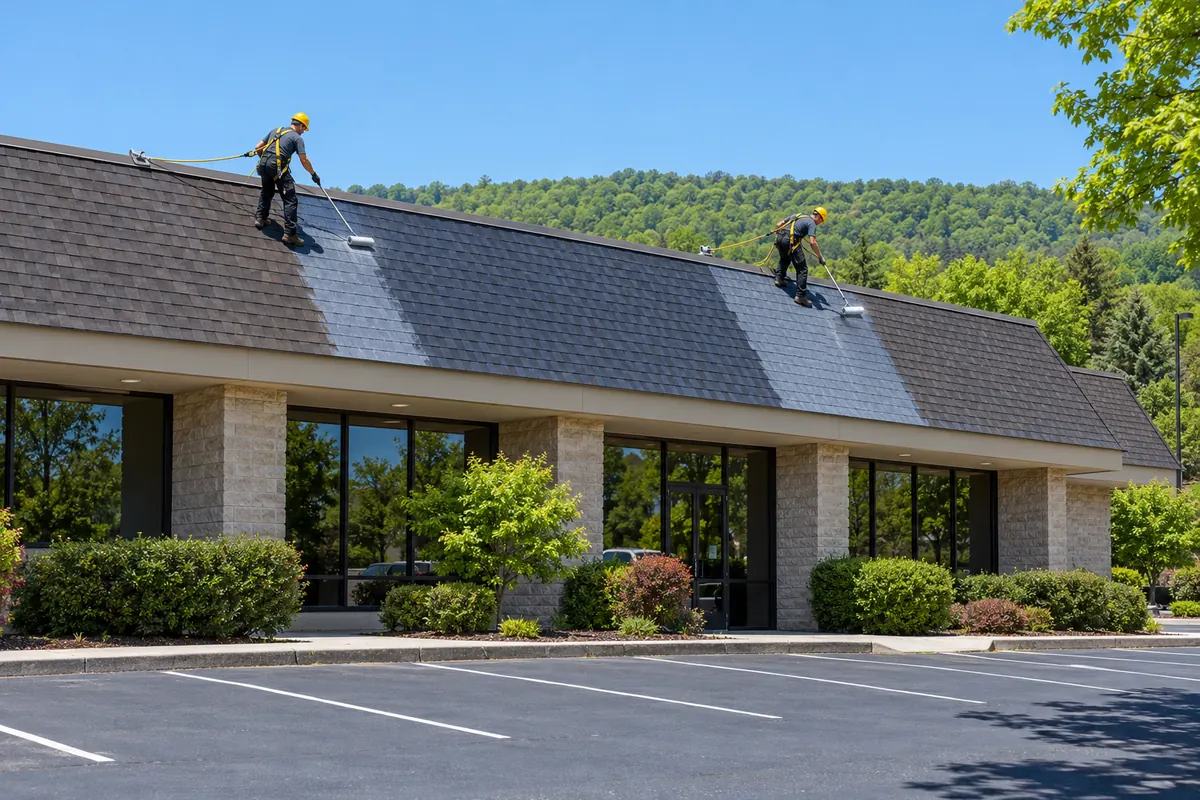
Shingle sections on smaller office buildings can be coated when the tabs lie flat and the boots are sealed.
Our shingle roof coating serviceNote where the ceiling stain sits and which rooftop unit is above it. Call us, and we will start the trace from there.
Four steps planned around patients, staff, and the air handlers that feed the building.

We walk the roof with facilities staff, mark every intake and penetration, and check curbs and duct flashing. Interior stains get matched to what sits above them.
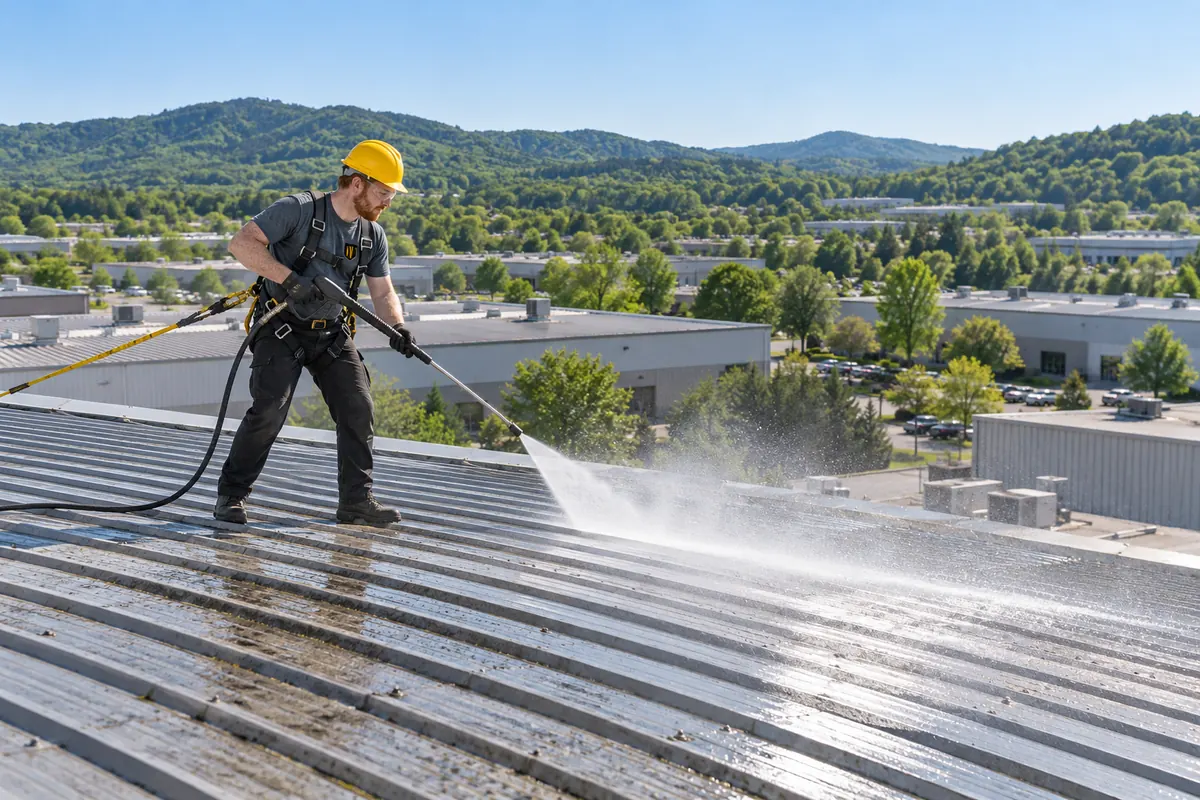
Intake shutdowns and covers for each rooftop unit are timed with the building, and noisy pressure washing moves to early mornings or weekends near occupied rooms.
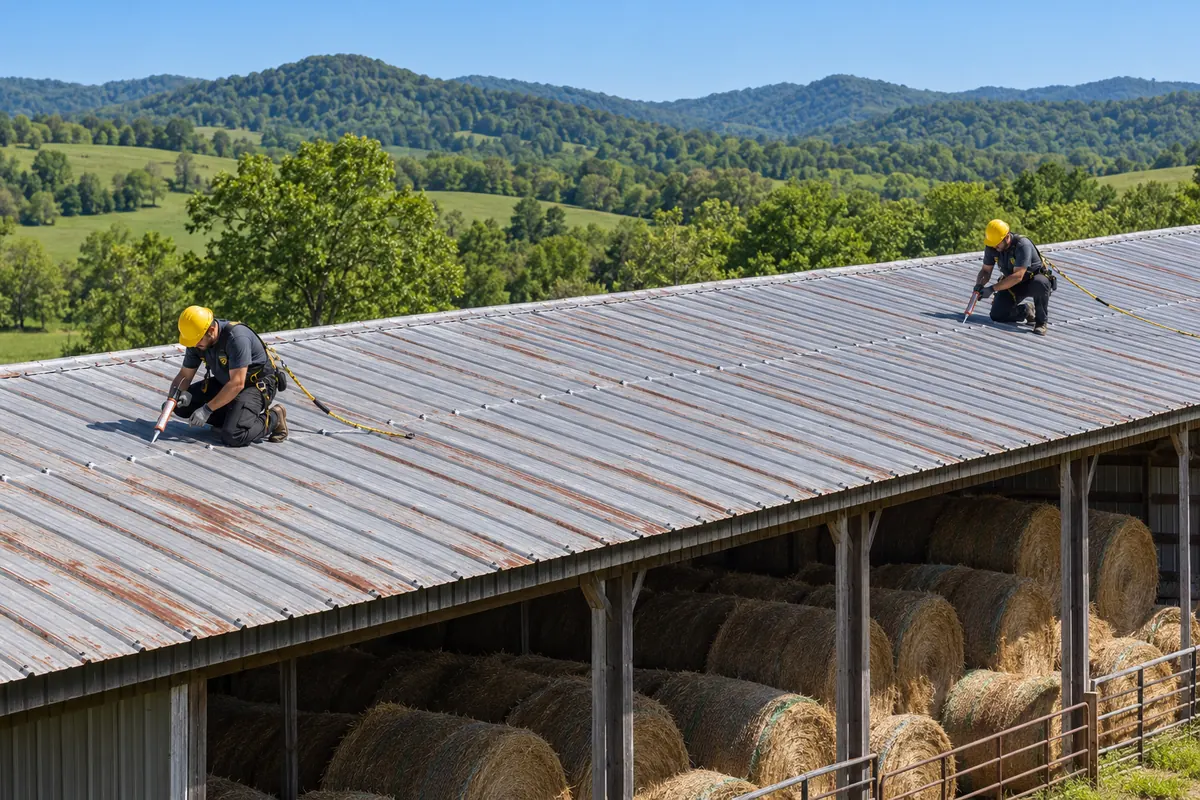
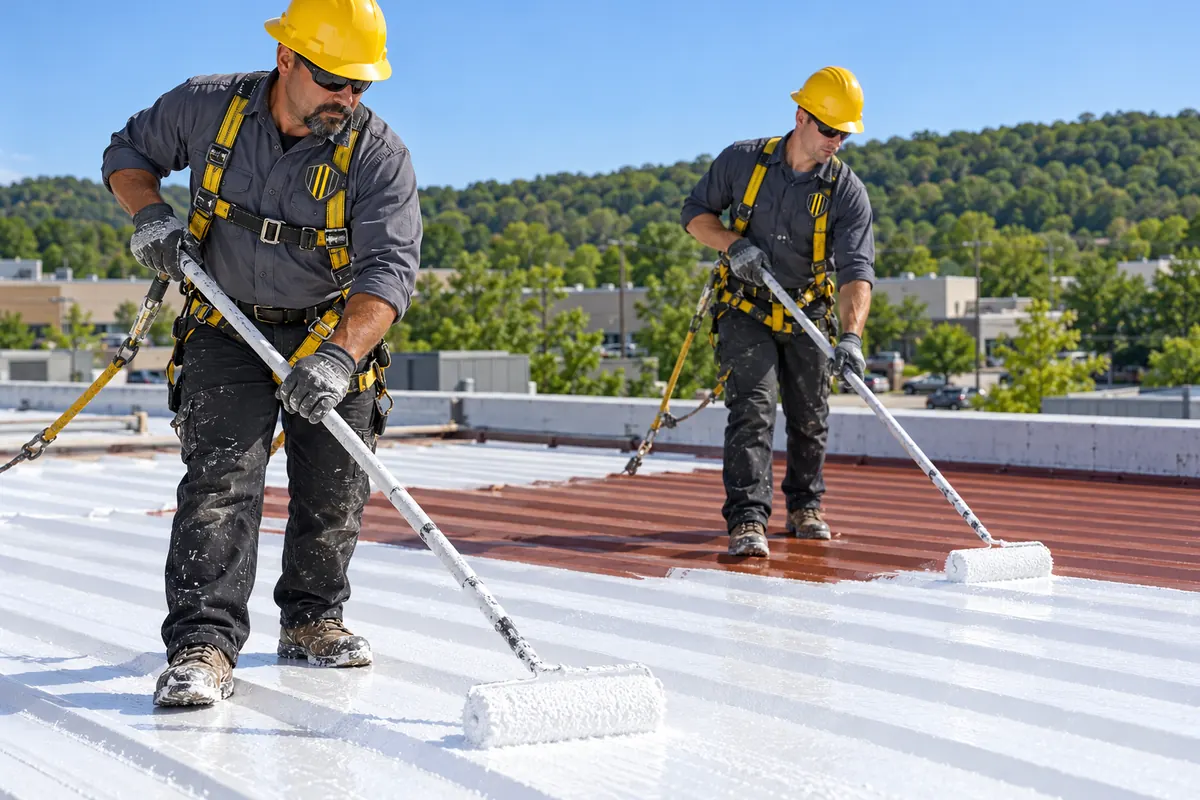
Curb fasteners are tightened, duct and pipe penetrations get fabric details, and seams on the metal get taped before any field coat.
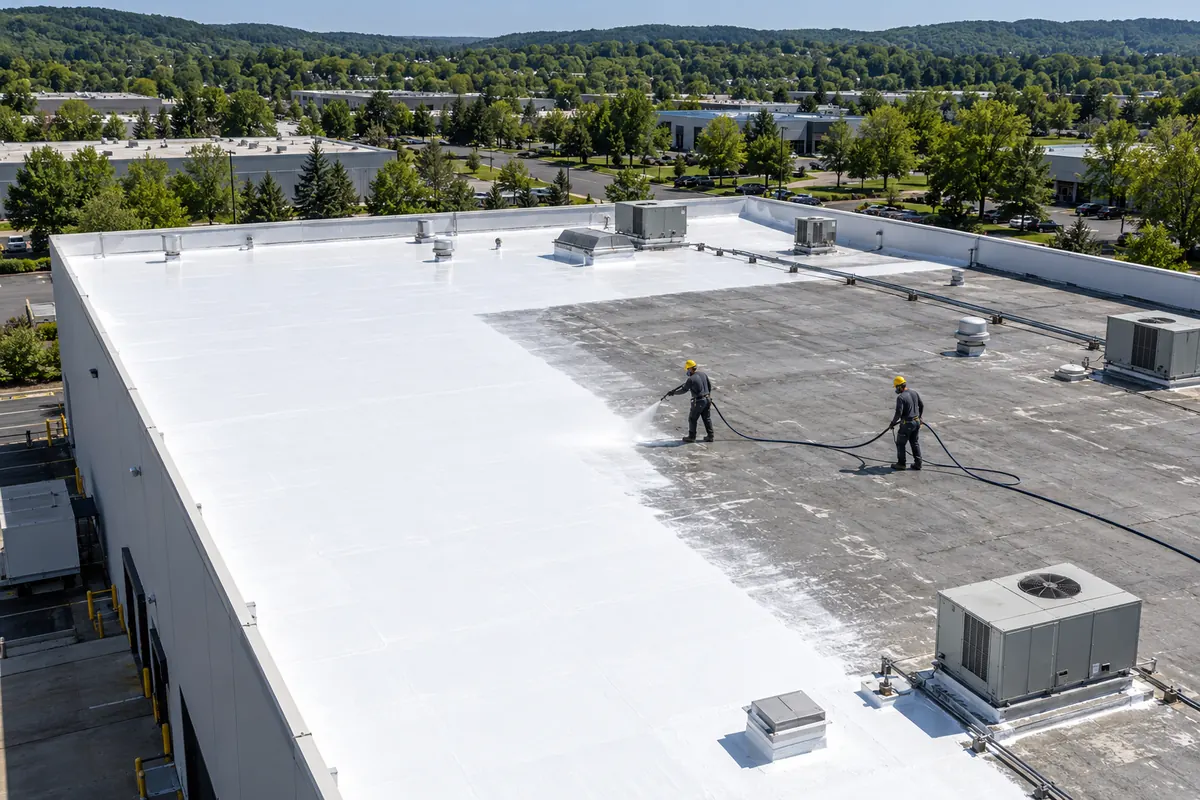
Edges above parking are rolled, spraying stops when wind picks up, and nearby cars are covered or moved. Water-based or low-odor products go on near intakes.
Besides Edgewood, we coat commercial roofs in Erlanger and four other nearby towns. Is your building somewhere else? Please call us or send us a message.
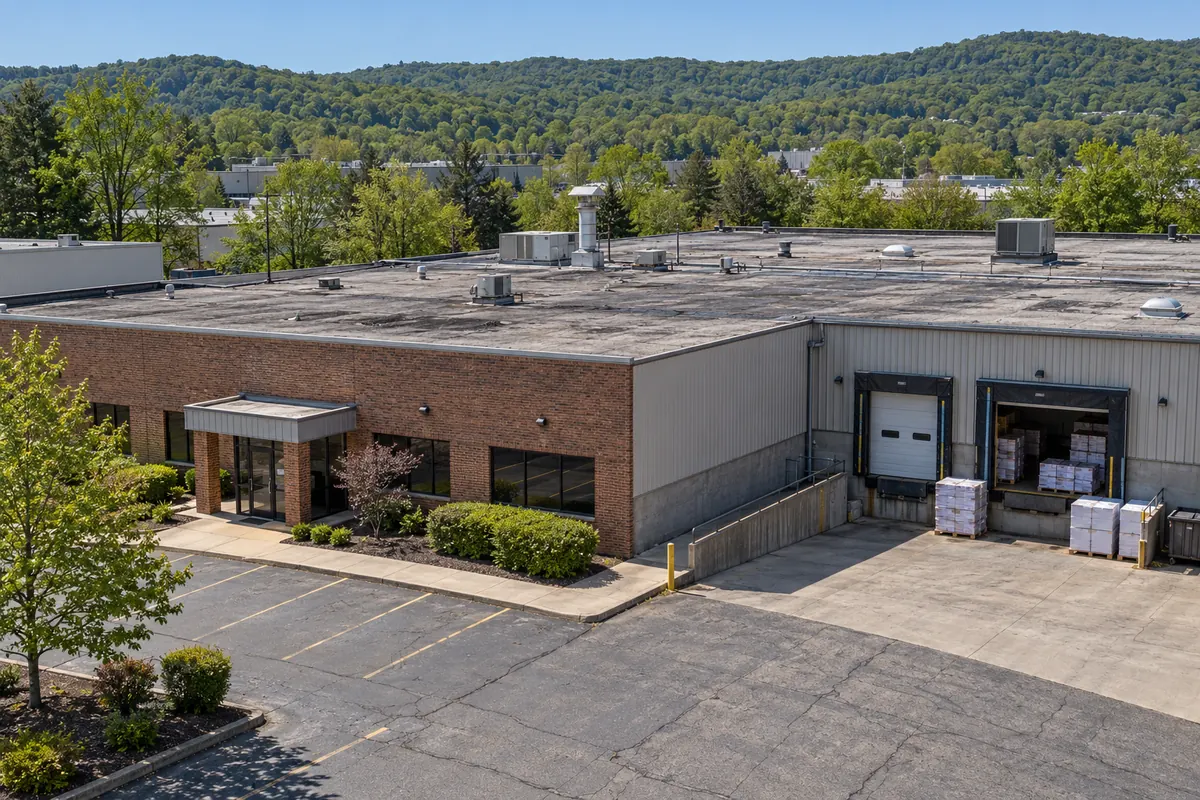
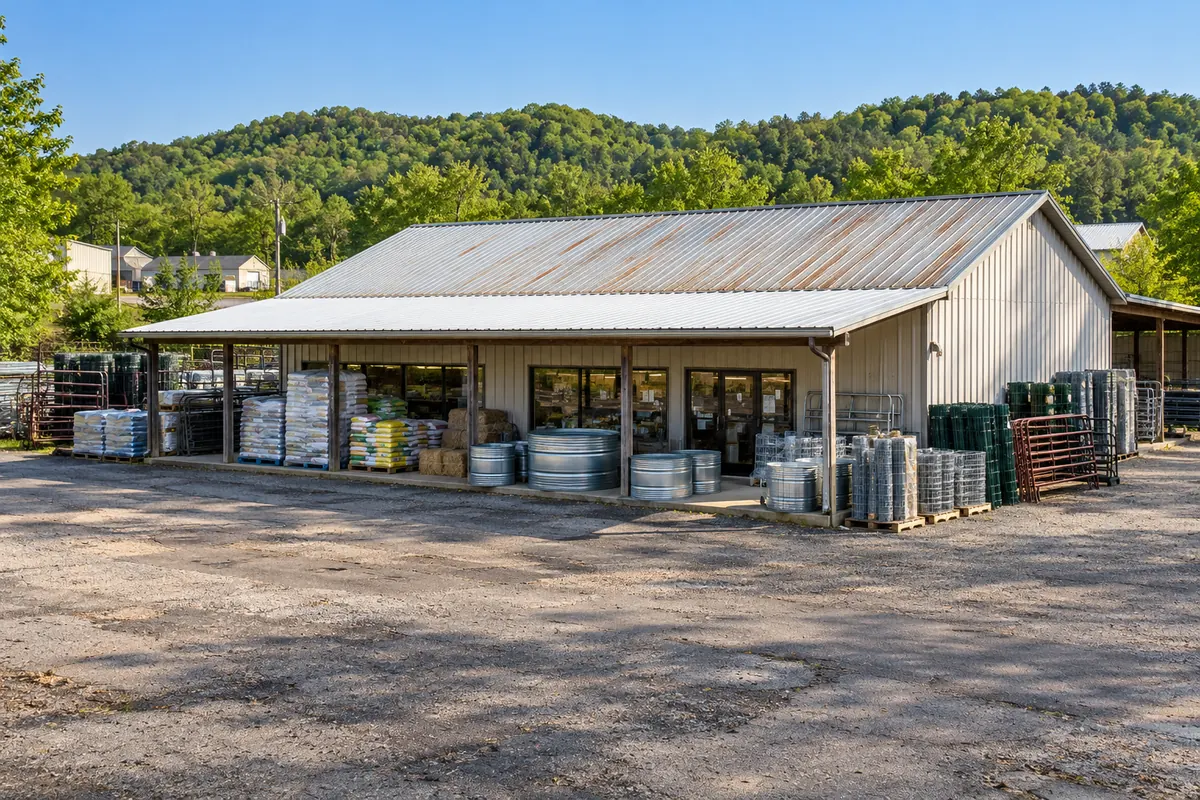
Retail accent roofs, canopies, and multi-building campuses.
Metal roof coating in Crestview Hills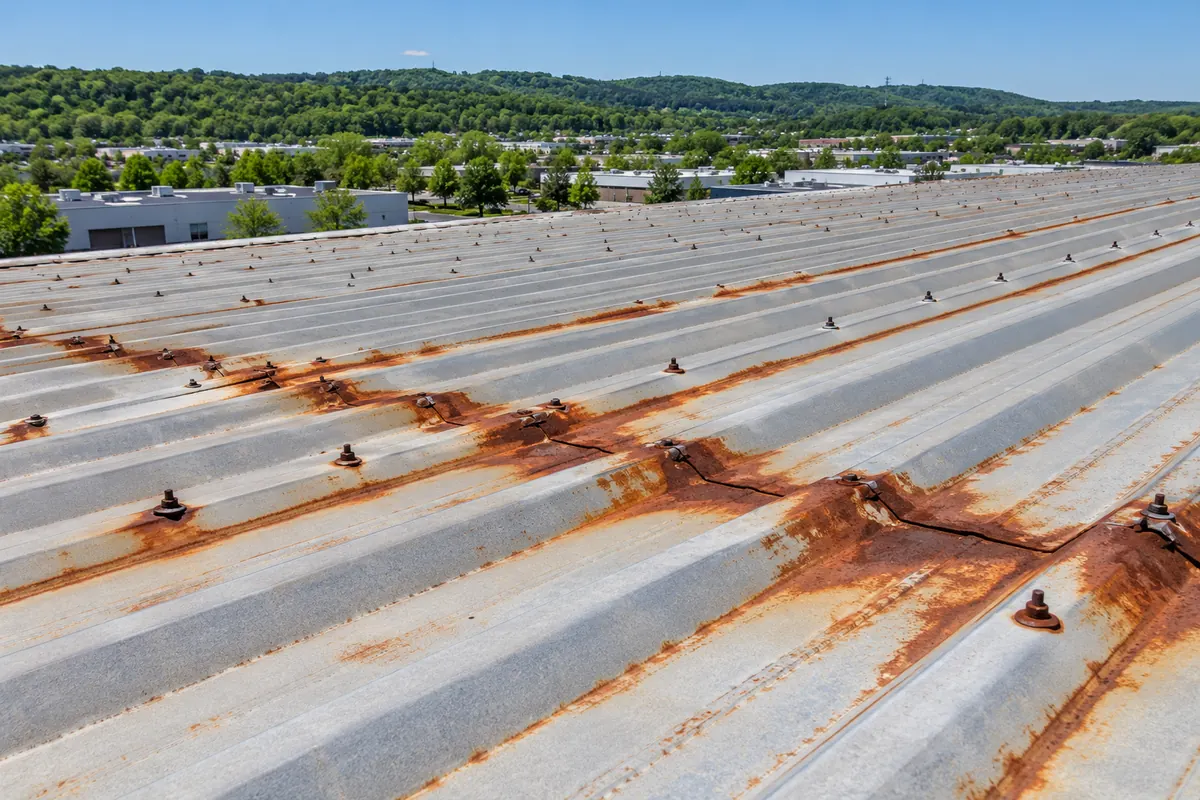
Church shingle roofs and the metal garages behind them.
Metal roof coating in Lakeside Park
Flex buildings with road film and units that drip.
Metal roof coating in Crescent Springs
Answers for clinic and office managers planning roof coating on a busy building.
Around patients, indoor air, and steady daily traffic. We use water-based acrylic or low-odor silicone near intakes, cover or shut down intakes during priming on a schedule set with staff, and move noisy prep to weekends or early mornings.
Curbs and duct penetrations get sealed, and the manager knows each day's work zone so entrances stay clear.
By rolling near roof edges, setting wind limits for spraying, and moving or covering cars parked close to the building. Spray shrouds and windscreens go up at rooftop units and wall edges.
Near the hospital campus, the first row of patient and staff parking is the main risk, so those rows get reserved or covered before spraying starts.
Yes. The crew works from the roof and rarely enters, and intake shutdowns are short and scheduled. Loud steps like pressure washing and grinding are the ones moved away from appointment hours.
Staff get a daily note on which part of the roof is active and which doors to route patients through.
Planning and Development Services of Kenton County handles building permits for Edgewood. Coating alone, panel replacement, and swapping rooftop equipment each change the scope.
We describe the full job to PDS before work starts and keep the paperwork with the building records.
Water-based acrylic has the mildest odor of the coatings we use, and some silicones are made low-odor as well.
Primers, especially solvent-based ones, carry the strongest smell, so priming near intakes gets the tightest scheduling and the intake covers stay on until it dries.
Send the roof details, or call to talk through intakes, parking, and hours.
Leave your name and number and we will call you about your commercial roof.
Or call now: (859) 204-8079