
FAQ · Erlanger, KY

Erlanger Metal Roof Coating Questions

Plain answers to the metal roof coating questions Erlanger building owners ask, from rust and screws to permits, weather, and cost.

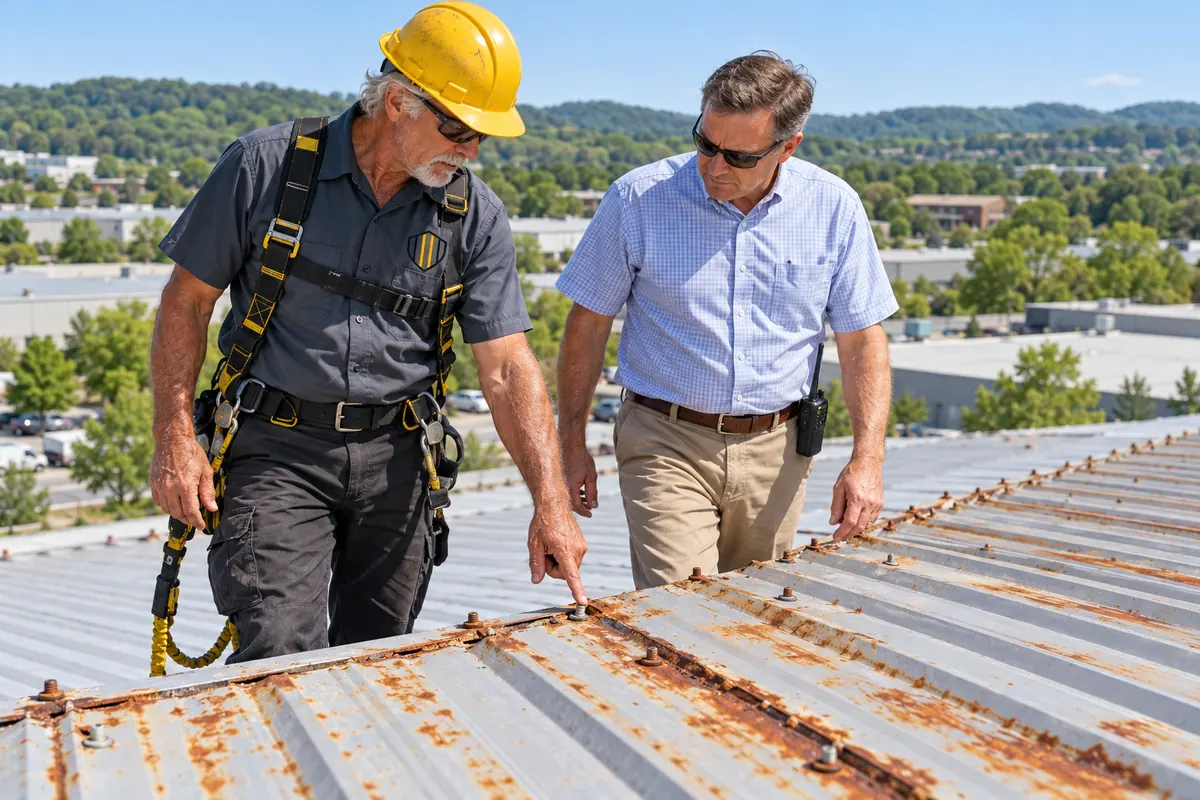
Roofer and building owner walking a rusted exposed-fastener metal roof1Inspect The Roof
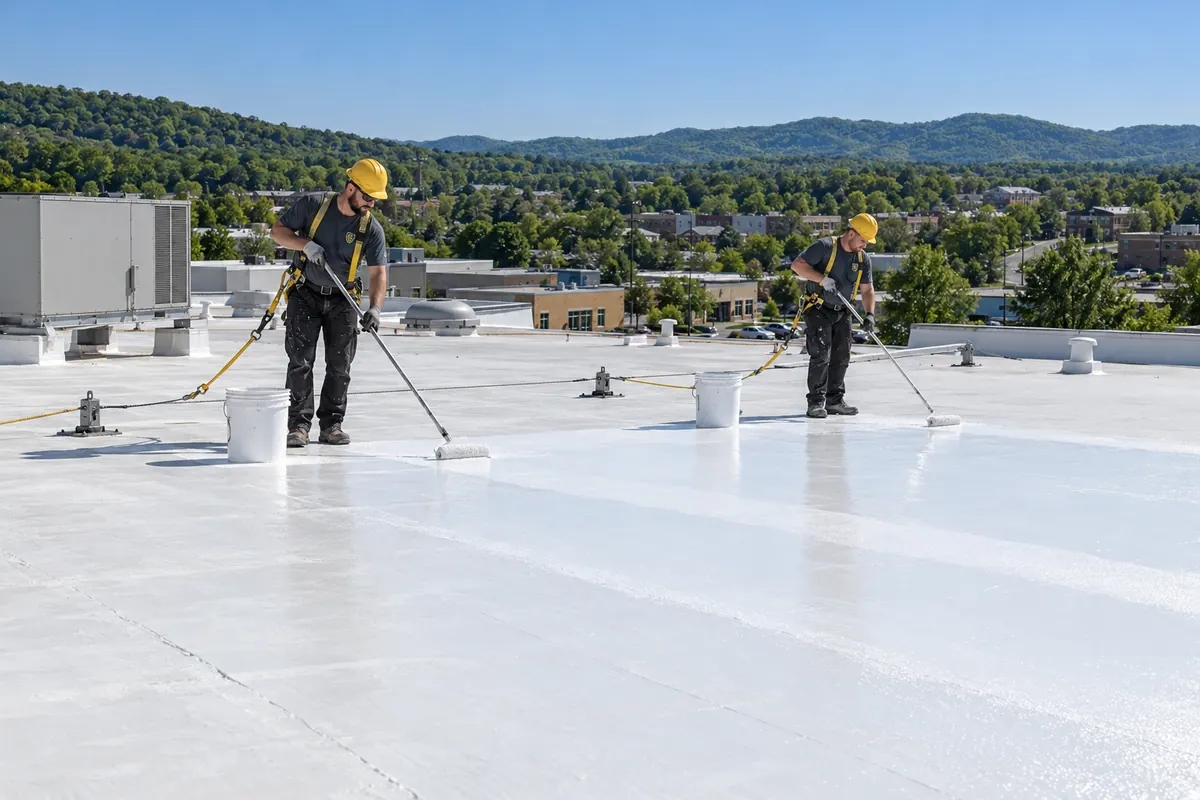
Two roofers rolling white acrylic coating across a low-slope roof2Coat The Roof

Metal Roof Coating In Brief

Metal roof coating is a spray- or roller-applied membrane that bonds to steel roof panels, closing seams and fastener holes and holding back corrosion. Erlanger Metal Roof Coating coats commercial metal roofs and applies silicone, acrylic, spray foam and shingle coatings on business, industrial and farm buildings in Erlanger, Kenton County, Kentucky, and the towns around it.

Related pages: commercial metal roof coating in Erlanger, silicone coating for low-slope metal roofs, acrylic coating for sloped metal roofs, spray foam over metal roofs, coating asphalt shingle roofs on commercial buildings, all roof coating services, and the towns we serve around Erlanger.

Metal Roof Coating Basics

What does a metal roof coating actually do on a commercial building?

A metal roof coating forms a continuous rubbery skin over the panels that seals fastener heads, seams and laps while shielding the steel from water and sunlight. It bonds to the metal and stretches with it as panels expand on hot afternoons and shrink on cold nights.

On a working roof, that skin handles three jobs:

  • Seals the thousands of exposed screws and washers that loosen over time.
  • Covers light surface rust so it stops spreading across the panel face.
  • Reflects sunlight when a white or light color is used, which keeps the panel surface cooler.

Coatings add no structural strength. Panels that flex underfoot or have rusted through need repair or replacement first.

Which metal roofs around Erlanger are good candidates for coating?

Good candidates are metal roofs with surface rust, loose or leaking fasteners and tired paint, on panels that are still firm and attached to solid purlins. Warehouses, shops, pole barns, churches and strip centers with exposed-fastener R-panel or older standing seam often fit this description.

Warning signs that point toward panel replacement instead:

  • Holes that show daylight from inside the building.
  • Rust scale that flakes off in sheets when scraped.
  • Panels bent or crushed by foot traffic around rooftop units.
  • Purlins that sag between supports.

A roof with a few bad panels can still be coated once those sections are swapped. When most panels show these signs, replacement is the better call.

Will a coating stop leaks at seams and fasteners by itself?

Leaks stop when the leak points get detail work first and the field coat goes on after. Most metal roof leaks start at a handful of places: dried and cracked fastener washers, end laps where panels overlap downslope, ridge cap closures, and flashing around curbs and pipes.

Crews seal those spots with brushable mastic or reinforced seam tape before any coating touches the open panel. The full coat then bridges over the detail work and ties everything together.

Rolling one coat over open laps and backed-out screws leads to cracking along those lines as the roof moves. Detail work is where most of the labor and most of the leak protection lives.

Rust, Fasteners and Seams

How is red rust treated before a metal roof is coated?

Red rust gets cleaned down to firm metal and then primed with a rust-inhibitive primer before any topcoat goes on. Loose scale comes off with wire brushes or grinders, while tight surface rust that has stopped flaking can stay under the primer.

The level of rust sets the plan:

Rust conditionTreatment
Light rust bloom on panel facesClean and prime affected areas
Heavy rust at end laps and eavesScrape, prime, reinforce laps with fabric
Pinholes or perforationPatch with metal or replace the panel
Rusted-through gutters or trimReplace the piece

Primer choice matters. Coating manufacturers name approved primers for rusted steel, and skipping that step is a common reason coatings peel at rust spots.

What is white rust, and does it need special prep?

White rust is a powdery white corrosion that forms on galvanized or Galvalume panels when the metal coating reacts with trapped moisture, and it has to be cleaned and primed before coating. It often shows up on newer roofs, in panel laps, and on sheets that sat stacked and damp before installation.

Coatings bond poorly to that chalky residue. Prep usually includes:

  • Washing with a cleaner the coating maker approves for galvanized steel.
  • Light scrubbing to remove loose powder from laps and flutes.
  • Priming with a product rated for galvanized or Galvalume surfaces.

An adhesion test patch on a few panels confirms the primer is gripping before the full roof is coated.

Should old roof screws be replaced or just sealed?

Fasteners that are loose, stripped or rusted get replaced, and the rest get tightened and sealed. A walk of the roof finds screws that spin in their holes, washers that have shrunk or split, and heads rusted enough to snap.

Common fixes:

  • Oversized screws go into holes that are stripped and wallowed out.
  • New screws with fresh neoprene washers replace snapped or rusted ones.
  • Every remaining head gets a dab of mastic or a fastener cap before the field coat.

Overdriving is its own problem. Screws driven too tight crush the washer and open a path for water, so crews check each one as they go. On a large R-panel roof, fastener work alone can take days.

How are panel laps, end laps and ridge caps sealed?

Side laps, end laps and ridge caps get reinforced with seam tape or polyester fabric embedded in coating before the field coat. These overlaps are where wind and capillary action pull water in, especially at end laps on long, low-slope runs.

A standard sequence for each lap:

  • Clean and prime the joint.
  • Embed fabric or apply a compatible seam tape over it.
  • Brush coating over the tape so the edges lie flat.

Ridge caps also need attention at the closures, the foam or metal strips that block the gaps under the cap. Missing or crumbled closures let wind-driven rain and birds in, and they get replaced before the cap is sealed.

What happens to skylight panels and gutters during coating?

Skylight panels get masked, sealed around their edges, and left uncoated unless the owner wants them blacked out. Translucent fiberglass panels set into metal roofs often leak at their side laps and fasteners, and those joints get the same seam treatment as the steel.

Yellowed, cracked or brittle skylight panels are better replaced or covered with metal before coating. Brittle fiberglass breaks under a boot, which makes it a fall hazard as well as a leak point.

Gutters and downspouts get cleaned out, checked for rusted seams, and resealed. Coating the inside of a gutter helps where seams weep, while rotted sections get replaced so water keeps draining off the roof.

Choosing a Coating System

Silicone, acrylic or urethane: which coating works best on metal?

Silicone and acrylic are the two most common topcoats on commercial metal roofs, with urethane used mainly as a tough basecoat or primer layer in some systems. Each brings different strengths:

CoatingStrengths on metalWatch-outs
SiliconeHolds up to ponding water and UVCollects dirt; recoats need silicone or a special primer
AcrylicWater-based, low odor, easy to recoatSoftens under standing water
UrethaneHigh impact and foot-traffic resistanceStronger odor; part of fewer systems

Roof slope, the amount of ponding, and how often people walk the roof drive the choice. Manufacturer system specs decide which primers and basecoats go under each topcoat.

When is acrylic the better choice for a metal roof?

Acrylic fits sloped metal roofs that shed water quickly, where its low odor and easy recoating pay off. Exposed-fastener R-panel on pitched warehouses, shop buildings and barns often drains well enough that water never sits on the coating.

Reasons owners pick it:

  • Water-based cleanup and low odor near occupied offices.
  • Bright white finishes that stay cleaner looking than silicone.
  • Recoating later with more acrylic, which bonds well to itself.

Ponding is where acrylic struggles. Low spots near gutters, behind rooftop units and over sagging purlins hold water after rain, and constant water softens acrylic. Those areas need correction or a different coating.

Is silicone the right pick for a low-slope metal roof that ponds?

Silicone is the common choice for low-slope metal roofs with ponding because it resists standing water better than acrylic. Older low-pitch standing seam and R-panel roofs on warehouses often hold water at end laps, around drains, and behind curbs.

Silicone has tradeoffs:

  • Dirt pickup dulls the white surface over time, which cuts reflectivity.
  • Later recoats need silicone or a special primer, since most other coatings bond poorly to it.
  • Rooftop foot traffic finds it slick when wet, so walkway pads help near units.

Applied at the thickness the manufacturer specifies, silicone goes on in one or two passes. Low points with heavy ponding still benefit from drainage fixes first.

Should spray foam go over an old metal roof?

Spray foam over metal makes sense when a building needs added insulation and a more even surface, while coating alone fits roofs that only need waterproofing. Foam fills the flutes of R-panel, buries the fasteners, and is then protected by a coating layer.

FactorSpray foam plus coatingCoating only
Insulation addedYes, based on foam thicknessMinimal
Fasteners and lapsBuried in foamSealed one by one
Edges and trimRoofline rises; trim and gutters adjustedLittle change
Weather limits during installStrict on wind and moistureModerate

Foam also needs the panels dry and clean. Roofs with heavy rust or wet insulation underneath get repaired before foam goes on.

Can asphalt shingle roofs on commercial buildings be coated?

Shingle roofs on churches, offices and strip centers can be coated when the shingles are still flat, mostly holding granules, and the coating maker approves the product for asphalt shingles. Shingle roof coating is a narrower service than metal coating, and condition limits it.

Good candidates show:

  • Shingles lying flat with little curling or cupping.
  • Granule loss that is light and even, with no bare tabs.
  • Firm decking with no soft areas underfoot.

Poor candidates have curled tabs, missing shingles, or several layers already in place. Owners should also check whether a coating affects any existing shingle manufacturer coverage before going ahead. Valleys, pipe boots and flashing at walls get the same detail sealing a metal roof would.

Weather Around Erlanger

How do Northern Kentucky winters affect a coated metal roof?

Northern Kentucky winters cross the freezing mark often, and those cycles show up first at fasteners, laps and gutters. Cincinnati-area January normals from the National Weather Service office in Wilmington, Ohio put the average high near 40°F and the average low near 23°F, with about 7.7 inches of snow.

That pattern brings:

  • Ice buildup at gutters and eaves when snow melts and refreezes.
  • Snow slides on steeper panels that can tear loose gutters and snow guards.
  • Movement at fastener holes as panels shrink and swell through each cycle.

A flexible coating rides out this movement well when the detail work underneath is done right. Spring checks of eaves and gutters catch winter damage early.

When is the best time of year to coat a metal roof in Kenton County?

Late spring through early fall is the main coating season in Kenton County, since coatings need surface and air temperatures above a set minimum and dry weather to cure. May normals for the Cincinnati area run about 75°F for a high and 54°F for a low, though May also averages about 4.7 inches of rain.

Scheduling around that means:

  • Watching forecasts for dry windows after the morning dew burns off.
  • Stopping work early enough that coating skins over before evening dew.
  • Checking panel temperatures, which run far hotter than air on sunny days.

Each product data sheet lists its minimum temperature and rain-free cure time. Crews follow those numbers over the calendar.

Does a white coating keep a metal building cooler in summer?

A white or light-colored coating reflects more sunlight than bare or faded metal, which lowers the roof surface temperature on sunny days. How much that helps inside comes down to insulation, ventilation, and how the building is used.

The Cool Roof Rating Council keeps a public directory of rated roof products, listing solar reflectance and thermal emittance for many coatings. Owners can compare products there before choosing a color.

Points to know:

  • Reflectance drops as dirt builds up, so the aged rating matters more than the initial one.
  • Uninsulated shops and warehouses feel surface temperature changes more than well-insulated offices.
  • Energy bill changes vary from building to building, and no fixed savings can be promised.

Prep, Application and Downtime

How is a metal roof cleaned before coating?

Pressure washing removes dirt, chalking paint and loose rust so the primer and coating bond to clean metal. Old painted panels often chalk, leaving a white powder that rubs off on a hand, and that powder has to come off or the coating peels with it.

Cleaning steps usually include:

  • Clearing debris from gutters, valleys and around rooftop units.
  • Degreasing around kitchen exhaust fans and vents where grease builds up.
  • Washing with a coating-approved cleaner, then rinsing fully.
  • Drying time before priming, which can take most of a day.

Adhesion tests after cleaning tell the crew whether the surface is ready. Failed spots get washed again or primed with a bonding primer.

Does standing seam need different prep than exposed-fastener R-panel?

Standing seam and exposed-fastener R-panel need different prep because their leak points sit in different places. Exposed-fastener roofs leak mostly at screws, while standing seam roofs leak mostly at seams, clips and penetrations.

Prep stepStanding seamExposed-fastener R-panel
Fastener workFew or none exposedEvery screw checked, tightened or replaced
Seam treatmentSeam tops and end laps sealedSide laps and end laps reinforced
Panel movementPanels float on clips; coating has to flexPanels fixed through the face
Common trouble spotsRidge, eave, pipe bootsFastener washers, laps, skylights

Standing seam on a very low pitch can also hold water in the flat pans, which pushes the coating choice toward silicone.

Can a business stay open while its roof is coated?

Most buildings stay open and running while the roof is coated, since crews work from the roof and rarely need to enter. Planning still matters for the tenants, staff and customers inside.

Items to work out ahead of time:

  • Rooftop air intakes, which may need to be shut down or covered during spraying and while solvent-based primers dry.
  • Parking and loading areas next to the work zone, kept clear when spraying.
  • Ground access for the lift or ladder setup.
  • Noise from pressure washers and grinders during prep.

Odor varies by product. Water-based acrylics are mild, while some primers and solvent-based coatings have stronger odors that carry through intakes.

How soon can a freshly coated metal roof handle rain?

Rain resistance comes once the coating skins over and partly cures, a window set by the product data sheet and by the day's temperature and humidity. Some silicones resist light rain quickly, while acrylics need longer to firm up.

Crews protect fresh work by:

  • Starting early enough for the coat to set before afternoon storms.
  • Keeping coating off panels when rain is forecast within the cure window.
  • Measuring wet-film thickness during application so the coat is neither thin nor puddled.

Rain on uncured acrylic can wash it off the panel and leave milky streaks in gutters. When that happens, the area gets cleaned and recoated once dry.

Cost, Taxes, Permits and Utilities

What affects the cost of coating a commercial metal roof?

Roof size, rust level, fastener count and coating choice drive the cost more than anything else. Two roofs of equal square footage can differ widely in labor depending on what the prep uncovers.

Main cost drivers:

  • Square footage and roof height, which set equipment needs.
  • Rust and panel condition, including any panels that need replacing.
  • Fastener count, which runs high on R-panel roofs.
  • Coating type and the thickness the system specifies.
  • Rooftop units, skylights and curbs needing detail work.
  • Access, such as tight lots, hillsides or limited staging space.

Seeing the roof up close is the only way to know which of these will dominate. Photos from the ground or a drone help set expectations before anyone climbs up.

Should I coat, restore, re-panel or replace my metal roof?

Coating fits roofs with firm panels and light rust, while widespread rust-through calls for re-paneling or replacement. Restoration sits in between:

OptionFits whenWhat it involves
CoatPanels firm, light rust, minor leaksClean, seal details, apply topcoat
RestoreModerate rust, many failed fasteners and lapsFull fastener and lap work, primer, thicker coating system
Re-panelSections rusted through, framing solidSwap bad panels, then coat or leave bare
ReplaceWidespread perforation or framing damageTear-off or new roof over the framing

Many roofs land between categories, with a few panels replaced and the rest restored. A look at the purlins and insulation from inside helps settle the choice, since coating over wet insulation traps moisture and feeds more rust.

Can a metal roof coating qualify for Section 179 expensing?

Roof work on existing nonresidential buildings can qualify as Section 179 property, so a metal roof coating project may be deductible in the year it is placed in service. IRS Publication 946 lists roofs among the qualified real property improvements to nonresidential buildings.

Figures for 2026 from that publication:

  • Maximum deduction of $2,560,000.
  • Phase-out begins when qualifying purchases exceed $4,090,000.
  • Residential rental property is excluded.

Whether a specific coating counts as a roof improvement or a repair expense is a tax question. A CPA can sort out the treatment for each building and business.

Who handles building permits for roof work in Erlanger and nearby towns?

Planning and Development Services of Kenton County (PDS) handles building permits for Erlanger and the nearby Kenton County cities in the table. The Kentucky Department of Housing, Buildings and Construction contact sheet for Kenton County and the City of Erlanger business guide both point to PDS.

TownBuilding permit contact per state and city sources
ErlangerPDS; the city also lists its own HVAC inspector
ElsmerePDS
EdgewoodPDS
Crestview HillsPDS
Lakeside ParkPDS
Crescent SpringsPDS
Villa HillsPDS

Permit needs follow the scope of work. Panel replacement, structural repairs or new rooftop equipment change the picture, so a call to PDS before work starts settles it.

Which electric utility serves the Erlanger area, and are there cool roof rebates?

Duke Energy Kentucky serves Kenton County along with Boone, Campbell, Gallatin, Grant and Pendleton counties, according to its annual report to the Kentucky Public Service Commission. The name on the electric bill confirms which utility serves a given building, and business energy programs change from year to year.

Before counting on an incentive:

  • Check current Duke Energy Kentucky business programs for roofing or insulation measures.
  • Ask whether reflective coatings or added insulation such as spray foam qualify.
  • Keep product data sheets and Cool Roof Rating Council listings on file in case paperwork is needed.

Coating work earns its place by sealing rust, laps, skylight edges and fasteners. Any rebate is a bonus on top of that work.

Questions by Town

What permits apply to a metal roof coating job in Erlanger?

Erlanger's own business guide sends building and zoning permit questions to PDS of Kenton County, and it calls for a zoning permit when a building's exterior changes. A coating that changes roof color on a visible commercial building is worth raising with PDS for that reason.

Erlanger also appears on the state's Kenton County contact sheet with its own HVAC inspector. That matters when rooftop units get lifted off their curbs so curb flashing can be rebuilt, or when units are swapped during the roof work.

Steps for Erlanger owners:

  • Describe the full scope to PDS, including any panel replacement.
  • Mention rooftop unit work so the HVAC side is covered.
  • Have color charts and product sheets handy for zoning questions.

Do warehouses near CVG in Erlanger need a different coating plan?

Large metal warehouses and logistics buildings around Erlanger, close to Cincinnati/Northern Kentucky International Airport just over the Boone County line, need plans built around long panel runs and busy truck courts. Long low-slope runs see more thermal movement and more end laps per panel line than small roofs.

Plans for these roofs focus on:

  • End laps and expansion along long runs, sealed with flexible fabric-reinforced details.
  • Dock canopies and loading-door awnings, which often rust first.
  • Staging that keeps lifts and hoses clear of trailers and forklifts.
  • Phased sections so operations keep moving under each part of the roof.

Wide roofs also make coating color and reflectance a bigger decision, since so much surface faces the sun.

Can older storefront roofs along Dixie Highway in Elsmere be coated?

Older commercial buildings along Dixie Highway in Elsmere can be coated where the metal sections are still firm, though these roofs often mix materials. One shop might have a low-slope main roof, a metal addition out back, and a metal mansard or canopy facing the street.

Each piece needs its own approach:

Roof sectionCommon issueCoating approach
Street-facing metal mansardFaded paint, rusted trimClean, prime, color-matched acrylic
Rear metal additionLeaks where it meets the main wallRebuild wall flashing, then coat
Metal canopyRust at gutters and edgesPrime, seal laps, coat

Transitions where two roof types meet are the usual leak source on these buildings, so that joint gets the most detail work.

See metal roof coating in Elsmere.

How are shared walls and parapets handled on attached Elsmere storefronts?

Shared walls and parapets between attached Dixie Highway storefronts in Elsmere get sealed with counterflashing and coating that laps up the wall, with neighboring owners kept informed. In attached rows, one roof often drains toward or past the next, and the parapet cap is where water gets in.

Work at a party wall includes:

  • Inspecting the parapet coping for open joints and loose fasteners.
  • Sealing the base where the roof panel turns up the wall.
  • Coordinating access if crews need to step onto the adjoining roof.

Coating only one side of a shared parapet leaves the other side open to water. Owners on the same block sometimes coat together to seal the whole run in one season.

See metal roof coating in Elsmere.

How is coating handled on medical office roofs near St. Elizabeth Edgewood?

Medical offices and clinics near the St. Elizabeth Edgewood hospital campus need coating work planned around patients, indoor air and steady daily traffic. Roofs over exam rooms carry rooftop air handlers drawing in outside air, and odor carries.

Plans for these buildings often include:

  • Water-based acrylic or low-odor silicone near intakes.
  • Covering or shutting down intakes during priming, timed with building staff.
  • Weekend or early-morning hours for noisy prep near occupied rooms.
  • Sealing curbs and duct penetrations, which are frequent leak points on busy mechanical roofs.

Clinic managers should know each day's work zone so patient entrances stay clear of hoses and equipment.

See metal roof coating in Edgewood.

How is overspray controlled at busy Edgewood medical and office lots?

Overspray is controlled by rolling near roof edges, setting wind limits for spraying, and moving or covering vehicles parked close to the building. Around the Edgewood hospital campus, patient and staff parking often runs right up to the wall, which makes the first row of cars the main risk zone.

Common controls:

ControlWhere it applies
Roller and brush applicationEaves and edges near parking
Wind speed limits for sprayingWhole roof, checked through the day
Vehicle covers or reserved empty rowsLots beside the building
Spray shrouds and windscreensRooftop units and wall edges

Spray foam and sprayed coatings drift on breezy days, and droplets on parked cars are hard to remove, so these steps get set before the first panel is sprayed.

See metal roof coating in Edgewood.

Can metal accent roofs and canopies at Crestview Hills retail centers be coated?

Standing-seam accent roofs, entry canopies and tower caps on Crestview Hills retail and office buildings, including the Town Center area, can be coated in colors that match or refresh the original finish. These roofs are as much about looks as leaks, so color and sheen matter.

Points to settle first:

  • Color matching against faded panels, which often look different from the original chip.
  • Landlord and tenant approval for any visible color change.
  • Early-morning or after-hours work near storefront entrances.
  • Reflectance ratings for darker colors, which absorb more heat than white.

Accent roofs have short panel runs and many trim pieces, so trim joints and seam tops get most of the detail work.

See metal roof coating in Crestview Hills.

What about roofs on campus buildings near Thomas More University in Crestview Hills?

Campus-style buildings around Thomas More University in Crestview Hills tend to have many separate roofs, so coating is usually phased building by building around the academic calendar. Summer break offers the most open time and the best curing weather.

Campus roof work brings its own checklist:

  • Mixed roof types, from metal on service and storage buildings to low-slope membranes elsewhere.
  • Pedestrian routes that need barricades under roof edges.
  • Gutters, downspouts and skylights checked across every building in the same pass.

A survey that maps each roof's material, age and leak history helps set priorities. Roofs with active leaks over classrooms go first.

See metal roof coating in Crestview Hills.

Can church and office shingle roofs in Lakeside Park be coated?

Asphalt shingle roofs on churches and small offices in Lakeside Park can be coated when the shingles lie flat and the coating maker approves its product for shingles. In a small city with a modest commercial footprint like Lakeside Park, pitched shingle roofs on churches and offices are a bigger share of the work than in warehouse areas.

Checks before coating a church or office shingle roof:

  • Steeple and wall flashing, often the oldest metal on the building.
  • Valleys, where granule loss and wear run heaviest.
  • Pipe boots and vents, which crack before the shingles do.

Color choice matters on visible pitched roofs, and gray, tan or white coatings can be matched to the building. Curled or brittle shingles point to reroofing instead.

See metal roof coating in Lakeside Park.

How are small metal garages and maintenance buildings in Lakeside Park coated?

Small metal garages, storage buildings and maintenance sheds behind Lakeside Park churches and offices are coated the same way as larger metal roofs, with the work scaled down. These outbuildings often have exposed-fastener panels, no gutters, and rust starting at the bottom edge where snow and leaves sit.

For small buildings:

  • Eave trim and the lowest panel ends get wire brushing and primer first.
  • Fasteners are checked across the whole roof, since short roofs still have hundreds.
  • Ridge caps and gable trim get sealed at their laps.

Pairing a small outbuilding with a larger roof on the same property cuts setup time, because the lift and crew are already there.

See metal roof coating in Lakeside Park.

Do Crescent Springs buildings near I-71/75 need extra cleaning before coating?

Buildings close to I-71/75 in Crescent Springs collect road film and soot on their roofs, so washing takes extra time and often a degreaser. That greasy film keeps primer from gripping even when the panels look clean from the ground.

Prep near a busy interstate includes:

  • Degreasing and rinsing panels until water sheets instead of beading.
  • Testing adhesion on several spots across the roof.
  • Cleaning skylight panels and gutters where grime settles.

Flex and office buildings in Crescent Springs also tend to have rooftop units with condensate lines that drip onto panels, leaving rust stripes that need priming before the topcoat.

See metal roof coating in Crescent Springs.

Is spray foam a good fit for Crescent Springs flex buildings with hot or cold spaces?

Spray foam over the metal roof is a strong fit for Crescent Springs flex and light-industrial buildings when office space inside swings hot in summer and cold in winter. Foam adds insulation on top of the panels and buries the fastener lines that leak.

Before choosing foam, check:

  • Roof edges and gutters, since foam raises the roofline and trim needs adjusting.
  • HVAC units, which may need curb extensions to stay above the new surface.
  • Interior insulation, which has to be dry before foam goes over it.

Foam is sprayed in dry, calm weather and then topcoated with silicone or acrylic. Coating-only work fits better when the space inside is unheated storage.

See metal roof coating in Crescent Springs.

Do Villa Hills roofs on the Ohio River hillsides face more wind?

Roofs on the Villa Hills hillsides above the Ohio River sit more exposed to wind than buildings on sheltered lots, so edge trim, ridge caps and fasteners get extra attention before coating. Wind lifts panels from the edges first, and loose eave and rake trim acts like a sail.

Before coating an exposed roof:

  • Rake and eave trim gets re-fastened where it has loosened.
  • Ridge caps are checked for missing closures and lifted ends.
  • Spray work is limited to calm days, with rolling used near edges.

Coatings seal the roof but add no hold-down strength. The fastening underneath is what keeps panels in place.

See metal roof coating in Villa Hills.

How are hard-to-reach church and institutional roofs in Villa Hills accessed?

Steep Villa Hills lots call for lifts set on level ground, roof anchors for fall protection, and hoses run up from a staging area that can sit well downhill from the building. Hilly sites leave little flat space beside walls, which shapes the whole job.

Access planning covers:

Site conditionApproach
Steep grade beside the wallLift placed on the uphill side or in the lot
Tall gable or steepleFall-protection anchors and roof ladders
Long hose runsPump staged on flat ground, hoses secured
Tight drivewaysSmaller equipment and deliveries in stages

Those details add setup time, so access gets mapped during the first roof visit.

See metal roof coating in Villa Hills.

Getting Started

What should a building owner have ready before a roof inspection?

A roof inspection goes faster when the owner has the roof's age, leak history and access details ready. That background points the inspector straight to problem areas like failing end laps, rusted gutters or leaking skylight panels.

Helpful items:

  • Approximate roof age and panel type, if known.
  • Interior photos of water stains, with locations marked.
  • Past repair records, including any earlier coatings.
  • Roof access point, such as a hatch, ladder or lift spot.
  • Contact names for tenants or staff who need notice.

From there, the inspection covers panels, fasteners, seams, flashing and drainage, and the owner hears which path fits the roof.

Still Have A Roof Question?

Call us with what you are seeing on the roof, and we will answer it or set up a visit.

Get An Estimate For Your Metal Roof

Tell us about the roof and the building, or call to talk through your questions.

Call Us (859) 204-8079