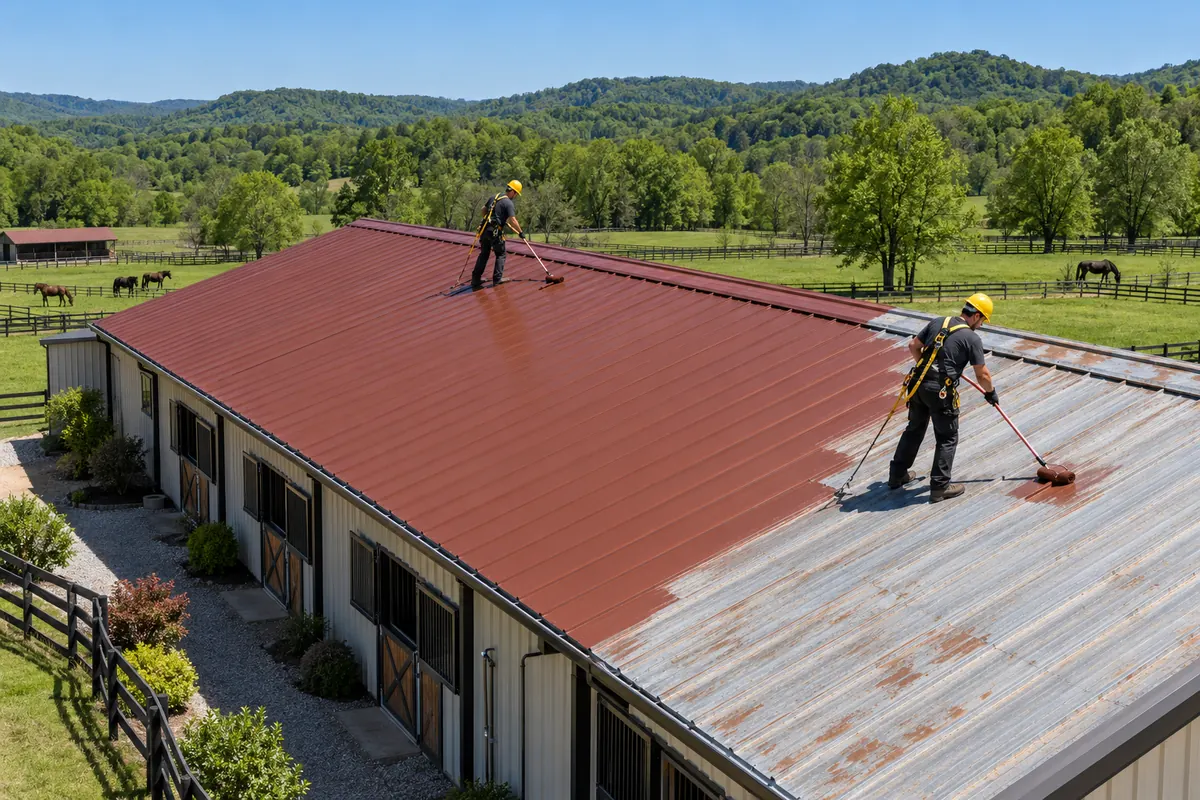
Metal Roof Coating
For R-panel and standing seam with rust, loose screws, and leaking laps. Fastener work, rust primer, and lap fabric come before an acrylic or silicone topcoat.
Metal roof coating in Erlanger
Five roof coating services for Erlanger commercial buildings. We inspect your roof first, then seal and coat it with the system that fits its slope and condition.
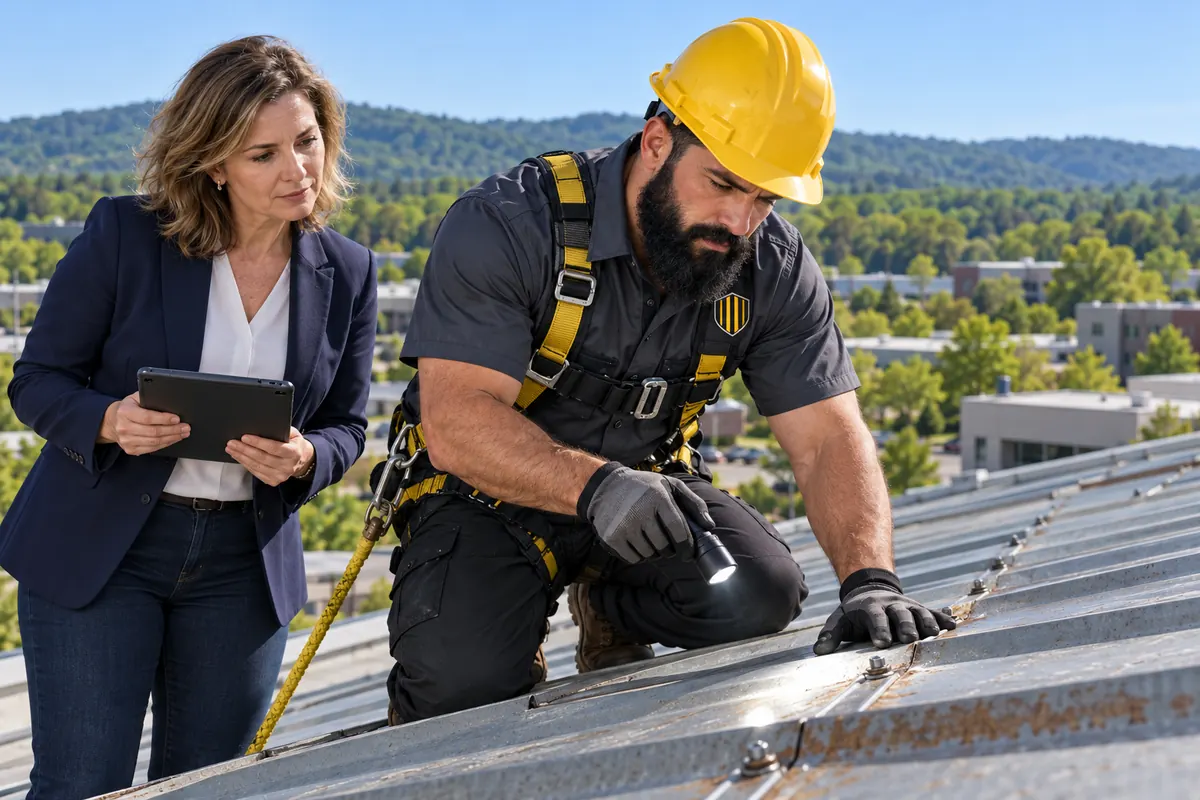 1Inspect The Roof
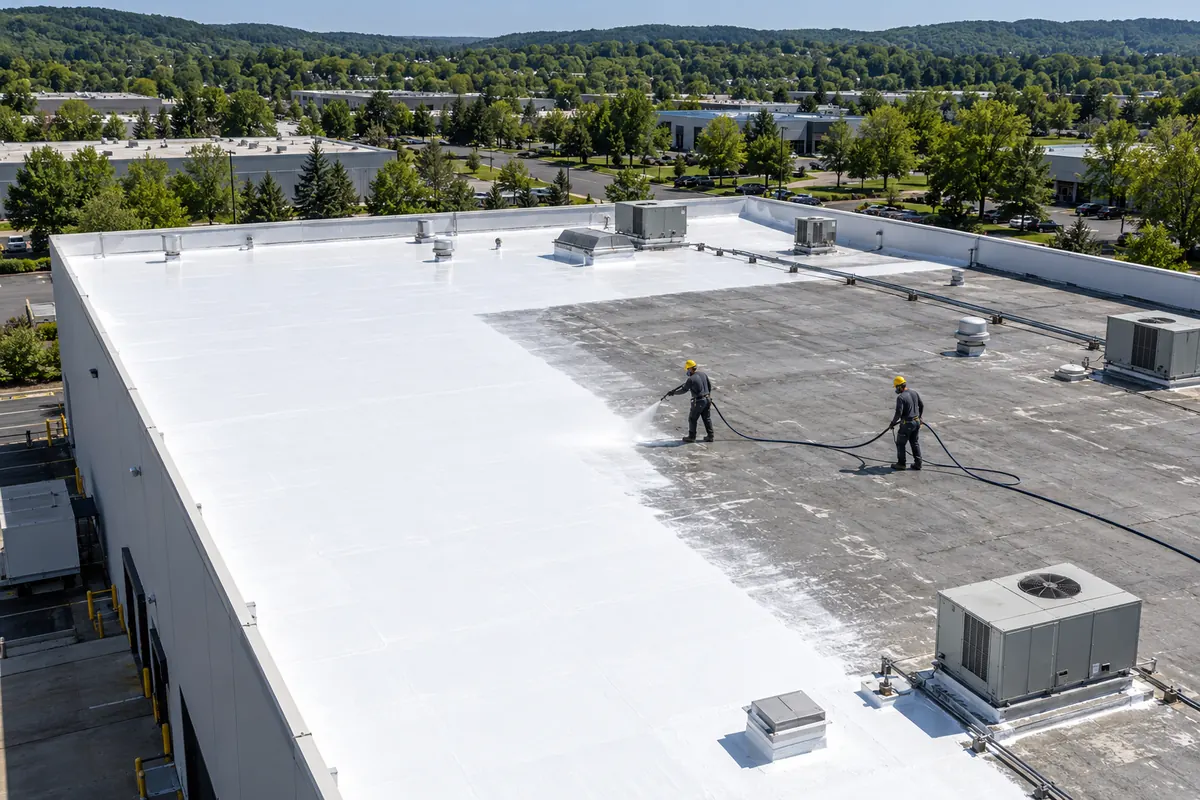 2Coat The Roof
Each system fits a different kind of commercial roof. The inspection tells us which one yours needs.
For R-panel and standing seam with rust, loose screws, and leaking laps. Fastener work, rust primer, and lap fabric come before an acrylic or silicone topcoat.
Metal roof coating in Erlanger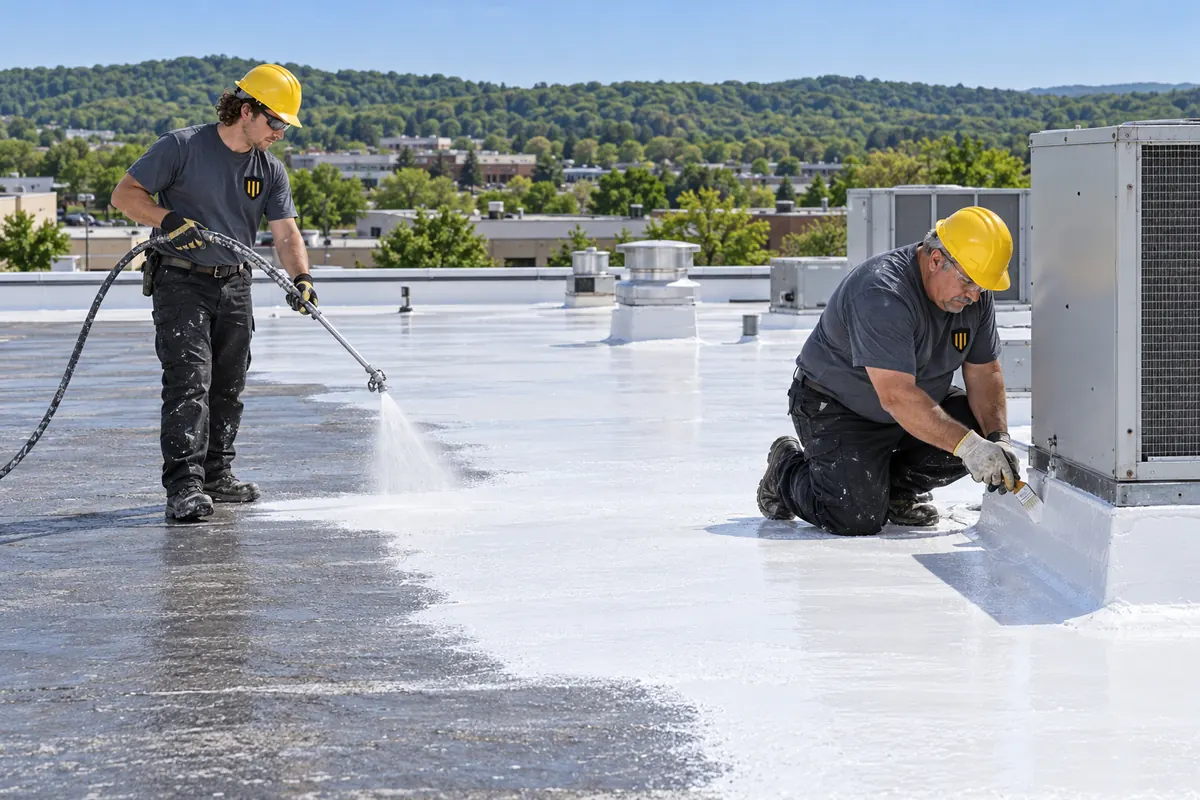
Made for low-slope metal and flat roofs where water sits after rain. Detail work at laps, curbs, and drains, then one or two thick passes of silicone.
Silicone roof coating in Erlanger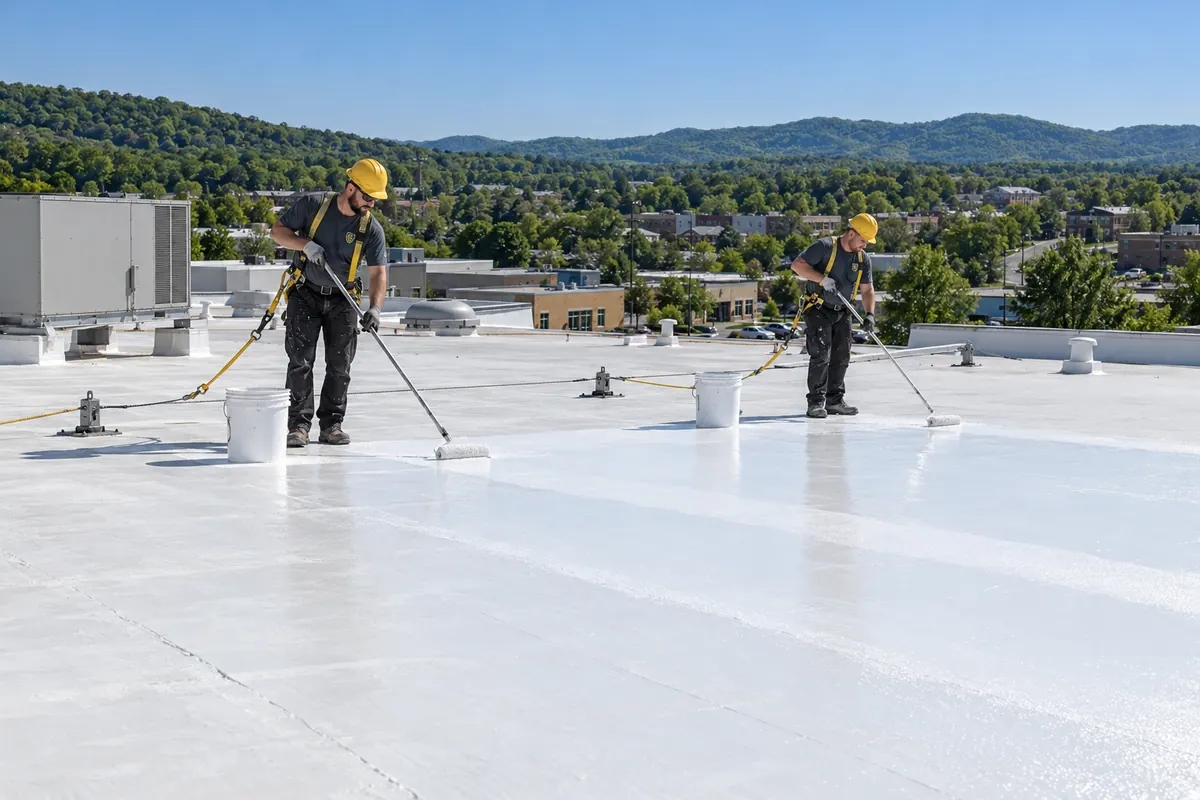
Water-based coating for pitched roofs that drain within hours, with low odor near occupied offices, a bright white finish, and recoats with more acrylic.
Acrylic roof coating in Erlanger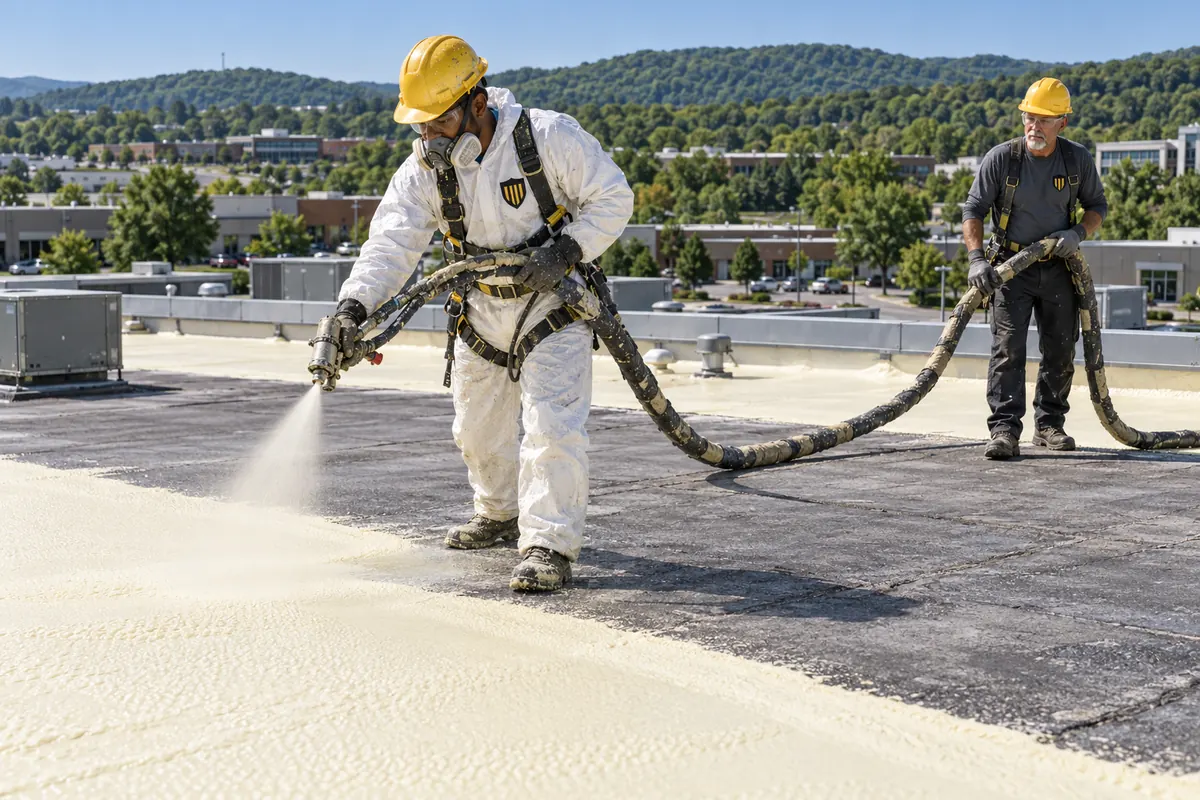
Insulation and a new roof surface in one job. Foam goes over dry metal or flat roofs and gets a silicone or acrylic topcoat.
Spray foam roofing in Erlanger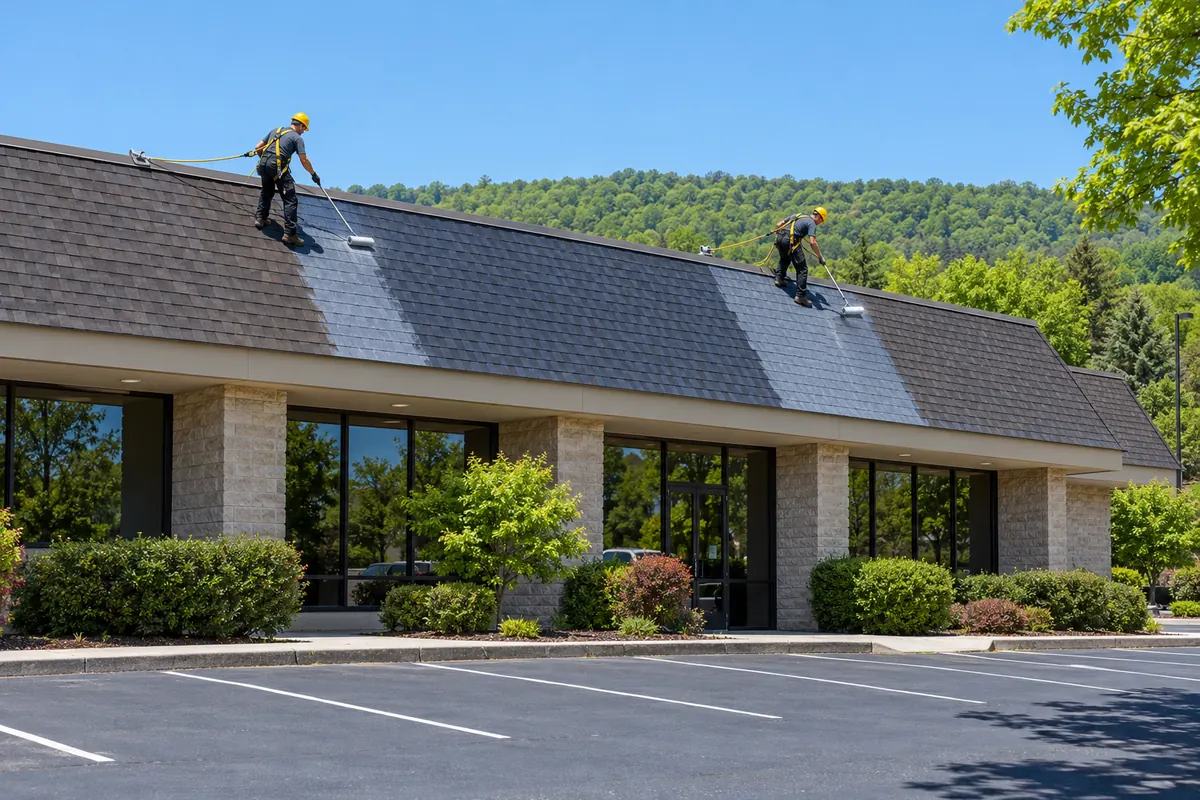
A narrow service for commercial shingle roofs whose tabs still lie flat on firm decking, with the coating maker's approval for shingles.
Shingle roof coating in ErlangerA quick comparison of the five systems by roof type, water, and building. Your inspection confirms the match.
| System | Roof Type | Water On The Roof | Typical Buildings | Recoat Path |
|---|---|---|---|---|
| Metal Roof Coating | Exposed-fastener or standing seam metal | Sheds or holds; the topcoat follows | Warehouses, shops, pole barns | The same topcoat |
| Silicone | Low-slope metal or flat | Puddles after rain | Warehouses, flex buildings, strip centers | Silicone only |
| Acrylic | Pitched metal | Drains within hours | Shops, churches, offices | More acrylic |
| Spray Foam | Metal or flat, needing insulation | Foam can even out low spots | Flex buildings, shops | Topcoat over the foam |
| Shingle Coating | Pitched asphalt shingle | Sheds water | Churches, offices, strip centers | Recoat when worn |
That is what the inspection settles. Call us and describe the roof slope, the building, and what you see at the screws and laps.
The topcoat changes from roof to roof. These five steps stay the same.
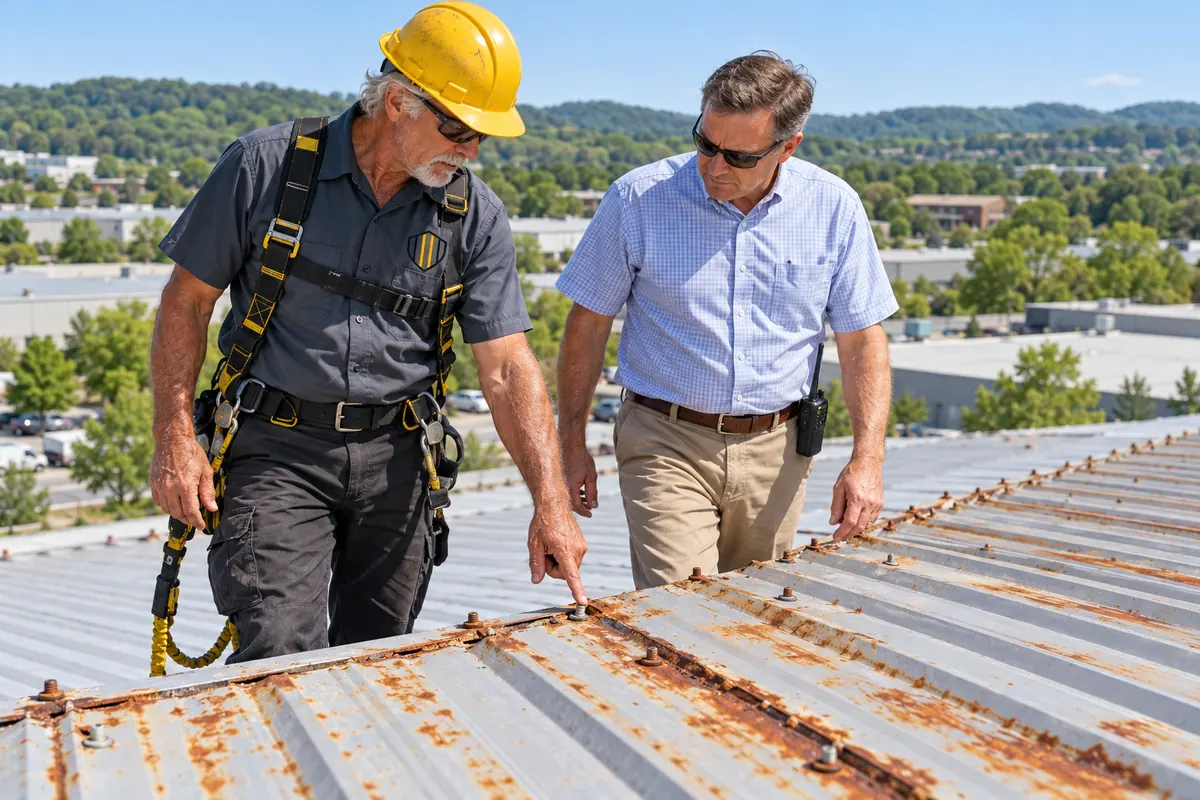
Slope, drainage, rust, fasteners, and insulation get checked on every roof, because those findings decide which of the five systems we recommend.
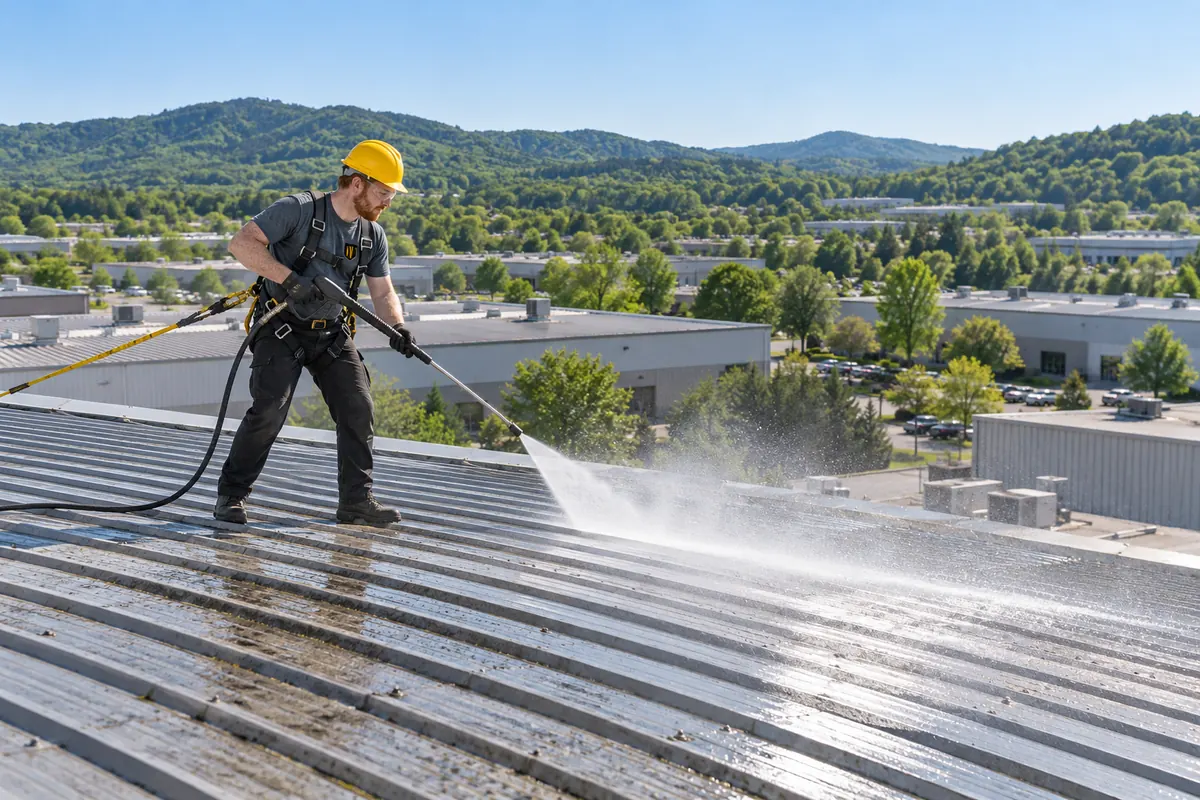
Each roof gets the cleaning its material needs: pressure washing for metal, a gentle low-pressure rinse for shingles, and degreaser where road film or kitchen grease builds up.
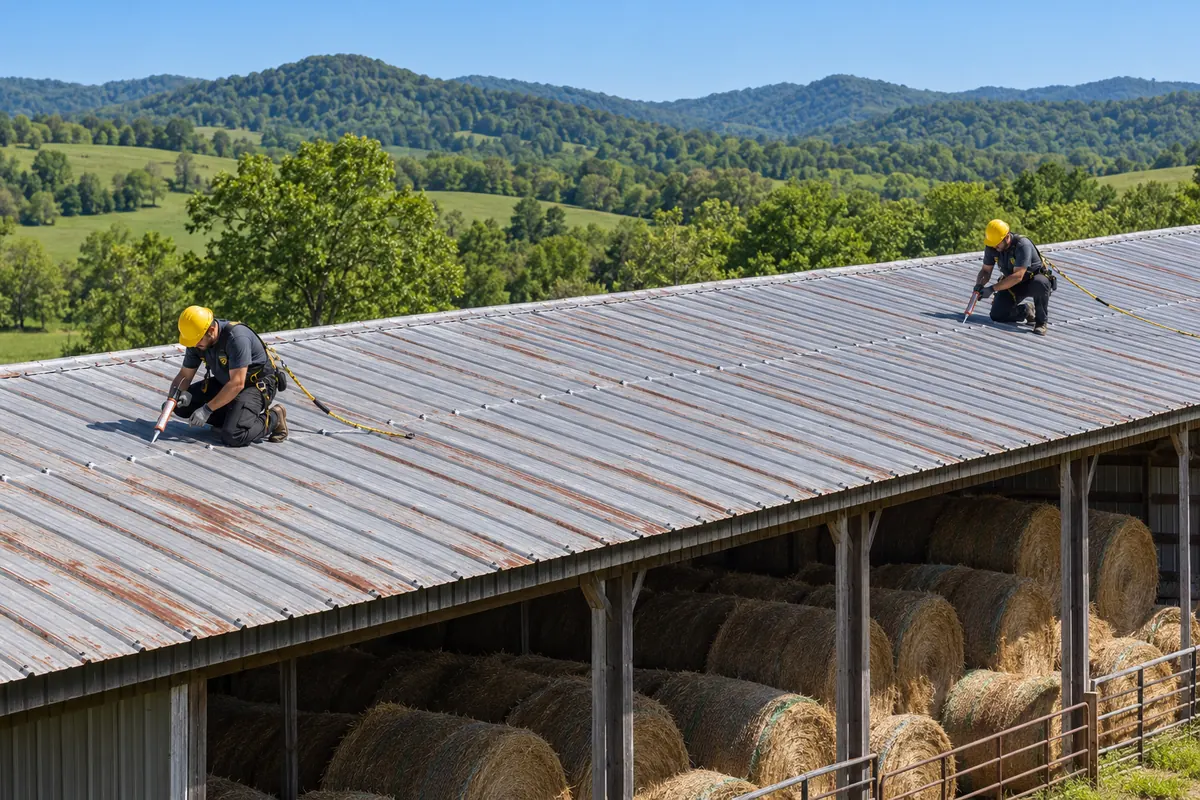
Laps, screws, ridge caps, boots, and curbs get fabric, tape, mastic, or new fasteners before the field coat covers them.
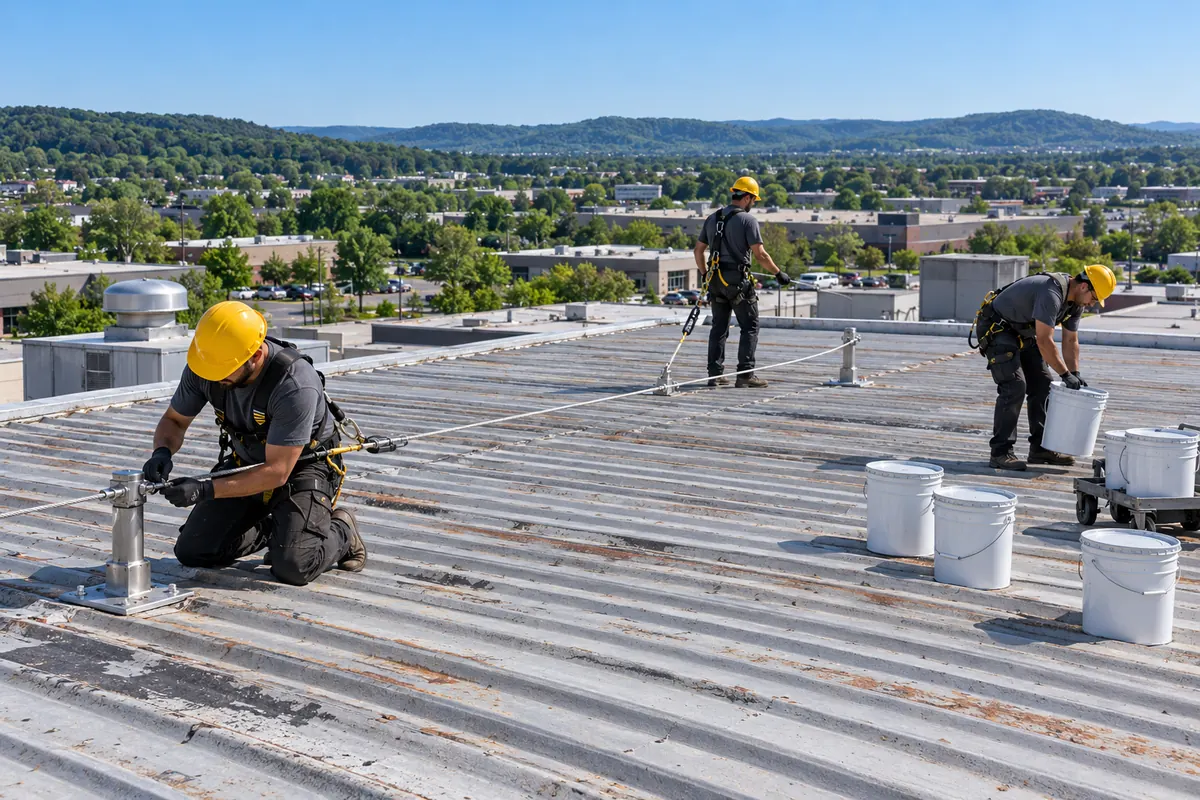
Rusted steel, galvanized panels, and old coatings each get the primer the system maker names, confirmed with adhesion test patches.
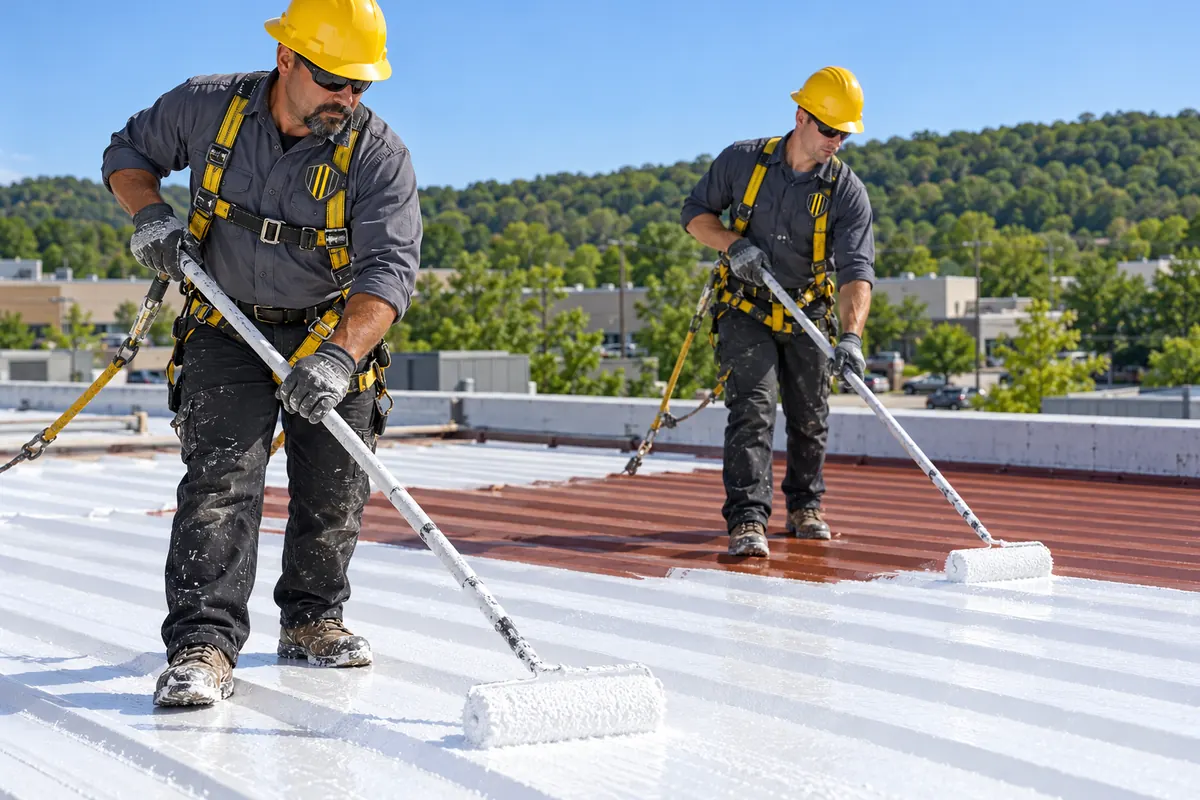
The chosen system goes on at its specified thickness, checked with a wet-film gauge, and you get the data sheets and photos when the roof is done.
Answers that apply across all five systems.
Only with detail work under it. Most metal roof leaks start at dried fastener washers, end laps, ridge cap closures, and flashing around curbs and pipes, and those spots get mastic or reinforced seam tape before any coating touches the open panel.
A coat rolled over open laps and backed-out screws cracks along those lines as the roof moves.
Skylight panels are masked, sealed around their edges, and left uncoated unless you want them blacked out. Yellowed or brittle panels are better replaced or covered with metal.
Gutters and downspouts get cleaned, checked for rusted seams, and resealed, with coating inside the gutter where seams weep and rotted sections replaced.
Silicone and acrylic are the two most common topcoats on commercial metal roofs, with urethane used mainly as a tough basecoat.
Silicone holds up to ponding but collects dirt; acrylic is low-odor and easy to recoat but softens under standing water; urethane resists foot traffic but smells stronger. Slope, ponding, and foot traffic decide.
Roof size, rust level, fastener count, and coating choice drive it most. Roof height and access set equipment needs, rusted-through panels add replacement, R-panel roofs carry thousands of screws, and rooftop units, skylights, and curbs add detail work.
Two roofs of the same size can differ widely once prep is uncovered, which is why we look before pricing.
It can. IRS Publication 946 lists roofs among qualified real property improvements to nonresidential buildings, and its 2026 figures put the maximum deduction at $2,560,000, phasing out above $4,090,000 of qualifying purchases.
Whether a given coating counts as an improvement or a repair is a tax question for your CPA.
Tell us the roof type and size, or call and we will help sort out which system fits.
Leave your name and number and we will call you about your commercial roof.
Or call now: (859) 204-8079