
Low-Slope Roofs · Erlanger, KY

Erlanger Silicone Roof Coating

Silicone roof coating for Erlanger roofs that hold water after rain. We inspect the low spots and laps first, then seal the details and spray one thick coat.

Roofer checking a metal panel lap with a flashlight while a property manager takes notes1Inspect The Roof
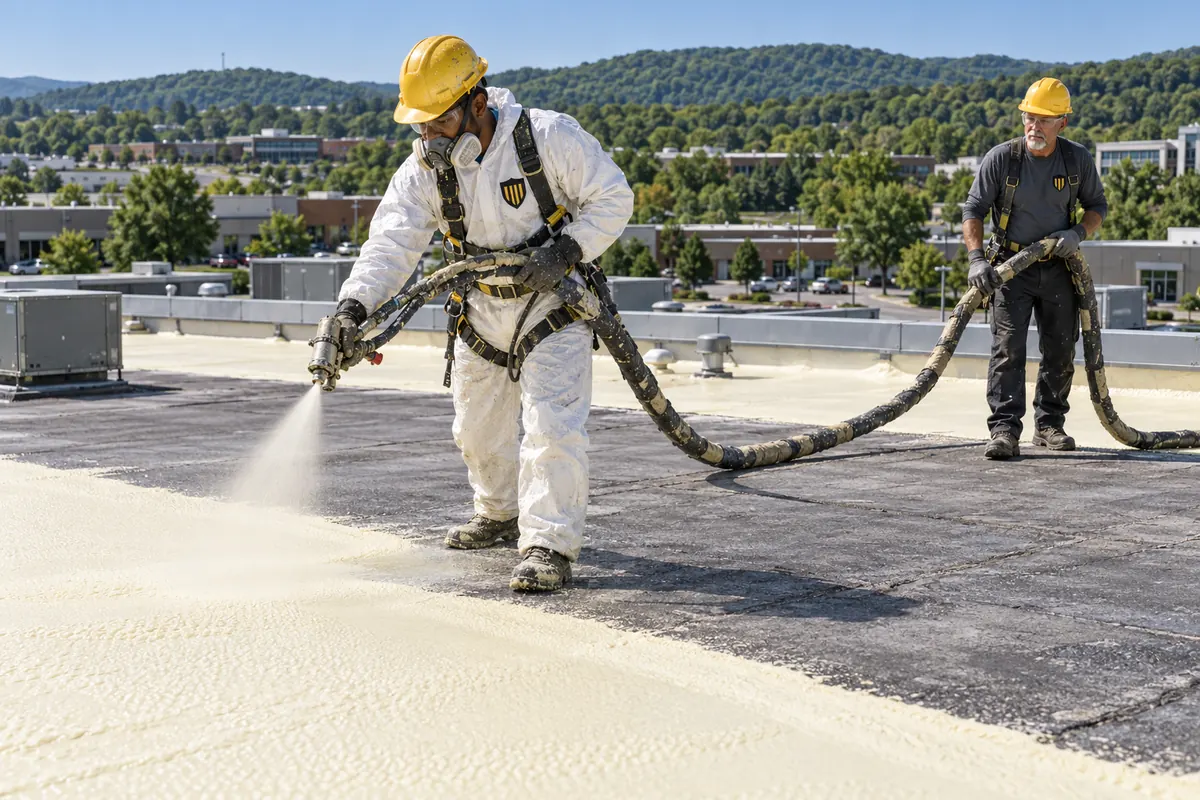
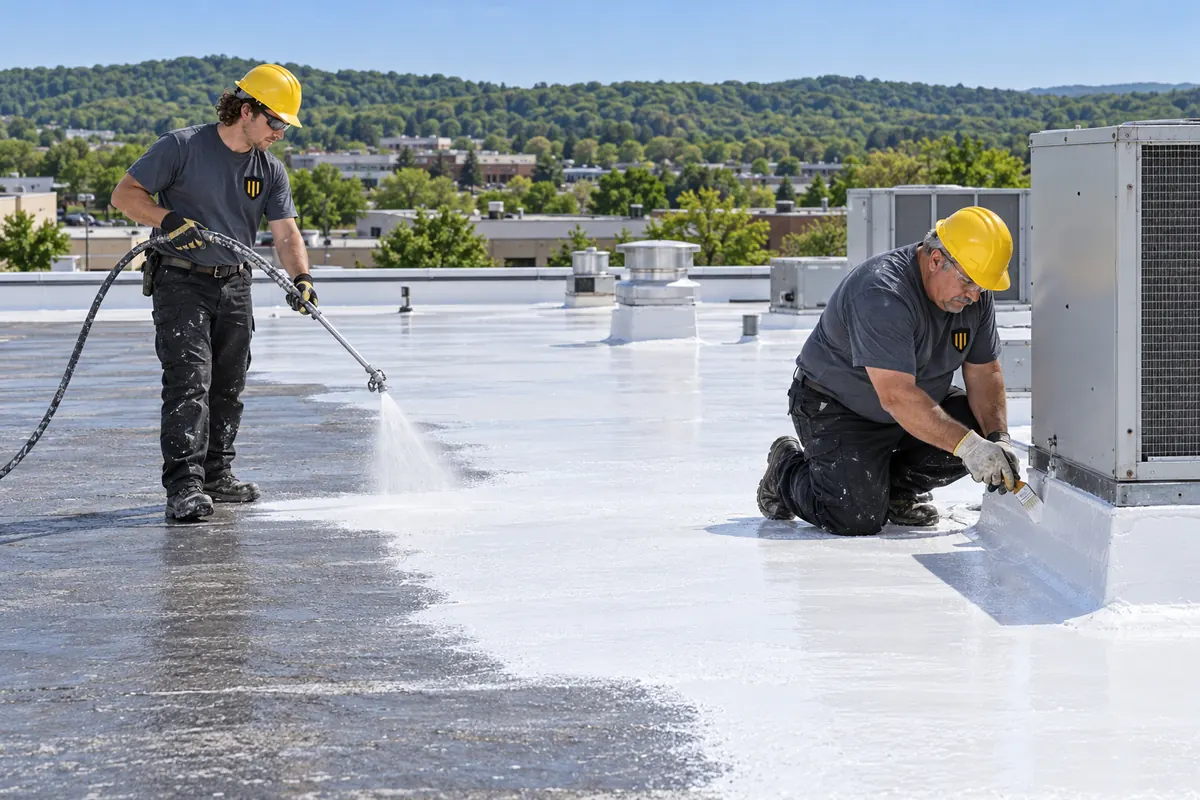
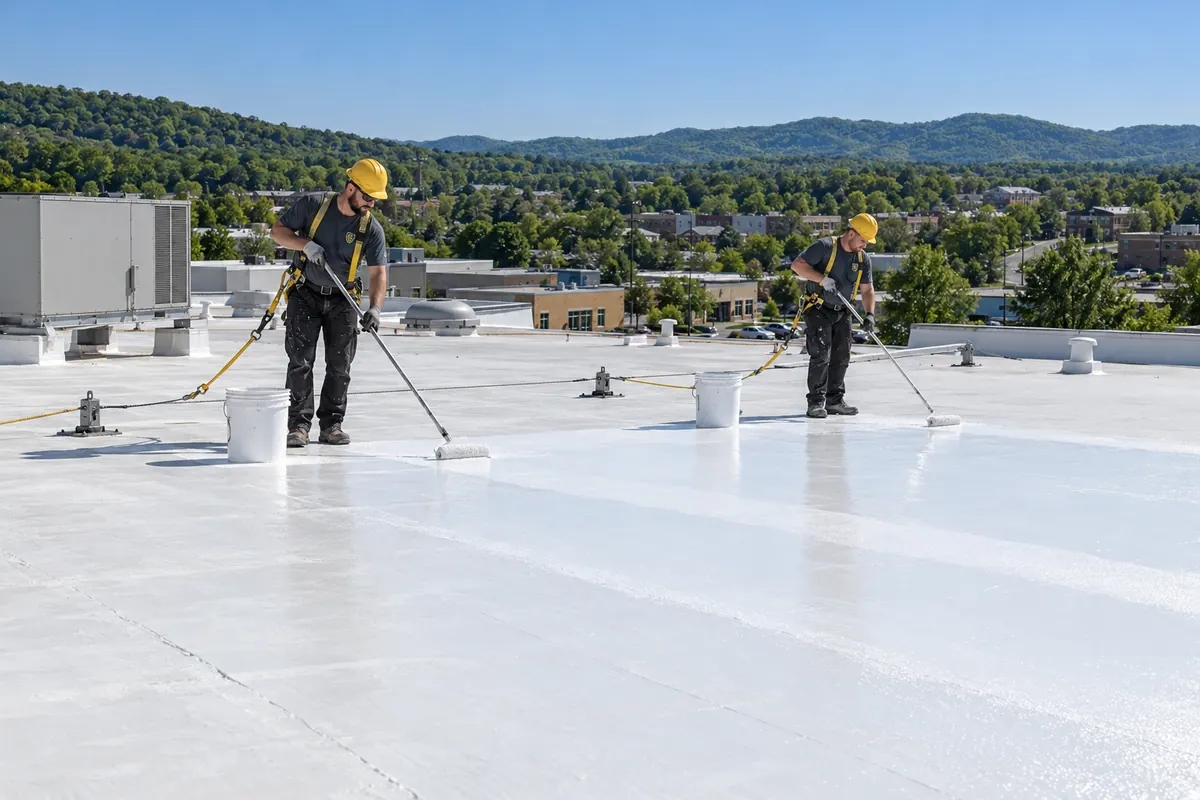
Roofer spraying silicone while another seals the base of a rooftop unit2Spray The Silicone

Silicone Job Facts

  • Built for roofs that pond
  • Laps taped before spraying
  • Moisture checked under the deck
  • One or two thick passes

Is This Roof A Fit?

Silicone suits low-slope roofs where water sits after a storm. The roof on the right has a problem a coating would seal in, so it needs work first.

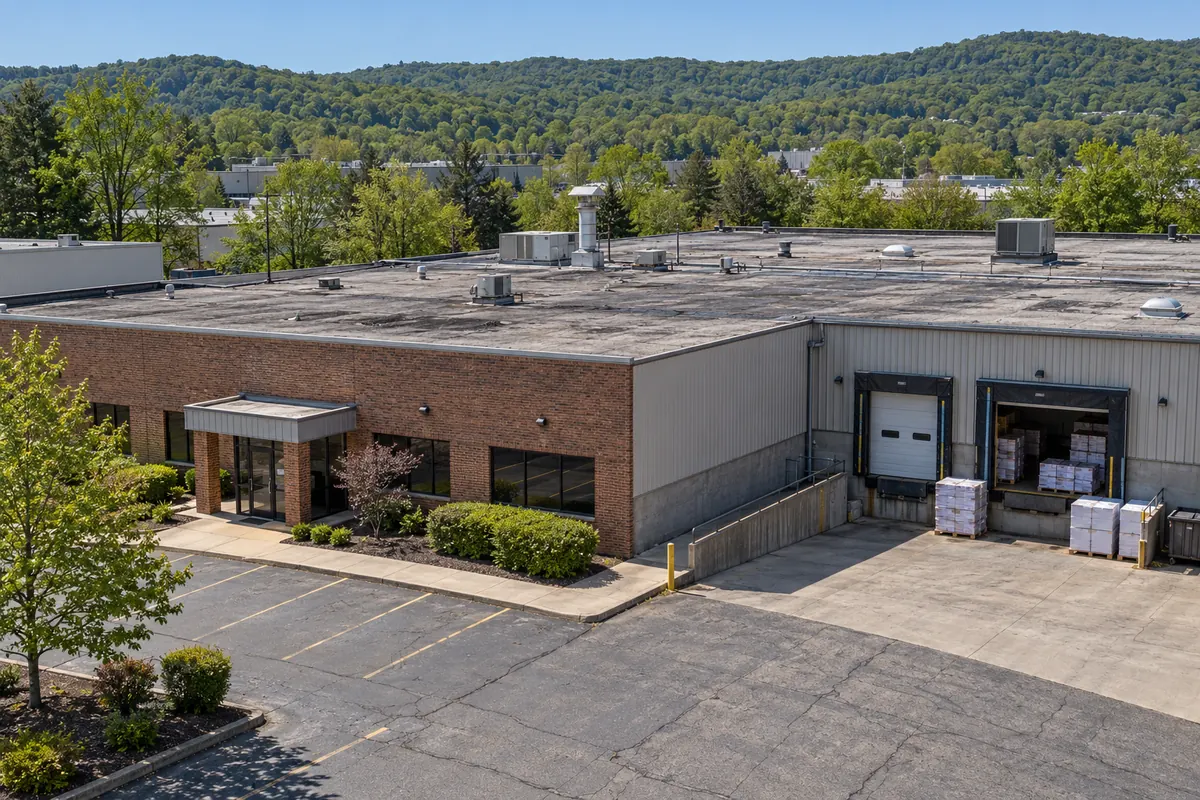
Brick office and warehouse building with a low-slope roof and loading docks
Ready For Silicone

Low Slope, Dry Underneath

Slope
Low-pitch metal or a flat deck
Water
Puddles at end laps or curbs
Insulation
Dry when checked from inside
Surface
Firm and cleanable
Plan
Tape laps, detail drains, spray
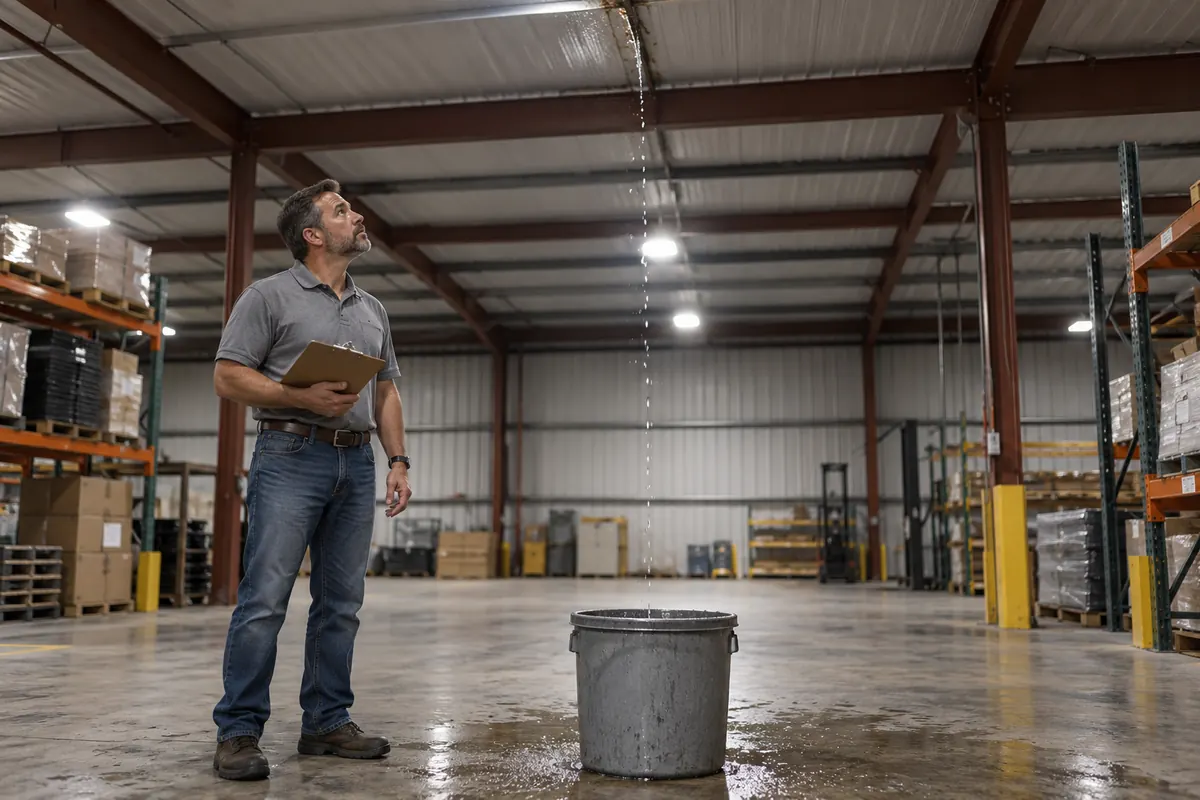
Building manager looking up at a roof leak dripping into a bucket in a warehouse
Fix It First

Wet Insulation Or A Sagging Deck

Slope
Low spots over sagging purlins
Water
Ponds that never dry out
Insulation
Soaked and feeding rust from below
Surface
Soft or rusted-through areas
Plan
Dry or replace, correct the low spots

Deep low points with heavy ponding are worth a drainage fix before the silicone goes on.

Silicone Roof Coating In Erlanger For Water That Stays Put

Low-slope roofs hold water in predictable places. Silicone is chosen for those spots, and each one gets detail work before the field coat.

End Laps On Long Runs

Water backs up where panels overlap downslope on a low pitch. Each end lap is cleaned, primed, and covered with fabric bedded in silicone.

Behind Rooftop Units

Curbs dam water on their upslope side, so a pond forms behind most units. Curb flashing is sealed and the base gets a heavier coat.

Drains And Gutters

Clogged gutters and scuppers back water onto the panels. We clear them, reseal rusted gutter seams, and coat inside the gutter where seams weep.

Pipe And Duct Penetrations

Boots crack before the rest of the roof does. Each penetration gets a brushed-in silicone detail, plus fabric where the flashing has pulled away.

Insulation Under The Deck

Silicone sheds water from above but would seal moisture in below. Wet insulation is found from inside and dried or replaced before we spray.

Commercial Roof Coating Options for Erlanger

Silicone is one of four topcoats we put on low-slope commercial roofs. Here is how they compare where water sits.

OptionBest OnWatch ForRecoat With
SiliconePonding areas and low pitchDirt dulls the white surfaceSilicone or a bonding primer
AcrylicRoofs that drain within a daySoftens under standing waterMore acrylic
Urethane BasecoatWalkways and service pathsOdor near air intakesThe matching topcoat
Spray Foam And SiliconeRoofs that need insulation and slopeDry, calm weather to spraySilicone over the foam

Roofs that drain within a day and see little foot traffic can sometimes take acrylic roof coating instead.

Benefits of Coating Your Roof

On a low-slope roof, these benefits depend on finding the wet spots first. With the deck dry, silicone gives you all four.

Holds Up To Ponding

Silicone resists standing water better than acrylic, so puddles behind curbs and at end laps sit on a coating made to handle them.

Cheaper Than A Tear-Off

Spraying over a firm low-slope roof skips removing the old roof and its insulation, which is why it tends to cost less than a re-roof.

Reflects Summer Sun

Bright white silicone reflects sunlight and lowers the roof temperature. Dirt pickup cuts reflectance over time, so the aged rating matters most.

Fewer Days On The Roof

Applied at the maker's thickness, silicone goes on in one or two passes, so the field coat takes fewer days than multi-coat systems.

Puddles Still There Two Days After Rain?

Note where the water sits and how deep it gets. Call us, and we will tell you whether silicone or a drainage fix comes first.

Silicone Coating, Step By Step

From the first moisture check to the last pass, these are the five steps on every low-slope roof we coat with silicone.

  1. Roofer and building owner walking a rusted exposed-fastener metal roof

    Inspect Your Roof

    We map where water sits after rain, check end laps and curbs, and look at the insulation from inside. Wet areas are marked before any prep starts.

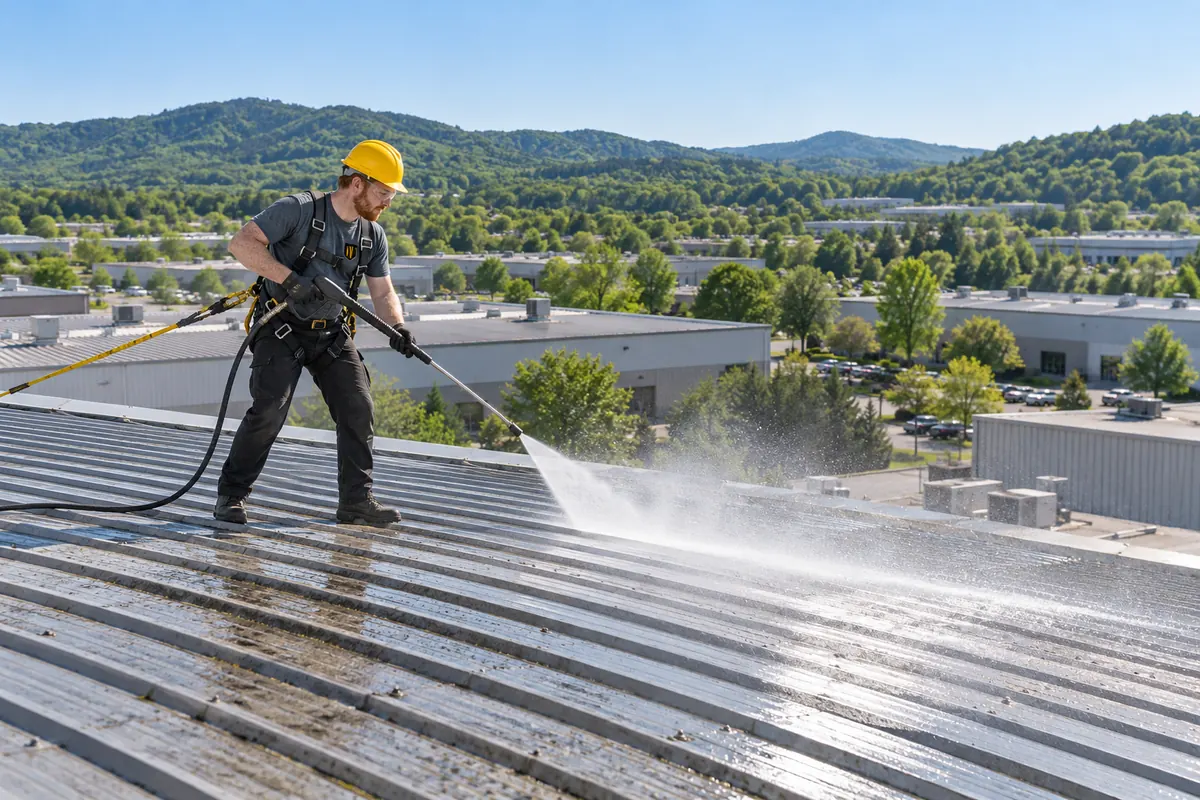
  2. Roofer pressure washing a metal roof before primer goes on

    Wash And Dry

    Dirt and chalked paint come off with a pressure washer and an approved cleaner. The roof then dries fully, since silicone sticks poorly to damp panels.

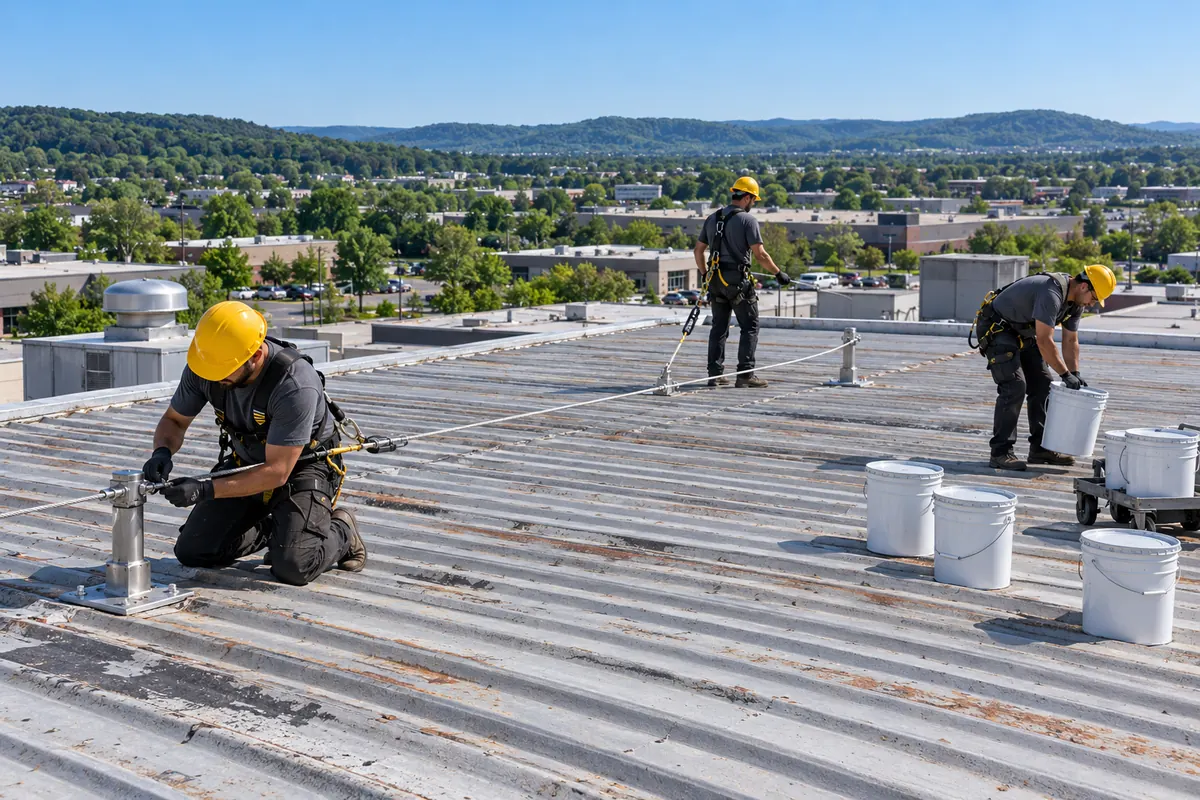
  3. Roofers sealing fasteners and pipe boots with pails of coating staged on a metal roof

    Detail Laps And Boots

    End laps, side laps, pipe boots, and curb bases get fabric or seam tape set in silicone. Primer goes on any bare or rusted steel.

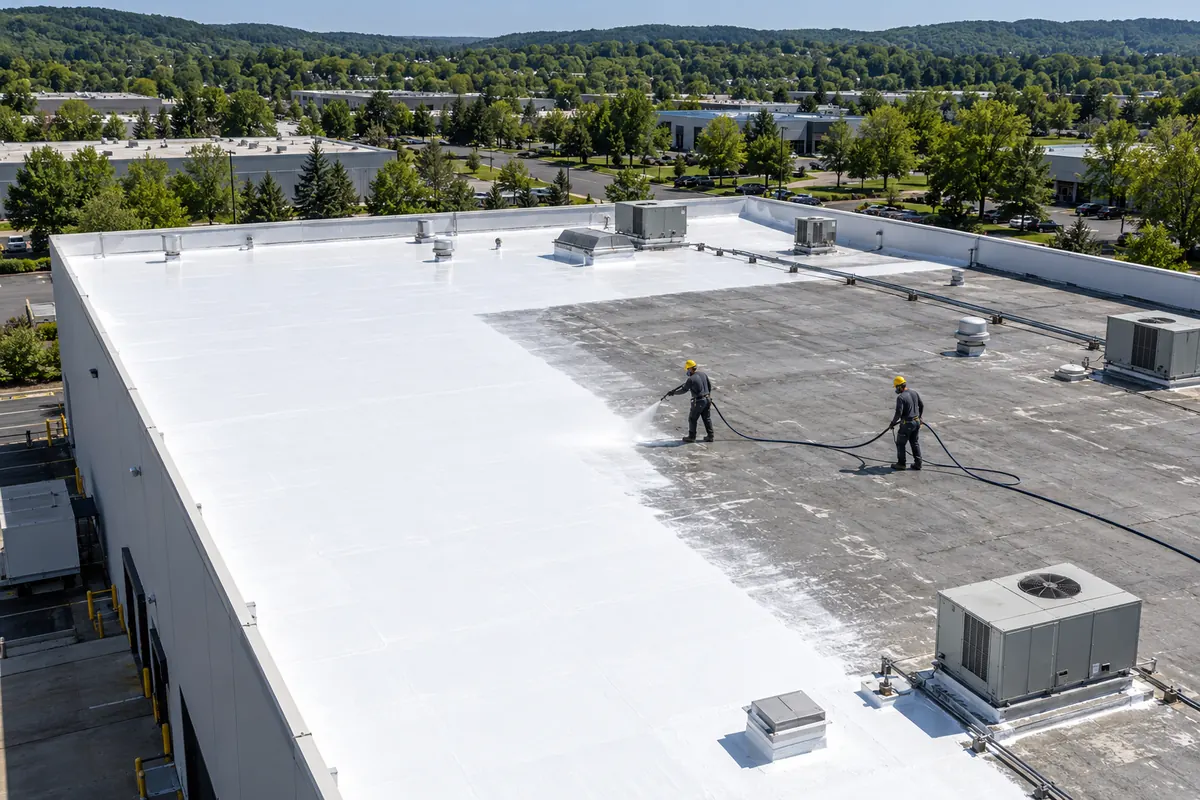
  4. Aerial view of a flat commercial roof half covered in fresh white silicone

    Spray The Field Coat

    Silicone is sprayed at the thickness on the product data sheet and measured with a wet-film gauge across the roof. Heavy ponding areas get extra build.

  5. Roofer showing a property manager roof photos on a tablet beside a work truck

    Review The Work

    Photos of the detail work, the product data sheets, and the Cool Roof Rating Council listing go to you after a final walk of the roof.

Other Coatings For Low-Slope Roofs

Silicone covers most ponding roofs. These services fit the cases where a different system works better.

Two roofers rolling white acrylic coating across a low-slope roof

Acrylic Roof Coating

Roofs that drain within a day and sit near occupied offices can take low-odor acrylic, which recoats easily with more acrylic.

Acrylic roof coating in Erlanger

Silicone Roof Coating Questions

Answers about ponding, laps, reflectance, and rain after a silicone job.

  1. Is silicone the right pick for a low-slope metal roof that ponds?

    Usually, yes. Silicone resists standing water better than acrylic, which is why low-pitch standing seam and R-panel roofs that hold water at end laps, drains, and curbs get it.

    The trade-offs: dirt dulls the white surface, later recoats need silicone or a special primer, and it gets slick when wet, so walkway pads help near units.

  2. How are panel laps, end laps and ridge caps sealed?

    With fabric or seam tape bedded in coating, before the field coat. Each joint is cleaned and primed, reinforced, then brushed over so the edges lie flat.

    End laps on long low-slope runs matter most, since wind and capillary action pull water in there. Missing ridge-cap closures are replaced before the cap is sealed.

  3. Does a white coating keep a metal building cooler in summer?

    White reflects more sunlight than faded metal, so the roof surface runs cooler on sunny days. How much of that reaches inside comes down to insulation, ventilation, and how the building is used.

    The Cool Roof Rating Council directory lists solar reflectance for rated products, and the aged figure matters more than the new one. Energy bill changes vary by building, so we promise no fixed savings.

  4. How soon can a freshly coated metal roof handle rain?

    Once the coating skins over and partly cures, a window set by the product data sheet and by the day's heat and humidity. Many silicones shrug off light rain quickly.

    We start early, keep coating off the panels when rain is forecast inside the cure window, and measure wet-film thickness so no area goes on thin or puddled.

  5. Can silicone go over an old acrylic or asphalt coating?

    Often, after testing. A clean, well-adhered acrylic coating can take silicone once a test patch shows good adhesion with the maker's primer.

    Asphalt-based coatings can bleed through a white topcoat, so they need a bleed-blocking primer or removal. Peeling layers come off first in every case.

  6. Will silicone fix a roof that holds water for days?

    It handles the water, but deep ponds over sagging purlins point to a framing or drainage problem that a coating leaves in place.

    We check the purlins from inside, and where low spots run deep, we fix the framing or add drainage before spraying. Shallow puddles that dry within a couple of days are what silicone is made for.

Get A Price On Silicone For Your Roof

Describe where water sits on the roof and how big the building is, or call and walk us through it.

Call Us (859) 204-8079