Foam Over Metal · Erlanger, KY

Erlanger Spray Foam Roofing

Spray foam roofing in Erlanger adds insulation and buries leaking fastener lines. We inspect the roof and confirm it is dry, then spray foam and topcoat it.

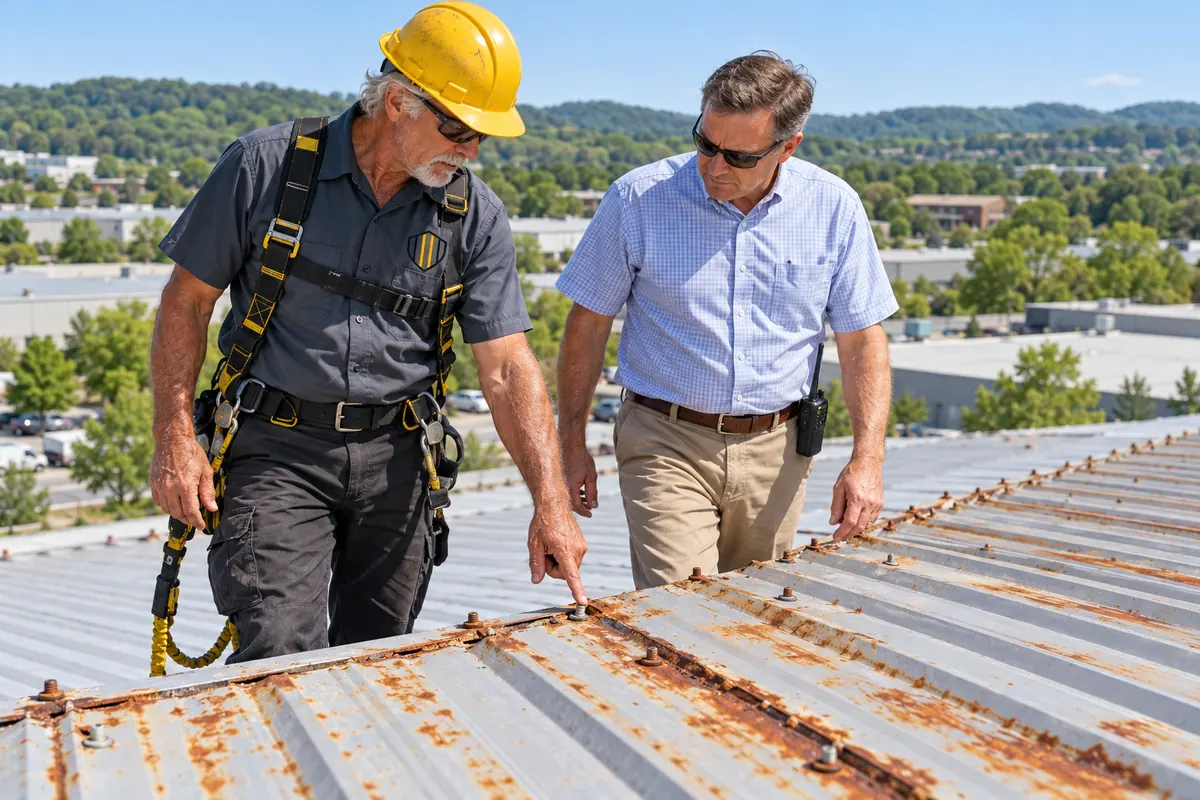
Roofer and building owner walking a rusted exposed-fastener metal roof1Inspect The Roof
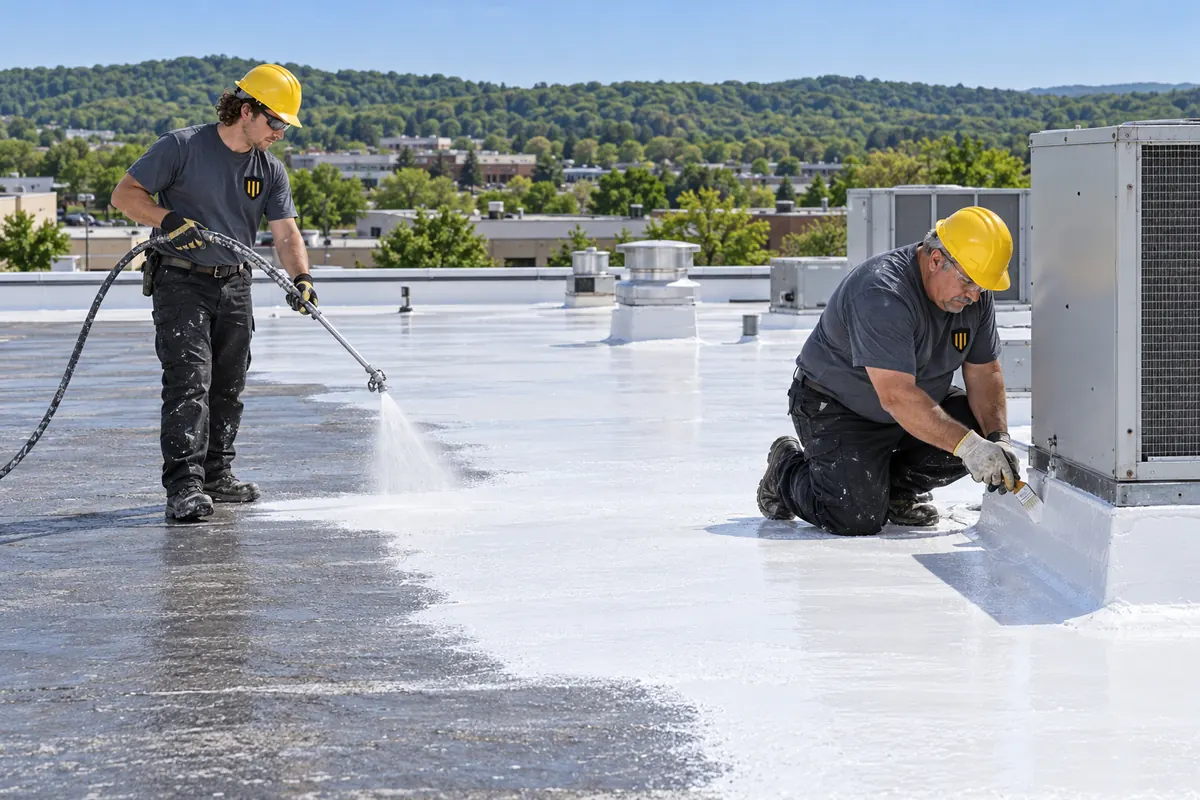
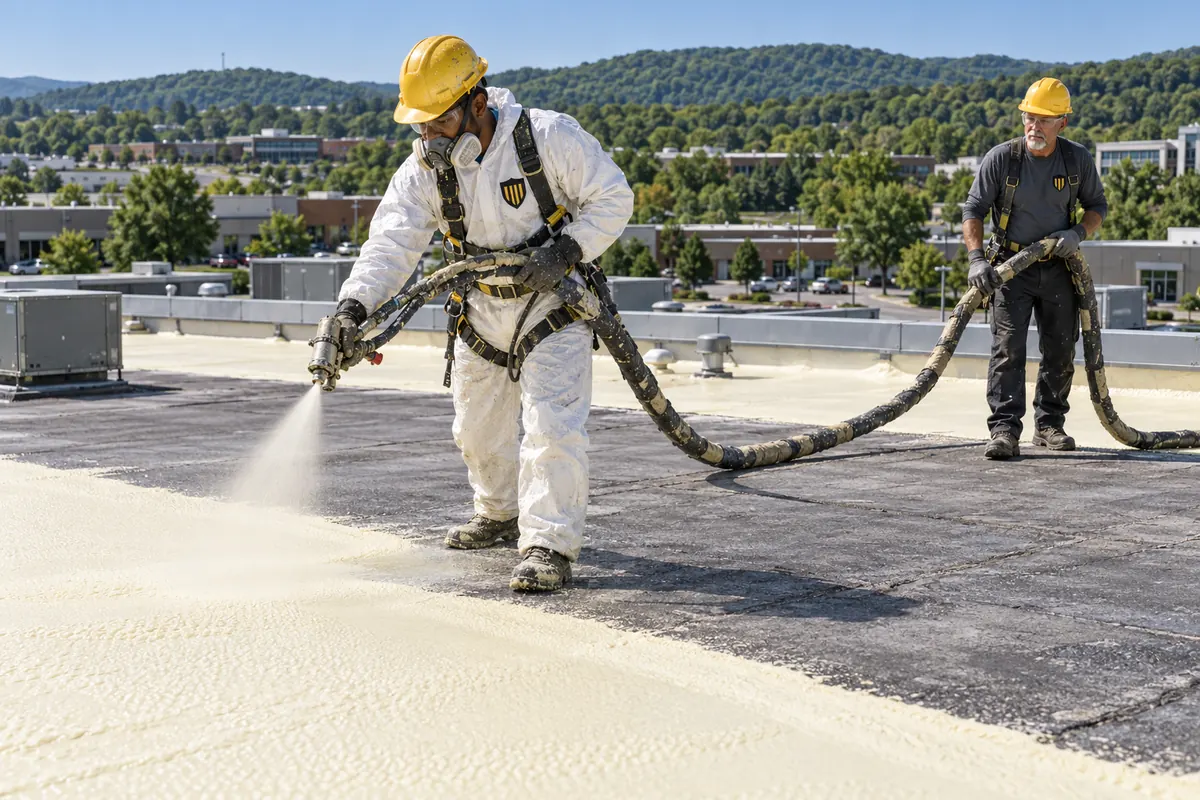
Roofer in a white suit spraying foam over a flat roof deck2Spray The Foam

Spray Foam Facts

  • Insulation added on top
  • Fastener lines buried
  • Dry panels confirmed first
  • Silicone or acrylic topcoat

Is This Roof A Fit?

Foam works over dry, clean roofs on buildings that need insulation. The roof on the right needs repairs first, or a coating-only plan.

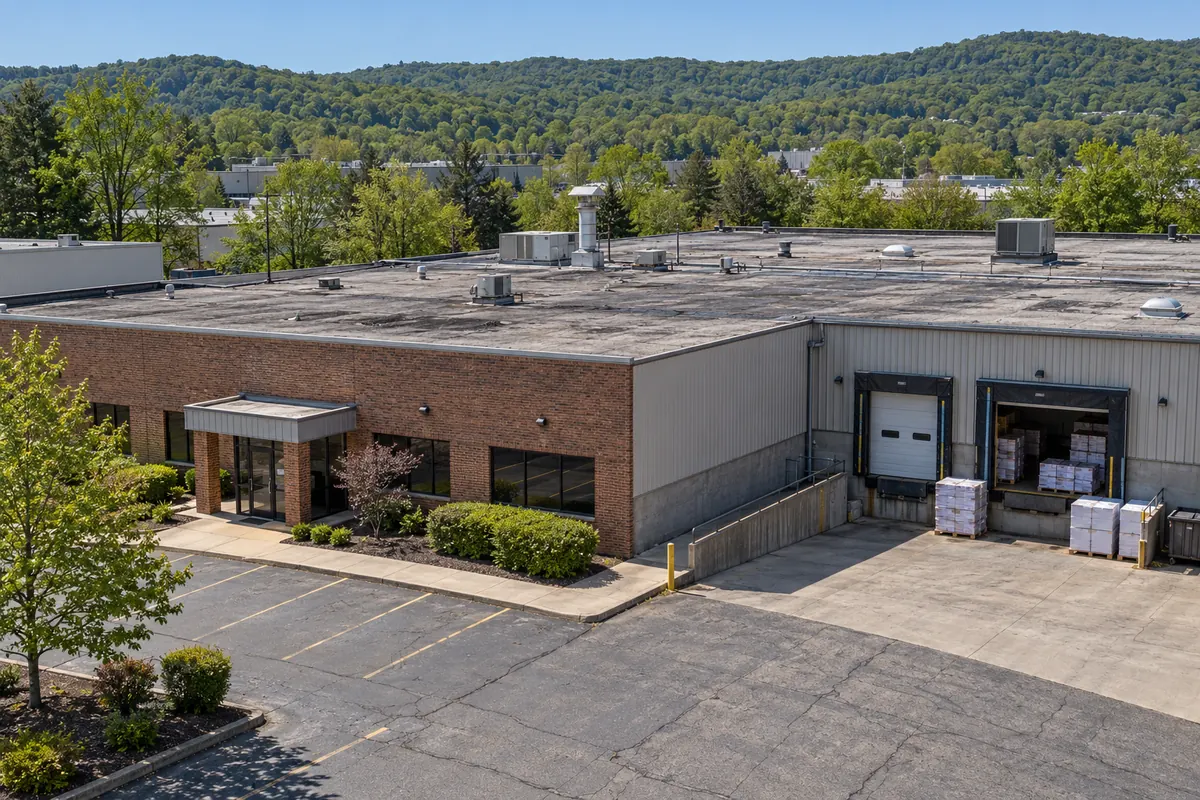
Brick office and warehouse building with a low-slope roof and loading docks
Ready For Foam

Dry Roof, Space Needs Insulation

Inside
Offices or shops that swing hot and cold
Panels
Firm, clean, and dry
Insulation
Dry when checked from below
Edges
Room to raise trim and gutters
Plan
Prep, spray foam, topcoat
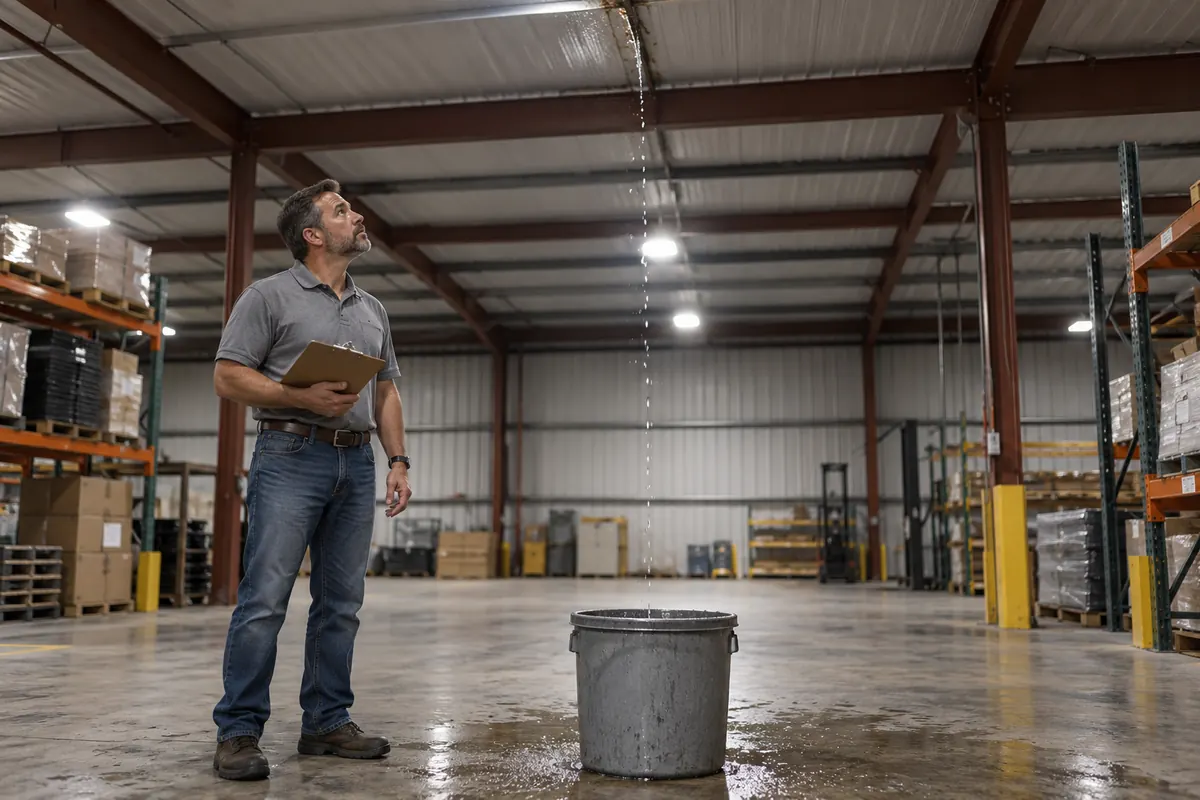
Building manager looking up at a roof leak dripping into a bucket in a warehouse
Repair Or Coat Instead

Wet Roof Or Unheated Building

Inside
Unheated storage space
Panels
Heavy rust or holes
Insulation
Wet and dripping into the space
Edges
Tight against walls and doors
Plan
Repair first, or coat only

Unheated storage with a firm roof usually needs only a metal roof coating.

Spray Foam Roofing In Erlanger Raises Every Edge

Foam adds thickness across the whole roof. These five parts of the building change when the roofline rises, and each is planned before spraying.

Eaves And Gutters

Foam raises the roof surface at the eave, so gutters are reset or extended and drip edges adjusted to keep water landing in them.

Rooftop Unit Curbs

Curbs that sit low after foam goes down need extensions, so units stay above the new surface and flashing has room to turn up.

Rake And Ridge Trim

Trim along the rake and ridge gets taller pieces or new closures where foam meets it, so wind finds no loose edge to catch.

Pipes And Vents

Pipe boots and vent stacks get foam built up around them, then topcoat brushed in, which replaces the cracked boots older roofs carry.

Insulation Below

Interior insulation has to be dry before foam seals over the panels. Wet batts are found from inside and dried or pulled first.

Commercial Roof Coating Options for Erlanger

Foam is one of four ways to treat an aging metal or flat roof. The table shows where each one fits.

OptionBest OnWatch ForTopcoat
Spray Foam Plus SiliconeLow-slope roofs needing insulationDirt pickup on white siliconeSilicone
Spray Foam Plus AcrylicPitched sections that drainCure needs warm, dry daysAcrylic
Metal Coating OnlyUnheated storage and shopsFastener work on every screwAcrylic or silicone
Silicone Coating OnlyPonding roofs with dry insulationAdds no insulationSilicone

Both topcoats shield the foam from sunlight, which breaks down bare foam over time.

Benefits of Coating Your Roof

Foam earns its place when a building needs insulation and a new roof surface at the same time.

Insulation On Top

Foam adds insulation above the deck, which helps flex buildings whose office space swings hot in summer and cold in winter.

Fasteners Buried

Every screw row and lap disappears under one continuous layer of foam, so washers that dry out later stay covered.

Low Spots Evened Out

Thicker foam in low areas evens out the surface and helps water move toward the gutters instead of sitting on the roof.

Skips The Tear-Off

Spraying over a firm, dry roof avoids removing panels and hauling them away, which tends to cost less than a new roof.

Office Too Hot In July And Cold In January?

Foam over the roof can help with that. Call us with the building size and what sits inside, and we will tell you if foam or a plain coating fits better.

How A Foam Roof Goes On

Five steps over one or more dry, calm days. Weather limits are stricter for foam than for coating alone.

  1. Roofer checking a metal panel lap with a flashlight while a property manager takes notes

    Inspect Your Roof

    We check panel condition, probe for wet insulation from inside, and measure edge, curb, and gutter heights, since foam will raise all of them.

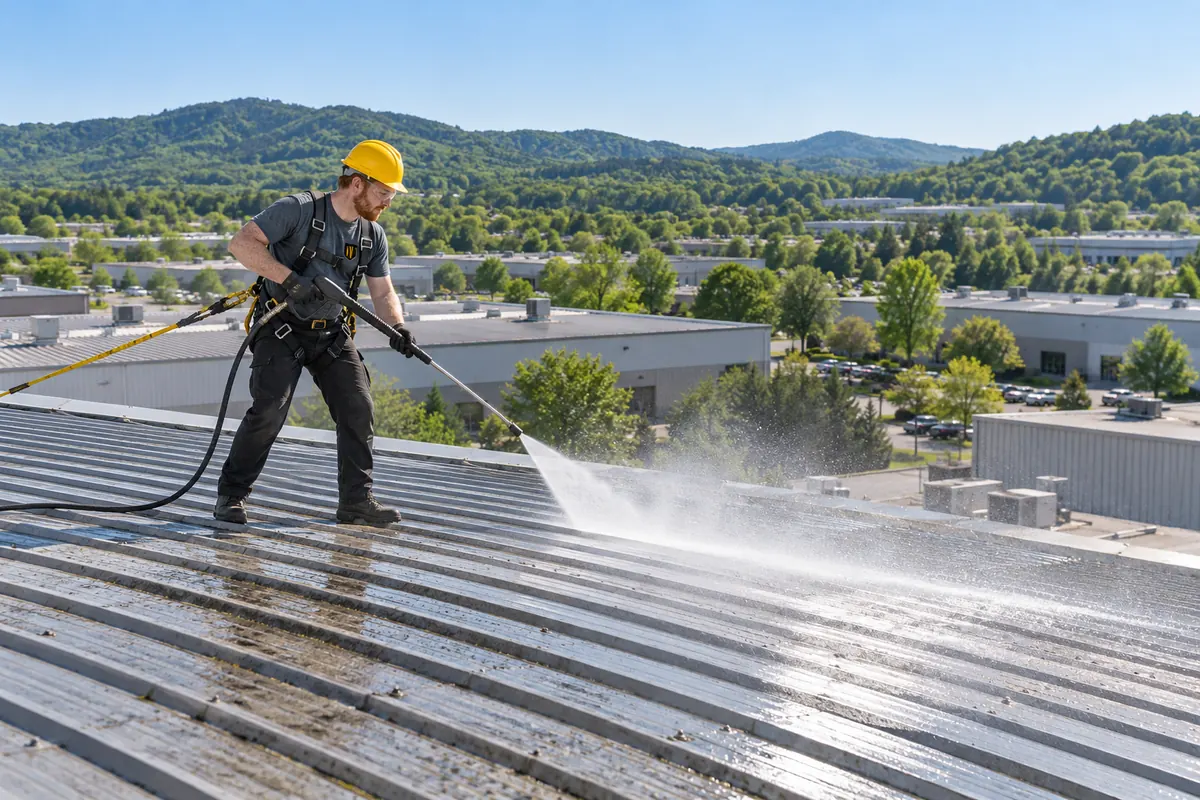
  2. Roofer pressure washing a metal roof before primer goes on

    Clean And Dry The Panels

    Pressure washing removes dirt and loose rust, and the roof dries completely. Foam needs clean, dry metal to stick.

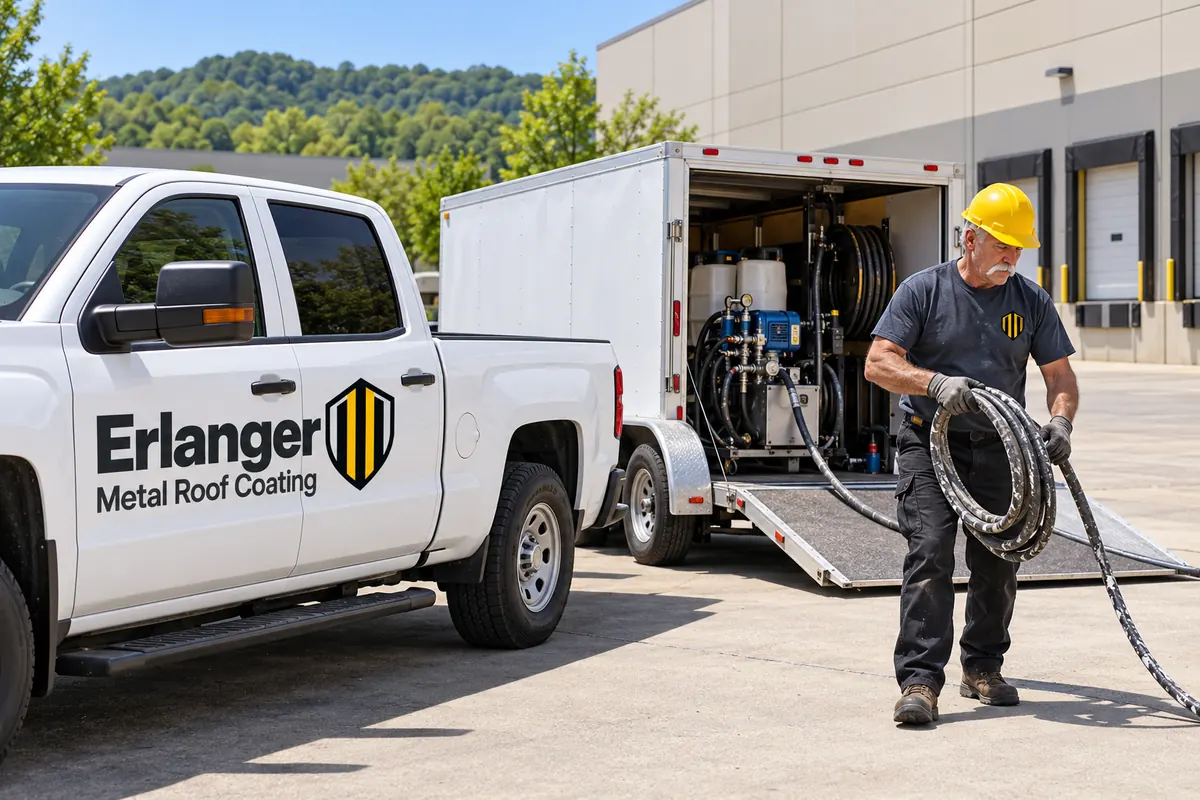
  3. Roofer coiling spray hose beside a coating rig trailer at a loading dock

    Mask, Stage, And Spray

    Vehicles, walls, and rooftop units near the work are covered, the rig is staged at the building, and foam is sprayed in calm weather to the planned thickness.

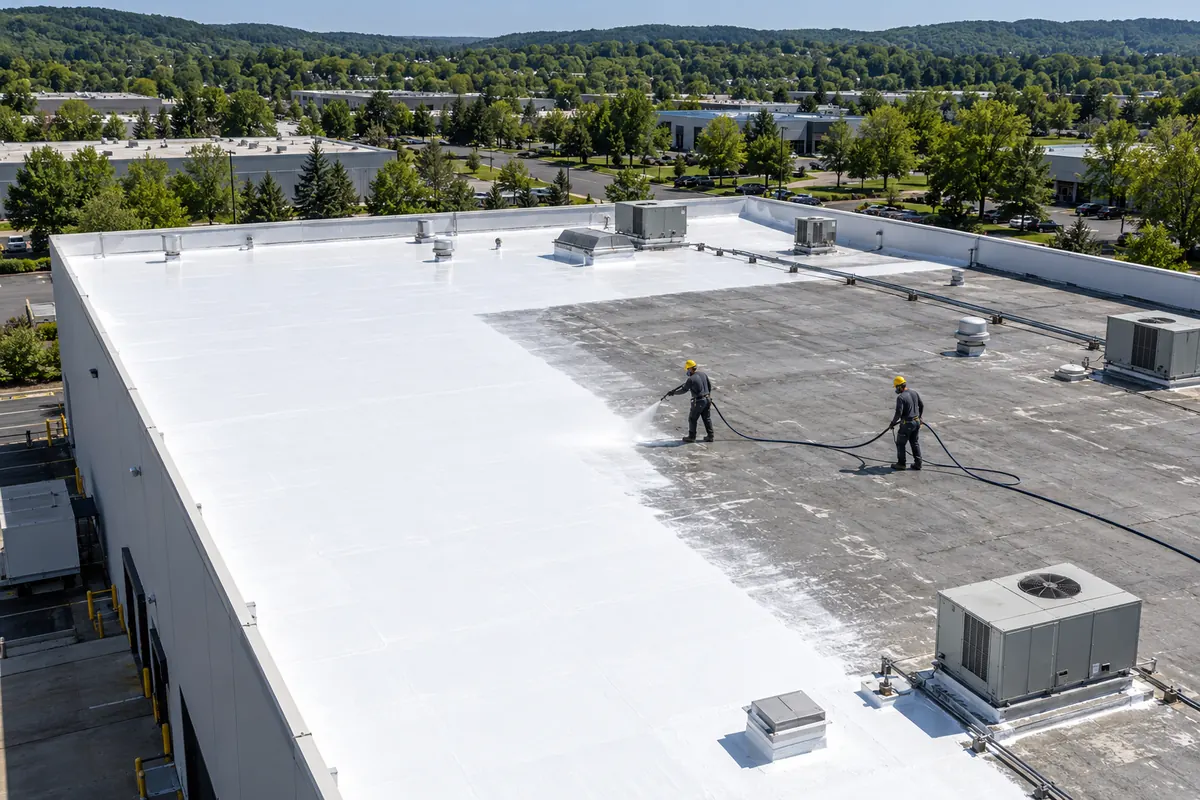
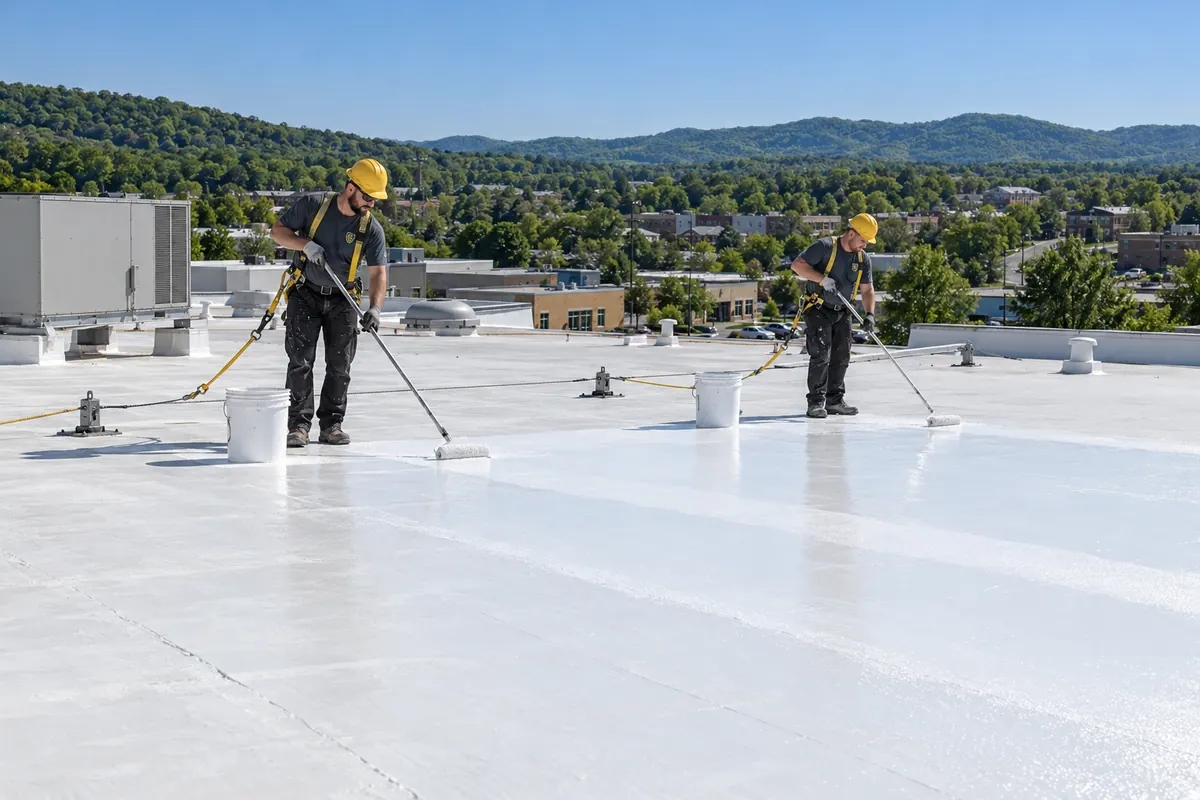
  4. Aerial view of a flat commercial roof half covered in fresh white silicone

    Topcoat The Foam

    Silicone or acrylic goes over the foam soon after spraying, sealing it from sunlight. Coverage is checked for pinholes.

  5. Roofers sealing fasteners and pipe boots with pails of coating staged on a metal roof

    Finish Edges And Curbs

    Gutters, trim, and curb flashing are set to the new height, and the crew walks the roof for thin spots before leaving.

Coating Options Without Foam

Plenty of metal roofs need sealing without added insulation. These coatings handle that.

Spray Foam Roofing Questions

Answers about foam over metal, weather, thickness, and the utility around Erlanger.

  1. Should spray foam go over an old metal roof?

    When the building needs insulation and a more even surface, yes. When it only needs waterproofing, a coating alone fits better.

    Foam fills the flutes of R-panel, buries the fasteners, and then gets a coating layer for protection. The panels have to be dry and clean, so heavy rust or wet insulation gets repaired first.

  2. Which electric utility serves the Erlanger area, and are there cool roof rebates?

    Duke Energy Kentucky serves Kenton County, along with Boone, Campbell, Gallatin, Grant, and Pendleton counties, according to its annual report to the Kentucky Public Service Commission.

    Business programs change from year to year, so check its current offers for roofing or insulation measures and ask whether foam or reflective coatings qualify. Keep product data sheets and rating listings for any paperwork.

  3. How thick is a spray foam roof?

    Thickness is set for each roof by the insulation the building needs and the slope the low spots need, then confirmed as the foam goes on.

    Thicker foam in low areas helps water move toward the gutters. The topcoat goes on at the thickness its maker lists for use over foam.

  4. What weather does spray foam need?

    Dry, calm days. Foam needs dry panels and low wind, because overspray drifts and moisture weakens adhesion.

    Morning dew has to burn off before spraying starts, and the topcoat follows soon after so the foam is never left bare in sunlight.

  5. Will foam stop condensation drips inside a metal building?

    Foam over the panels keeps the steel warmer, which cuts down on drips where warm, moist inside air meets cold metal.

    We still check whether drips are leaks or condensation first, since the fixes differ: leaks need sealing, while condensation needs insulation and ventilation.

Find Out If Foam Fits Your Building

Tell us the building size and how the space is used, or call to talk it through.

Call Us (859) 204-8079