Metal Panel Roofs · Erlanger, KY

Erlanger Commercial Metal Roof Coating

Commercial metal roof coating in Erlanger starts on the panels: we inspect every lap and screw, then prime rust, seal the details, and coat the whole roof.

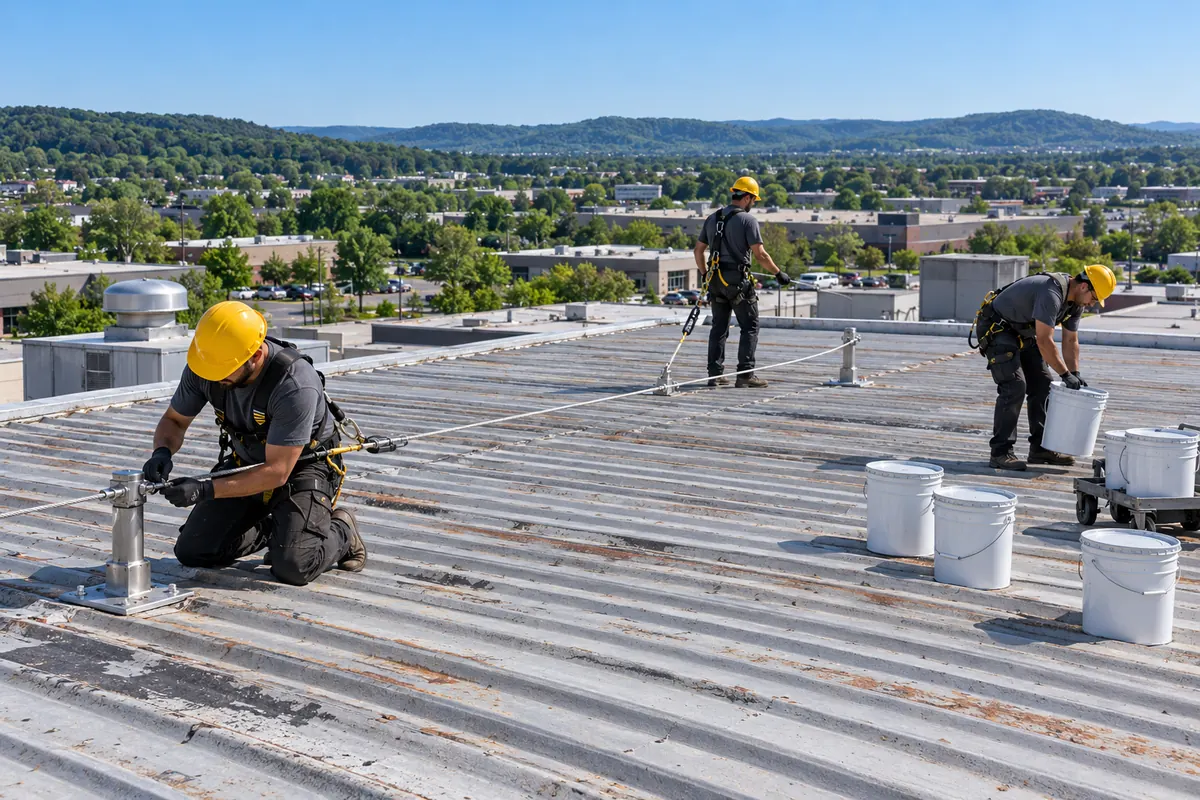
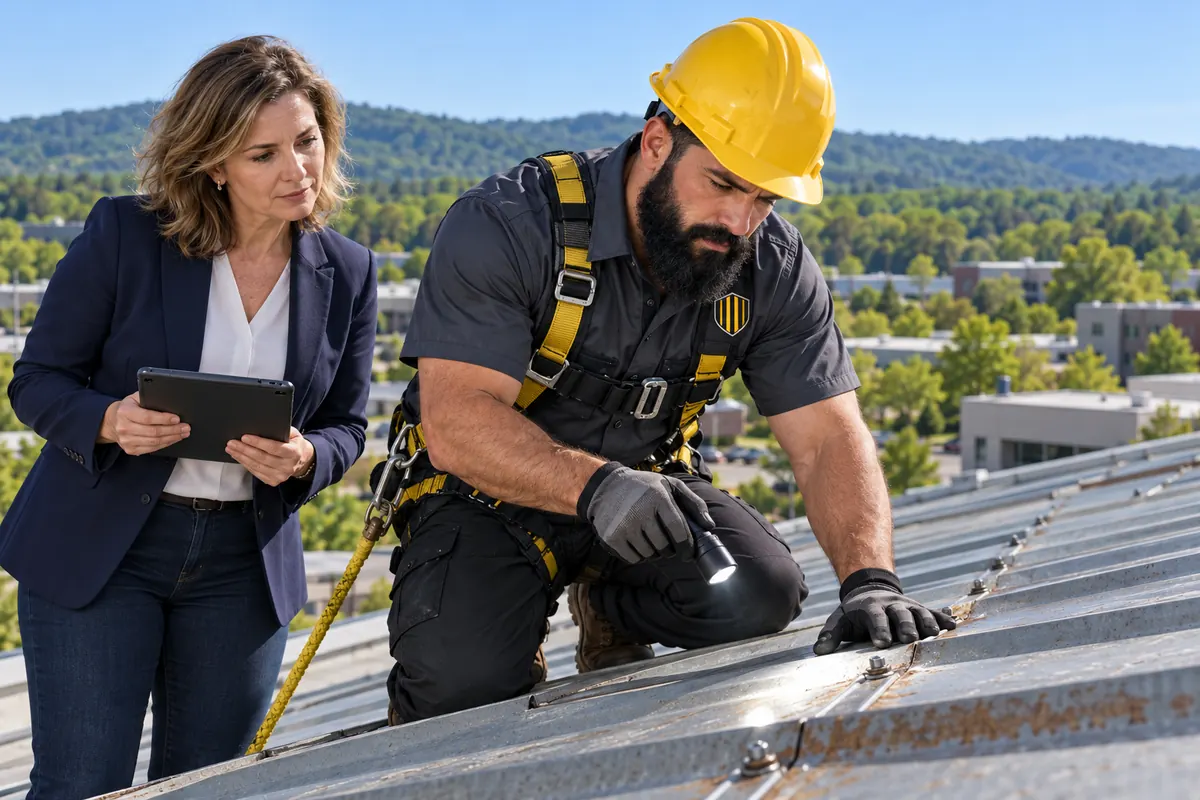
Roofer checking a metal panel lap with a flashlight while a property manager takes notes1Inspect The Roof
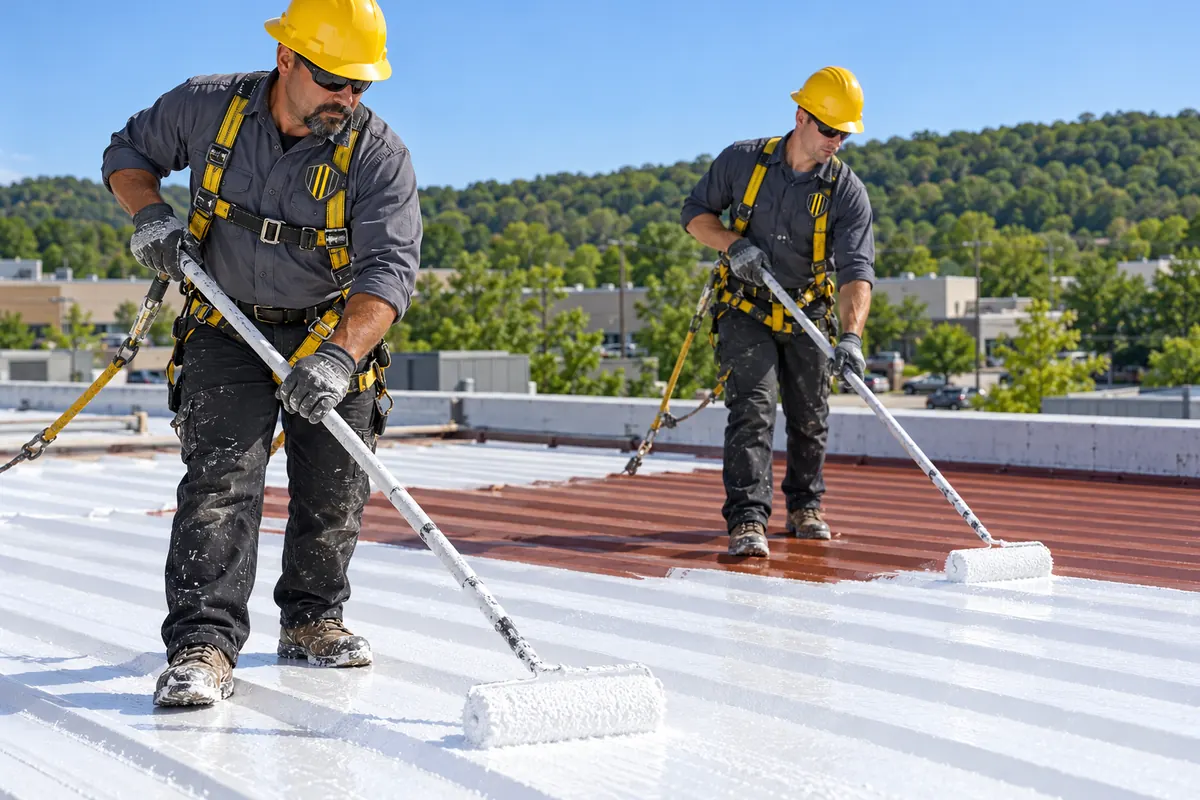
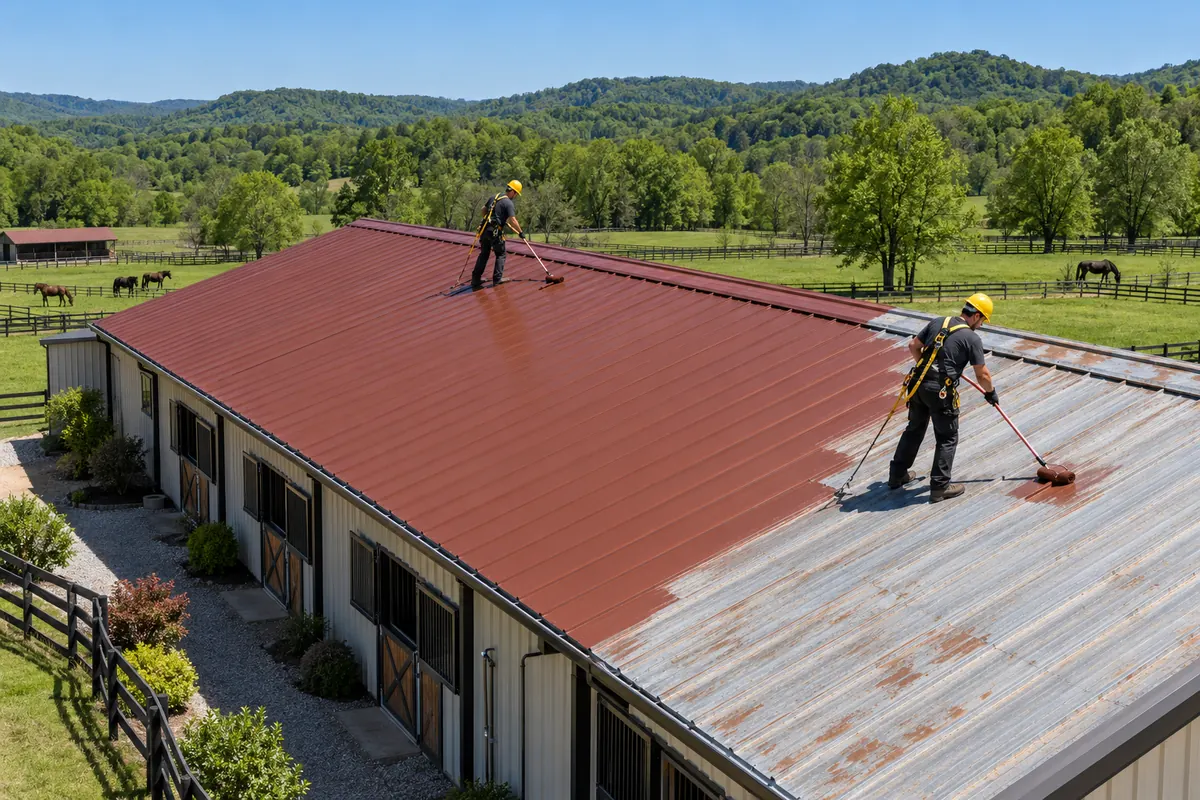
Crew coating a rusted metal barn roof with red coating in long passes2Coat The Panels

Metal Roof Prep Facts

  • Every screw checked or replaced
  • Red and white rust primed
  • End laps reinforced with fabric
  • Adhesion test before full coat

Is This Roof A Fit?

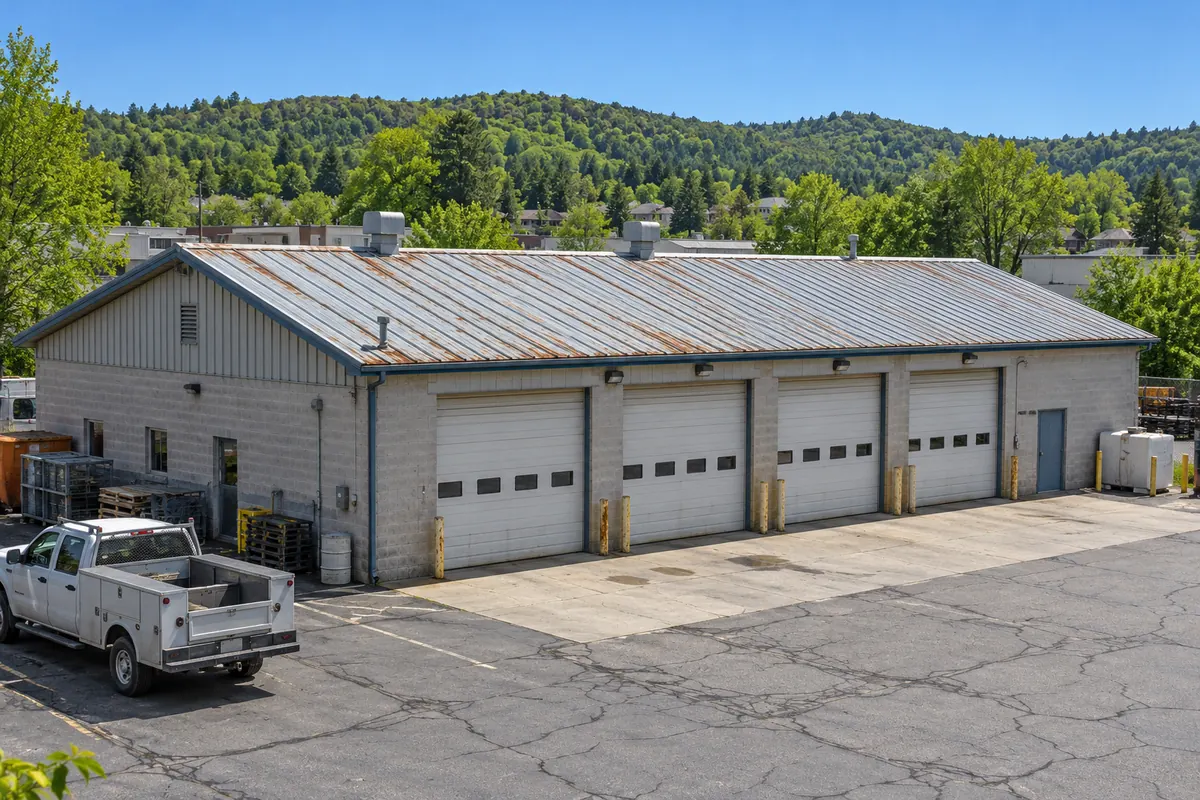
Most exposed-fastener and standing seam roofs we see around Erlanger fall on the left. The right-hand roof needs panel work before a coating makes sense.

Metal service building with four overhead doors and a weathered panel roof
Coat This Roof

Firm Panels, Light Rust

Panels
Solid underfoot, no daylight from inside
Rust
Bloom or tight rust that scrapes clean
Screws
Backed out, or washers dried and split
Purlins
Straight between supports
Plan
Prep, prime, tape laps, coat
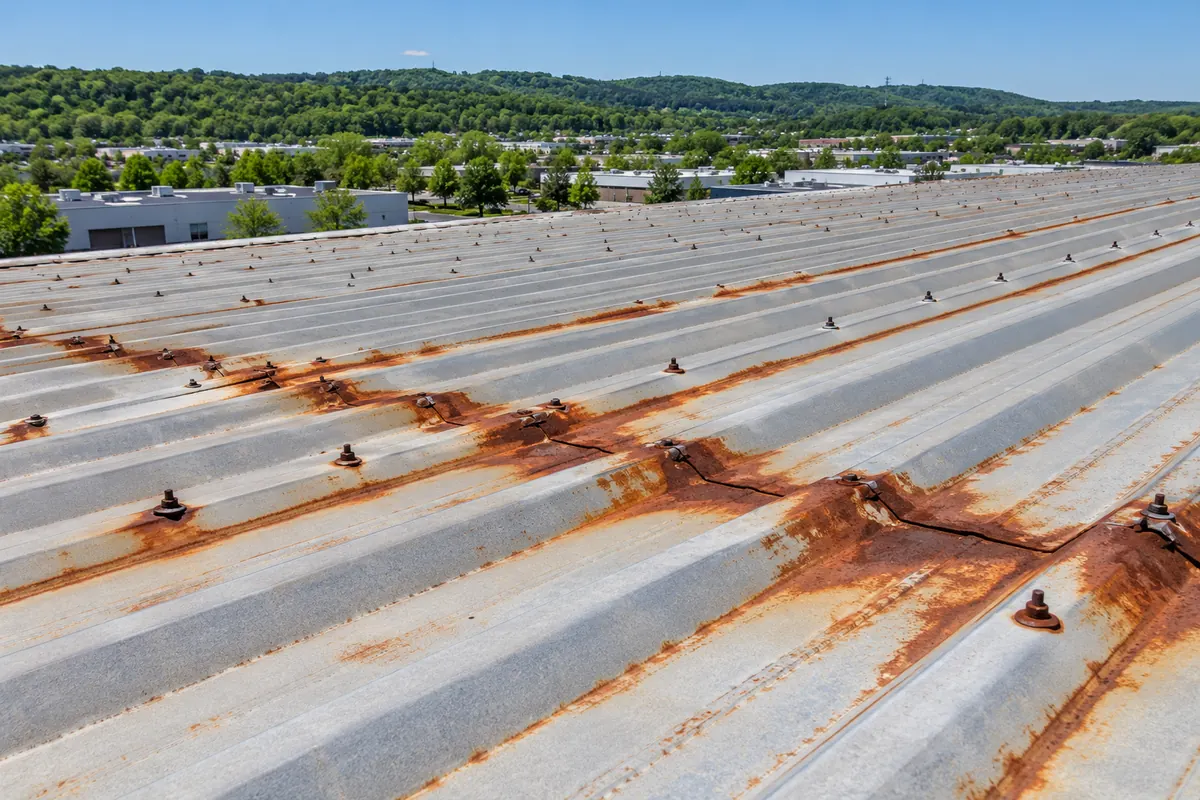
Rust streaks running from fastener rows on an exposed-fastener metal roof
Panel Work First

Rust Scale Or Rust-Through

Panels
Holes, or crushed spots near units
Rust
Scale that peels off in sheets
Screws
Snapped heads and wallowed holes
Purlins
Sagging between supports
Plan
Re-panel those runs, then coat

Many Erlanger roofs land in between. A handful of new panels plus a coating on the rest is a frequent result of the first inspection.

Commercial Metal Roof Coating In Erlanger Starts At The Screws

These five parts of a metal roof decide how long the coating lasts. Each one gets its own prep before any topcoat touches the open panel.

Exposed Fasteners

Screws that spin in their holes get oversized replacements, and snapped or rusted heads get new screws with fresh neoprene washers. Every remaining head is capped or dabbed with mastic.

Side And End Laps

Overlaps are cleaned, primed, and covered with polyester fabric or seam tape set in coating. End laps on long runs move the most, so they get the widest reinforcement.

Red Rust Spots

Loose scale comes off with wire brushes or grinders down to firm steel. Tight rust that no longer flakes can stay under a rust-inhibitive primer the coating maker approves.

White Rust On Galvanized

Powdery white corrosion forms on galvanized and Galvalume panels where moisture sat in the laps. It gets washed with an approved cleaner and primed with a product rated for that steel.

Ridge Caps And Closures

Crumbled foam closures under the ridge cap let rain and birds in. We replace them, seal the cap laps, and check the rake trim screws while we are up top.

Commercial Roof Coating Options for Erlanger

Four ways to coat a commercial metal roof, with the roof each one fits. The inspection decides which line your building falls on.

OptionBest OnWatch ForRecoat With
Acrylic SystemPitched R-panel that sheds waterPonding at gutters and behind unitsMore acrylic
Silicone SystemLow-pitch panels that hold waterDirt pickup on the white surfaceSilicone or a special primer
Urethane Base With A TopcoatRoofs with heavy foot trafficStronger odor while it curesThe same topcoat
Spray Foam Plus TopcoatBuildings that need insulationEdge trim and curb heights riseThe topcoat, never the foam

Every system starts with the primer its maker names for rusted or galvanized steel. Low-slope roofs that pond are covered on our silicone roof coating page.

Benefits of Coating Your Roof

A coating keeps a firm steel roof in service longer. These benefits hold when the panels, purlins, and insulation check out first.

Panels Stay Put

Reusing firm panels skips new steel and tear-off labor, which is why coating tends to price below re-roofing the same building.

Fastener Leaks Covered

Thousands of screw heads end up under one continuous coat, so a washer that dries out later sits beneath the coating instead of open to rain.

Cooler Panel Surface

White or light topcoats reflect more sunlight than faded paint, lowering panel temperature on sunny days. Insulation decides how much of that reaches inside.

Shop Floor Keeps Running

Work happens on the roof, section by section, so forklifts, docks, and offices below keep operating through the job.

Rust Streaks Under Every Screw Row?

That pattern points to failed washers across the roof. Call and tell us roughly how big the building is and when the panels went on.

How We Coat A Metal Roof In Erlanger

Five steps from the first walk to the final coat. The middle two take most of the labor on an exposed-fastener roof.

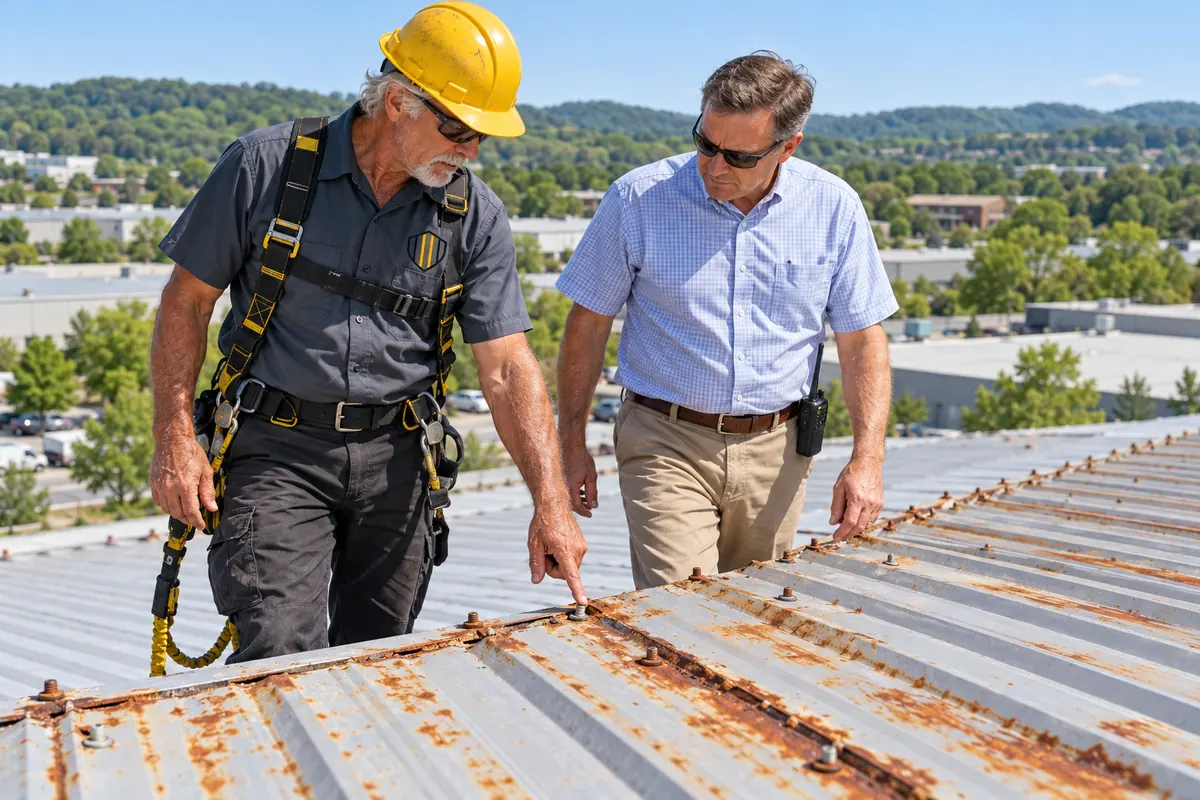
  1. Roofer and building owner walking a rusted exposed-fastener metal roof

    Inspect Your Roof

    We walk every panel run, test fasteners for spin, and probe rust spots to see whether they are surface rust or rust-through. Purlins and insulation get a look from inside the building.

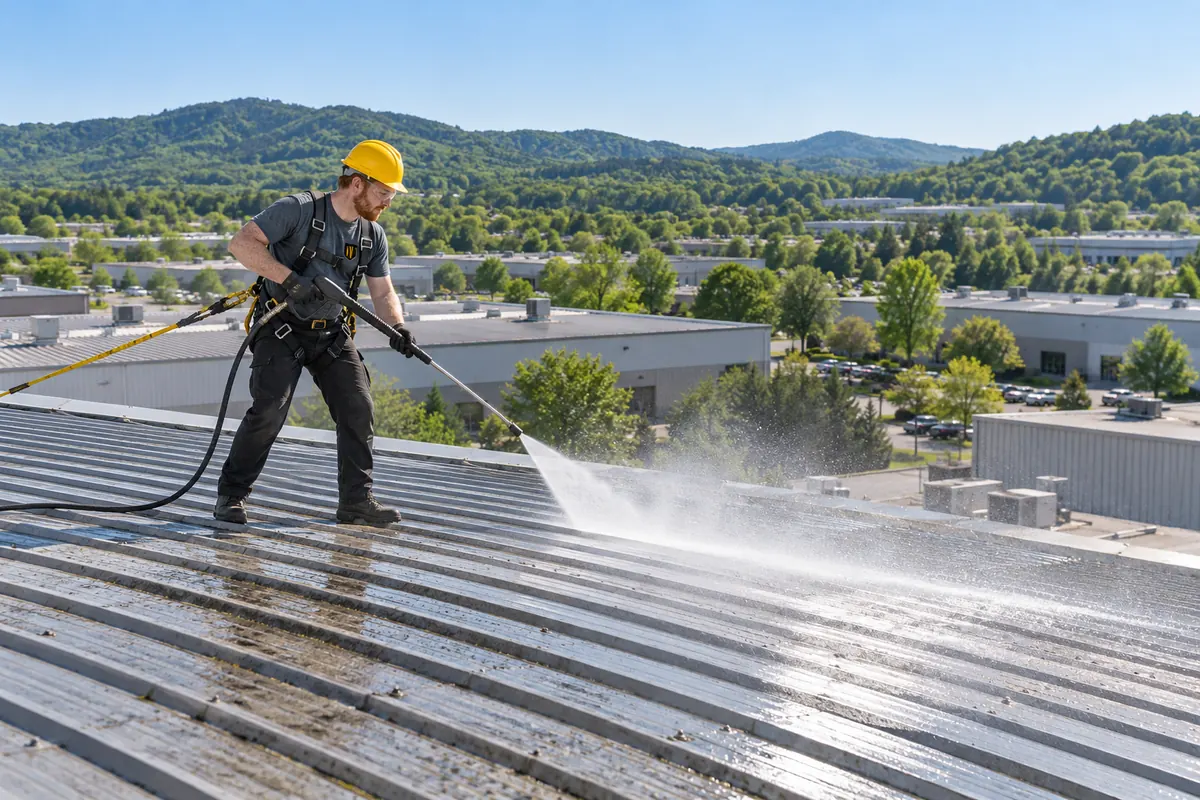
  2. Roofer pressure washing a metal roof before primer goes on

    Wash Off Chalk And Rust

    Old painted panels chalk, leaving white powder that rubs off on a hand. Pressure washing with an approved cleaner removes it, and the roof dries before primer, often for most of a day.

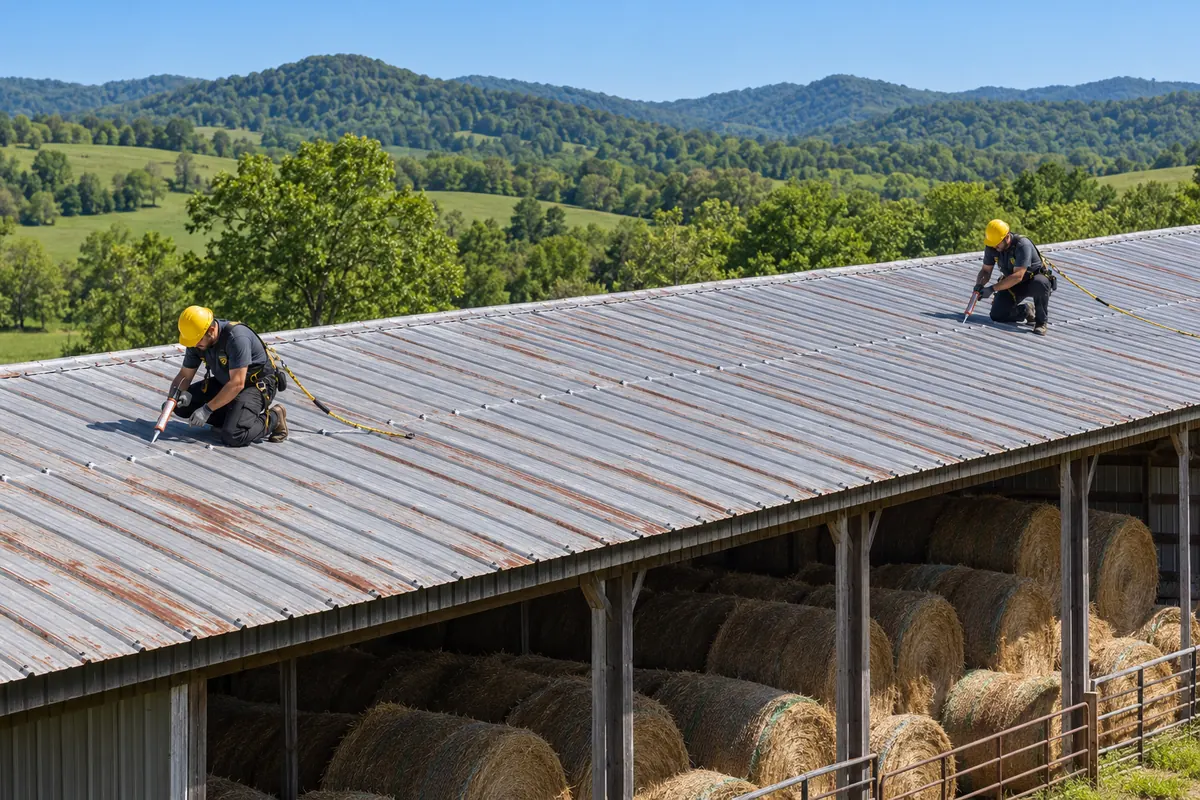
  3. Roofers sealing seams on a long metal roof over a hay storage building

    Fix Fasteners And Laps

    Stripped holes take oversized screws, rusted heads are swapped, and each remaining head is capped. End laps, side laps, and ridge caps get fabric or tape bedded in coating.

  4. Roofers sealing fasteners and pipe boots with pails of coating staged on a metal roof

    Prime And Detail

    Rust-inhibitive or galvanized-rated primer goes on wherever bare or rusted steel shows. Pipe boots, curb flashing, and skylight edges get brush-applied coating before the field coat.

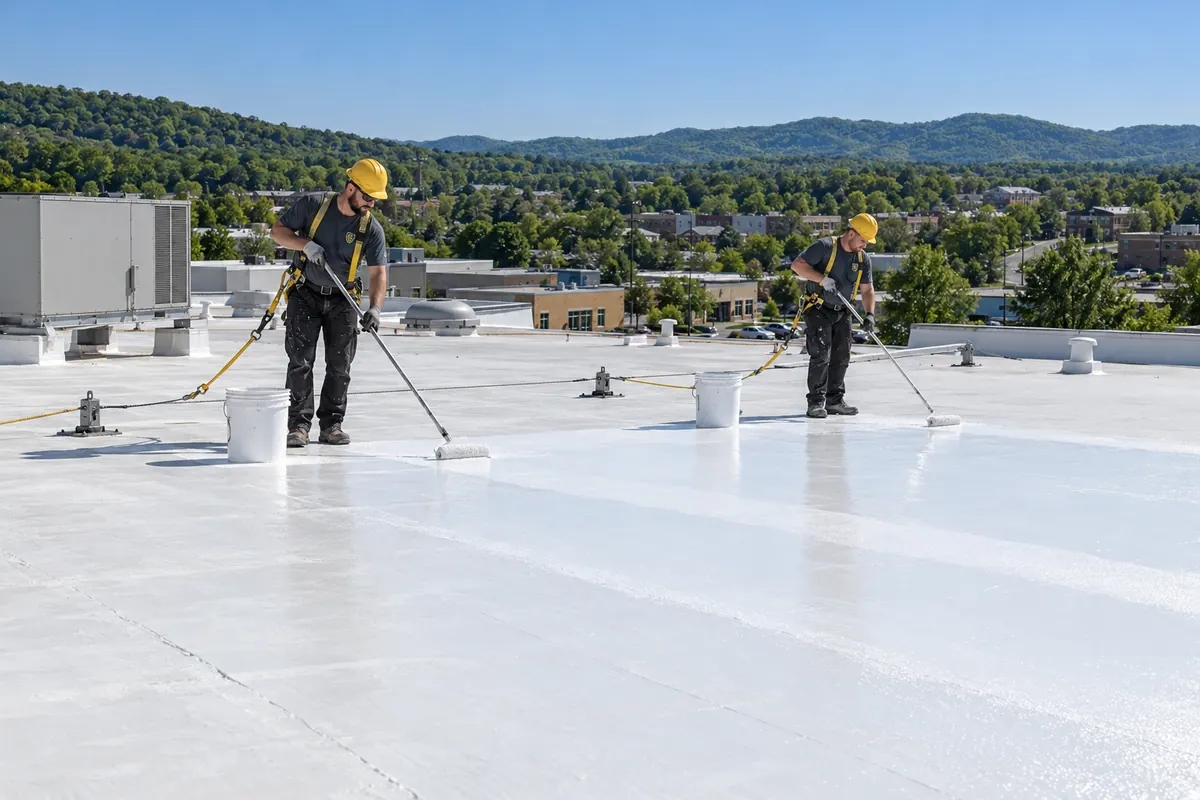
  5. Two roofers in harnesses rolling white coating over a metal roof

    Coat The Field

    The topcoat is sprayed or rolled across the panels at the specified thickness and checked with a wet-film gauge. Coats stop early enough in the day to skin over before evening dew.

Related Coating Work On Metal Roofs

Some metal roofs need a different topcoat or a foam layer. These services cover those cases.

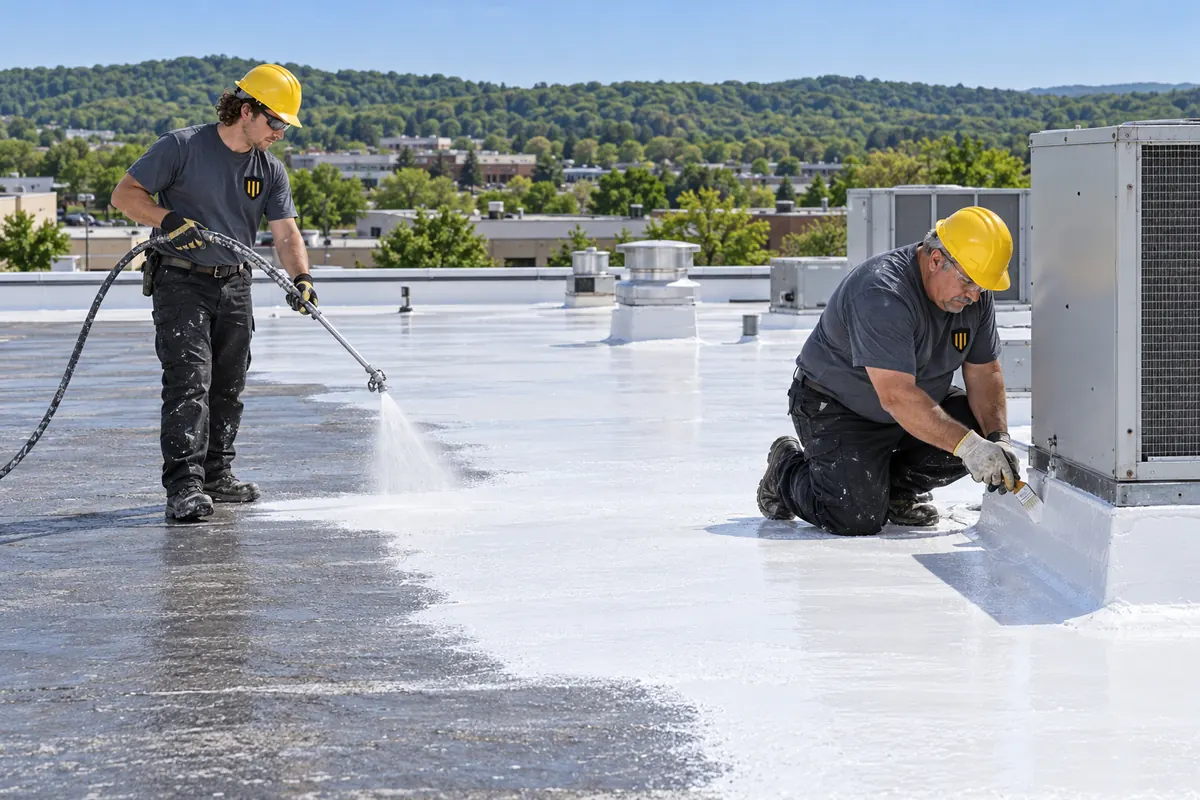
Roofer spraying silicone while another seals the base of a rooftop unit

Silicone Roof Coating

Low-pitch metal roofs that hold water at end laps and behind curbs get silicone, since standing water softens acrylic over time.

Silicone roof coating in Erlanger

Metal Roof Coating Questions From Erlanger Owners

Answers about panels, rust, screws, and laps, written for exposed-fastener and standing seam roofs.

  1. Which metal roofs around Erlanger are good candidates for coating?

    Firm panels on solid purlins, with surface rust, loose screws, and tired paint, make good candidates. Warehouses, shops, pole barns, churches, and strip centers with R-panel or older standing seam often fit.

    Daylight through holes, rust scale that flakes off in sheets, panels crushed around units, or sagging purlins point toward replacing those panels first.

  2. How is red rust treated before a metal roof is coated?

    Loose rust comes off and the steel gets a rust-inhibitive primer before any topcoat. Wire brushes or grinders take scale down to firm metal, while tight rust that has stopped flaking can stay under the primer.

    Pinholes get a metal patch or a new panel. Skipping the primer the coating maker names is a common reason coatings peel at rust spots.

  3. Should old roof screws be replaced or just sealed?

    Both. Loose, stripped, or rusted fasteners get replaced, often with oversized screws in wallowed holes, and the rest get tightened and capped.

    Overdriven screws crush the washer and open a water path, so each one gets checked by hand. On a large R-panel roof, fastener work alone can run several days.

  4. How is a metal roof cleaned before coating?

    Pressure washing with a coating-approved cleaner comes first, followed by a full rinse. Gutters, valleys, and the area around rooftop units are cleared, and kitchen exhaust fans get a degreaser.

    Chalked paint has to come off completely or the coating peels with it. Panels dry, often for most of a day, and adhesion tests confirm the surface is ready.

  5. Does standing seam need different prep than exposed-fastener R-panel?

    Yes, because they leak in different places. R-panel leaks mostly at its screws, so every fastener gets checked.

    Standing seam leaks at seams, clips, ridge, eave, and pipe boots, and its panels float on clips, so the coating has to flex with them. Very low-pitch standing seam can hold water in the flat pans, which pushes the choice toward silicone.

  6. Should I coat, restore, re-panel or replace my metal roof?

    Coat when panels are firm with light rust. Restore when rust and failed fasteners are widespread but the steel holds. Re-panel runs that are rusted through, and replace when perforation or framing damage spreads across the roof.

    Many roofs mix two of these. A look at the purlins and insulation from inside settles it, since coating over wet insulation traps moisture.

  7. Do warehouses near CVG in Erlanger need a different coating plan?

    They do. Large metal warehouses near Cincinnati/Northern Kentucky International Airport have long, low-slope panel runs with more thermal movement and more end laps per line.

    Plans focus on fabric-reinforced end laps, rusting dock canopies and door awnings, lift staging that stays clear of trailers and forklifts, and phased sections so work under each part keeps moving.

Price The Coating On Your Metal Roof

Tell us the roof size and what you see at the screws and laps, or call and we will talk it through.

Call Us (859) 204-8079