Rake And Eave Trim
Loose trim along the rake and eave catches wind like a sail and pulls panels with it. It gets re-fastened with new screws where the old ones have backed out.

Villa Hills metal roof coating for exposed hillside buildings. We inspect the trim and ridge caps the wind works on first, then fasten, seal, and coat.
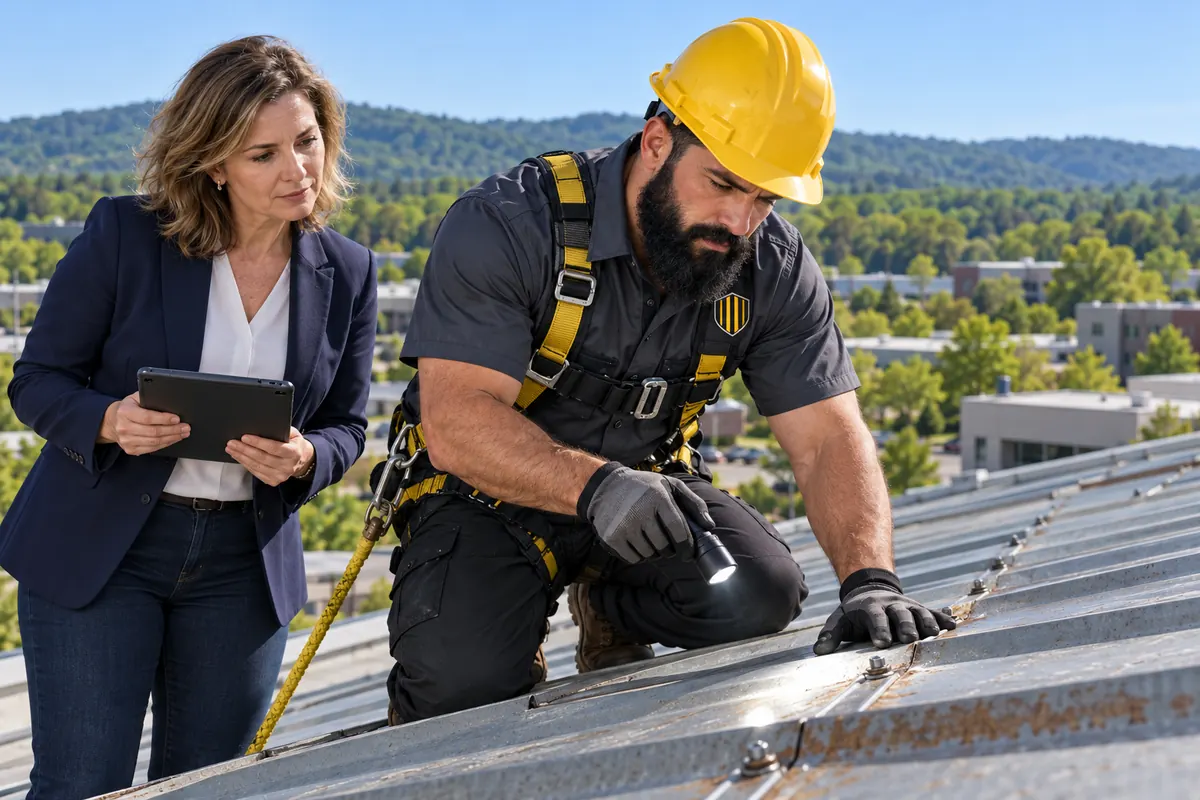 1Inspect The Roof
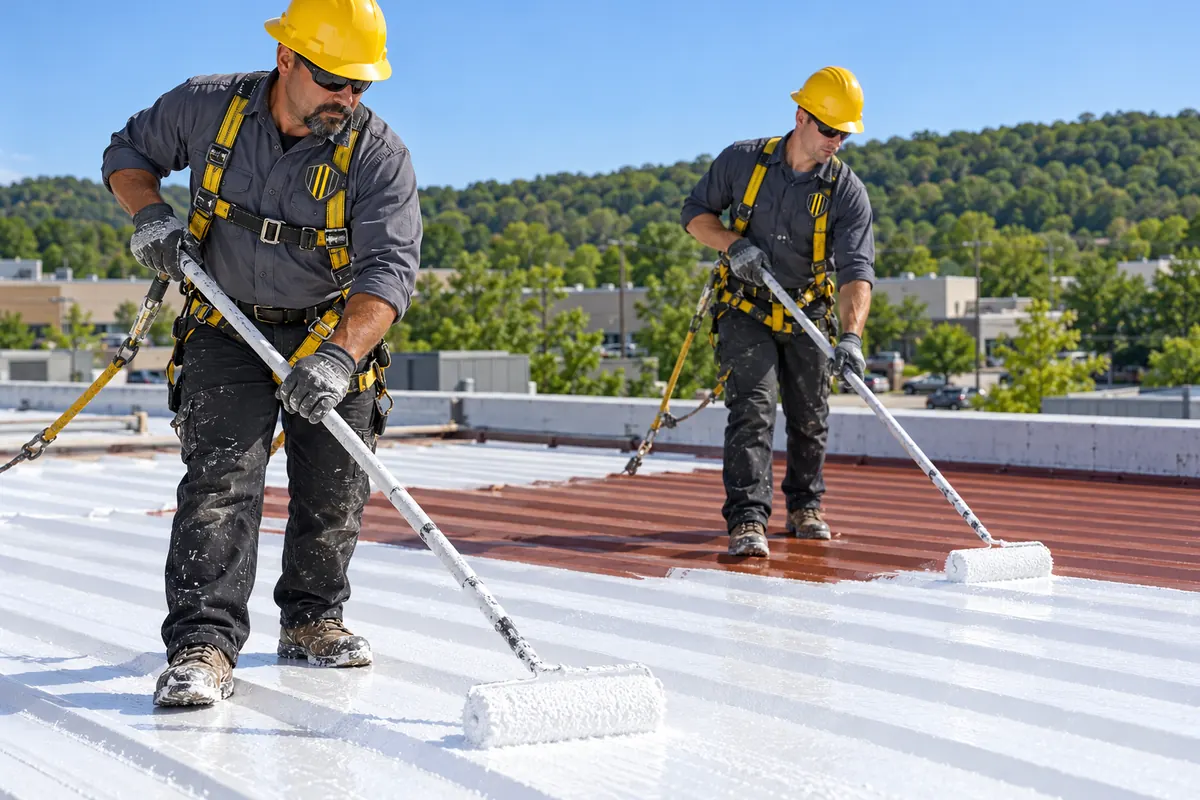 2Seal And Coat
Roofs on the Villa Hills hillsides above the Ohio River sit more exposed to wind than buildings on sheltered lots. Wind lifts panels from the edges first, and loose eave and rake trim acts like a sail.
The same slopes make access the other half of the job. Lifts need level ground, and hoses often run up from a staging area well downhill from the building.
On an exposed lot, wind finds these five spots first. Each one is fastened before any coating goes on.
Loose trim along the rake and eave catches wind like a sail and pulls panels with it. It gets re-fastened with new screws where the old ones have backed out.
Lifted cap ends and missing closures let wind-driven rain under the ridge. Closures are replaced and the cap laps sealed.
Screws near the edges take the most wind load and loosen first. They are checked and replaced before the field coat.
Church and institutional buildings on the hillsides have tall gables and steeples that need roof anchors and ladders to reach safely.
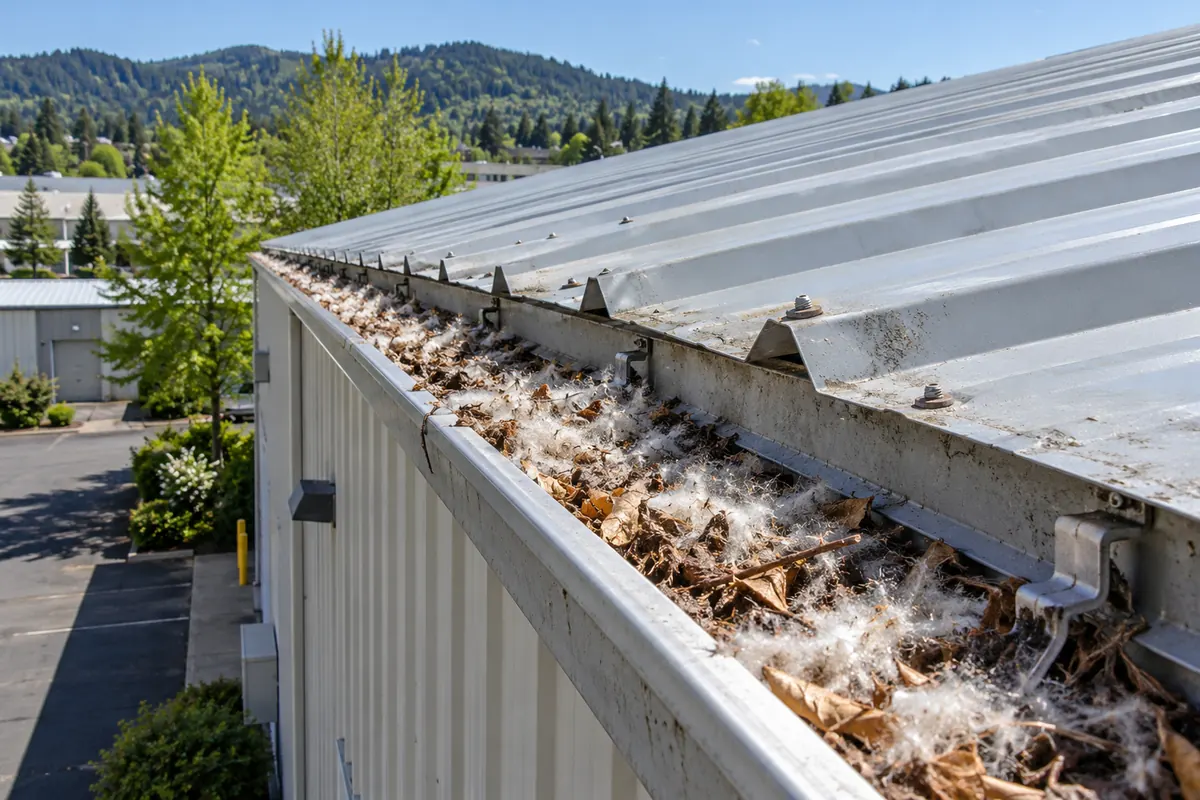
Hillside trees drop leaves into gutters, which hold water at the eave. Gutters get cleared, and rusted seams resealed.
On exposed hillside buildings, a coating done after the fastening work offers these four advantages.
The trim and ridge work done before coating closes the gaps wind uses, and the coating then seals the fasteners and laps over them.
Rolling coating near roof edges and spraying only on calm days keeps overspray off the slopes and the cars below.
Keeping firm panels avoids hauling new steel and debris up and down a steep lot, a real cost on a hillside property.
Coating days are picked for low wind, which also gives each coat a better chance to cure evenly.
The systems we use on Villa Hills churches, institutional buildings, and hillside shops.
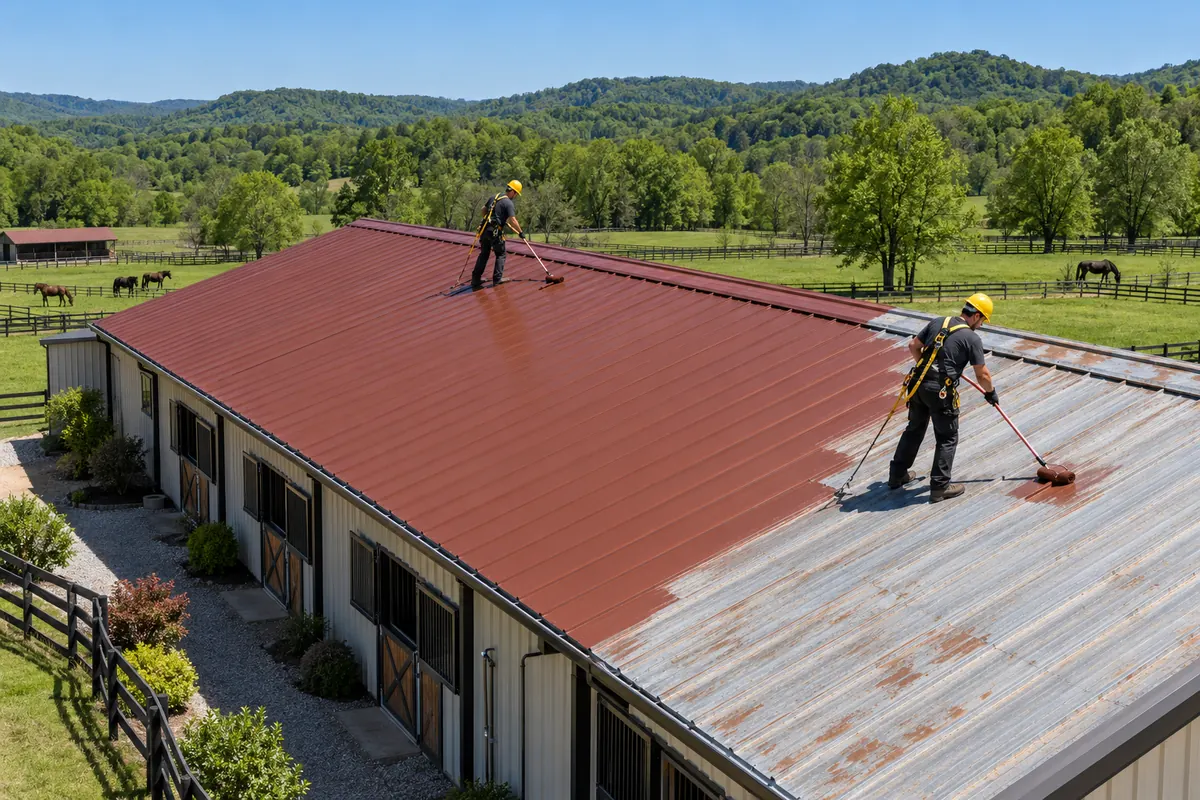
Exposed metal roofs get trim refastening, ridge closures, and screw work, then a coating rolled near the edges.
Our metal roof coating service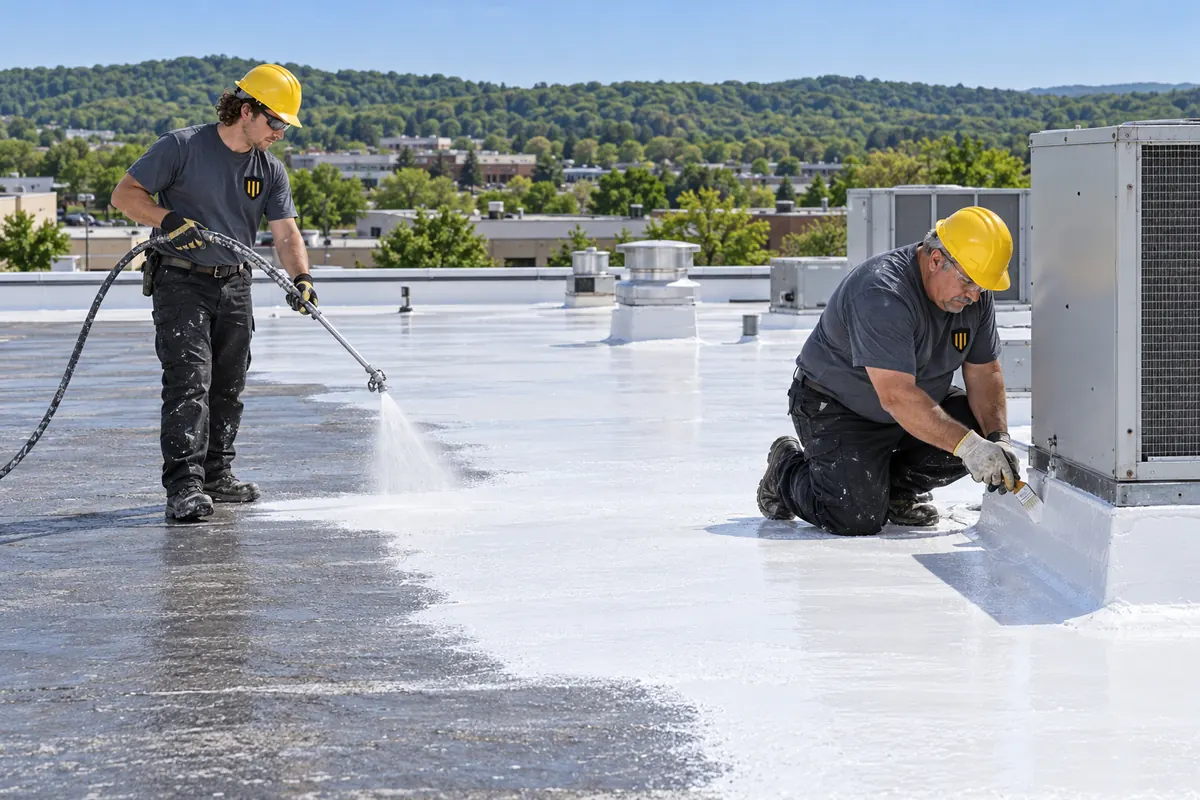
Low-slope sections on institutional buildings that hold water after storms take silicone, applied on calm days.
Our silicone roof coating service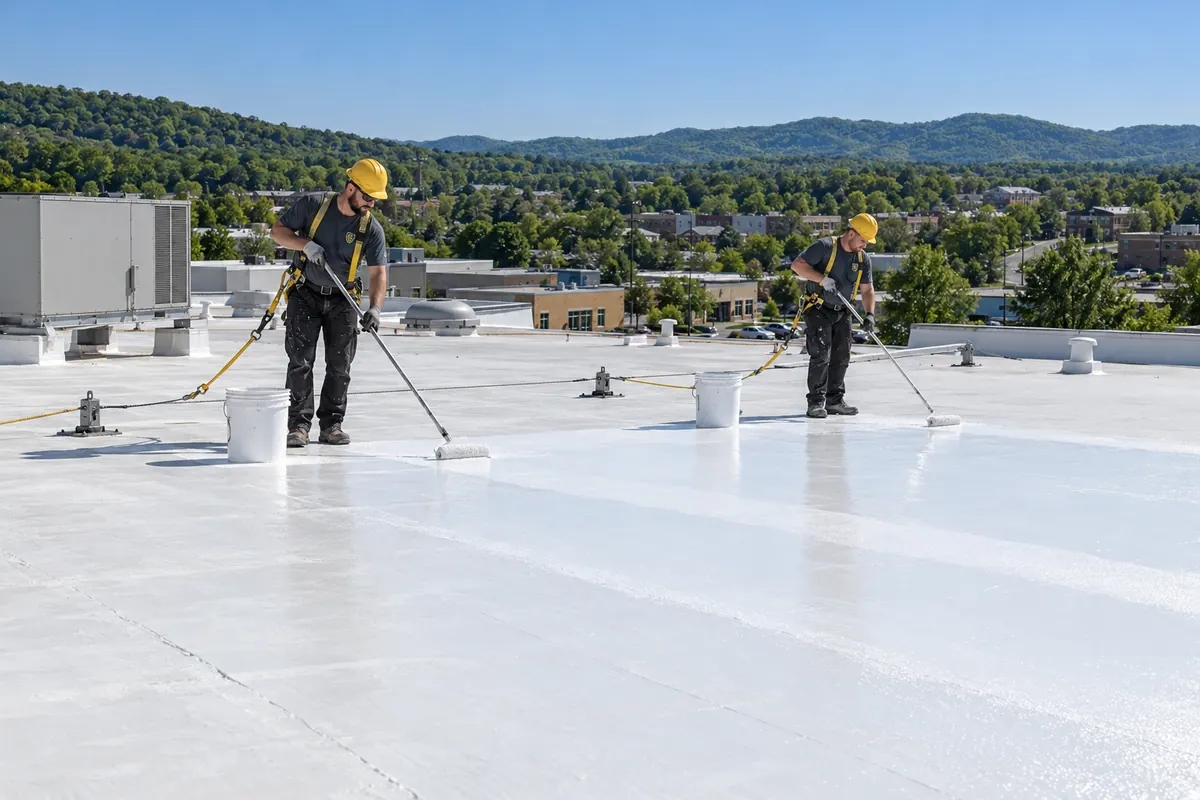
Pitched metal that drains quickly takes acrylic, rolled rather than sprayed where wind comes up the slope.
Our acrylic roof coating service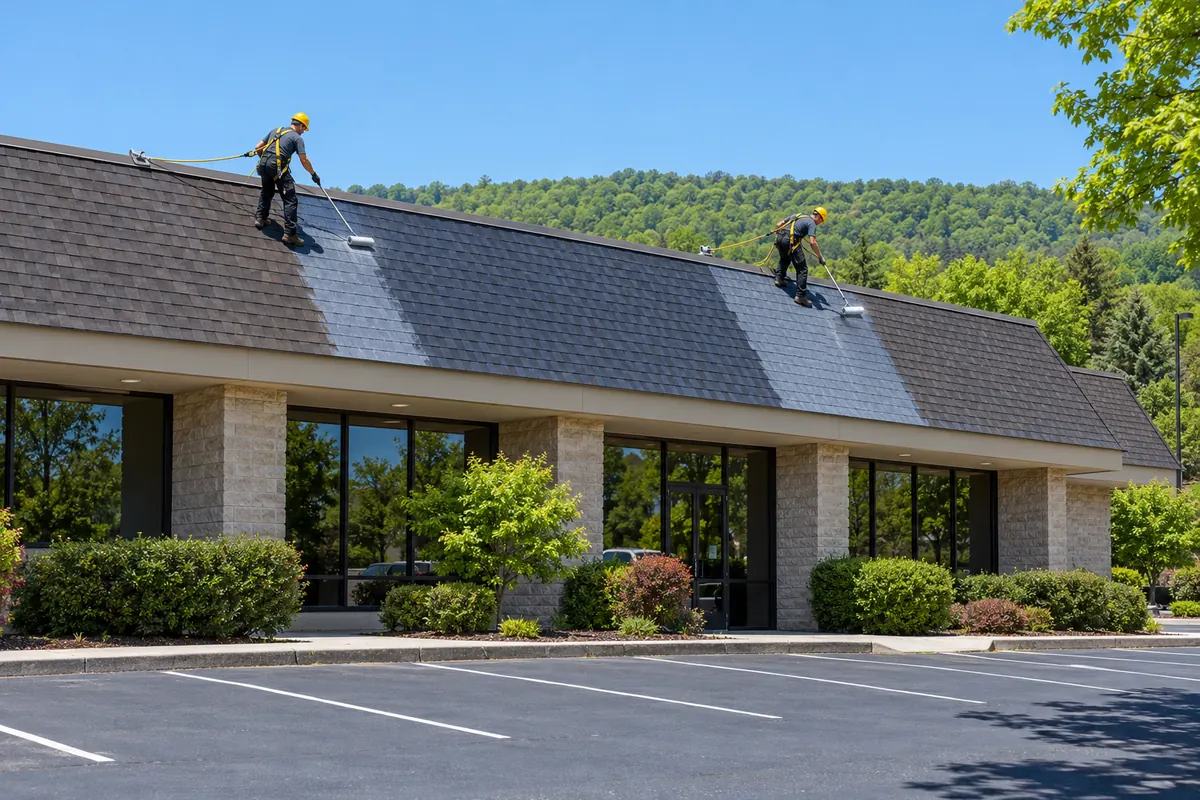
Church shingle roofs with flat tabs can be coated once steeple flashing and valleys are sealed.
Our shingle roof coating service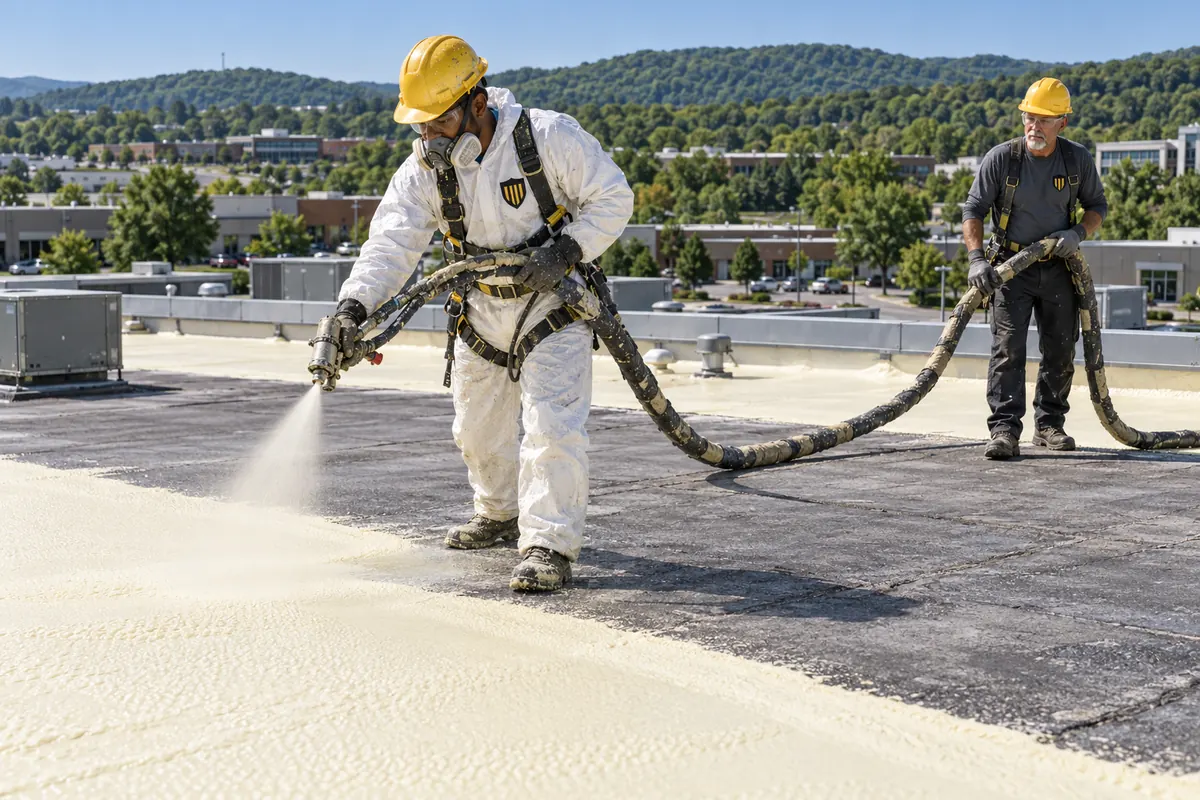
Foam fits flat roofs that need insulation, sprayed only in still air given the overspray risk on a slope.
Our spray foam roofing serviceLoose trim is the first thing to fix on an exposed roof. Call us and tell us which edge of the building it is on.
Four steps, starting with how to reach the roof safely on a steep lot.
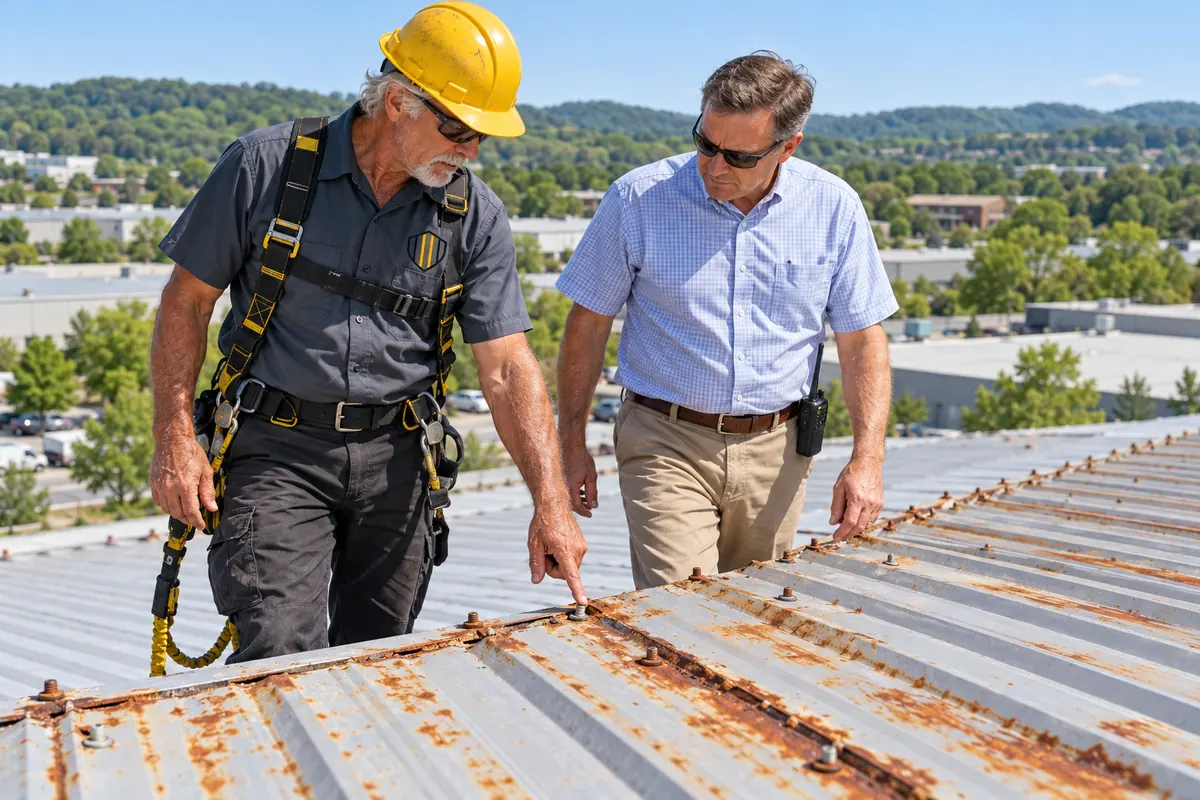
We check trim, ridge caps, and edge fasteners for wind damage and map where a lift can stand on level ground, where anchors go, and how far hoses must run.
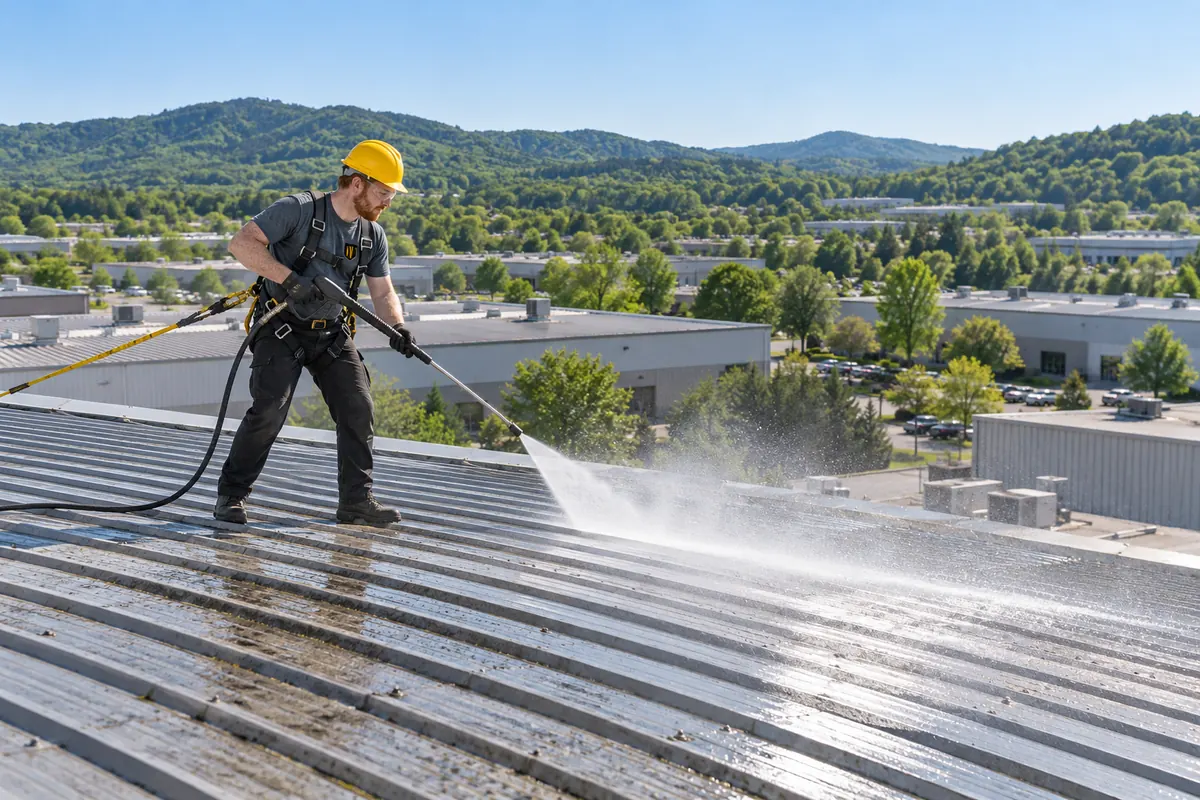
Lifts go on the uphill side or in the lot, pumps sit on flat ground with hoses to the roof secured, and smaller equipment handles tight driveways.
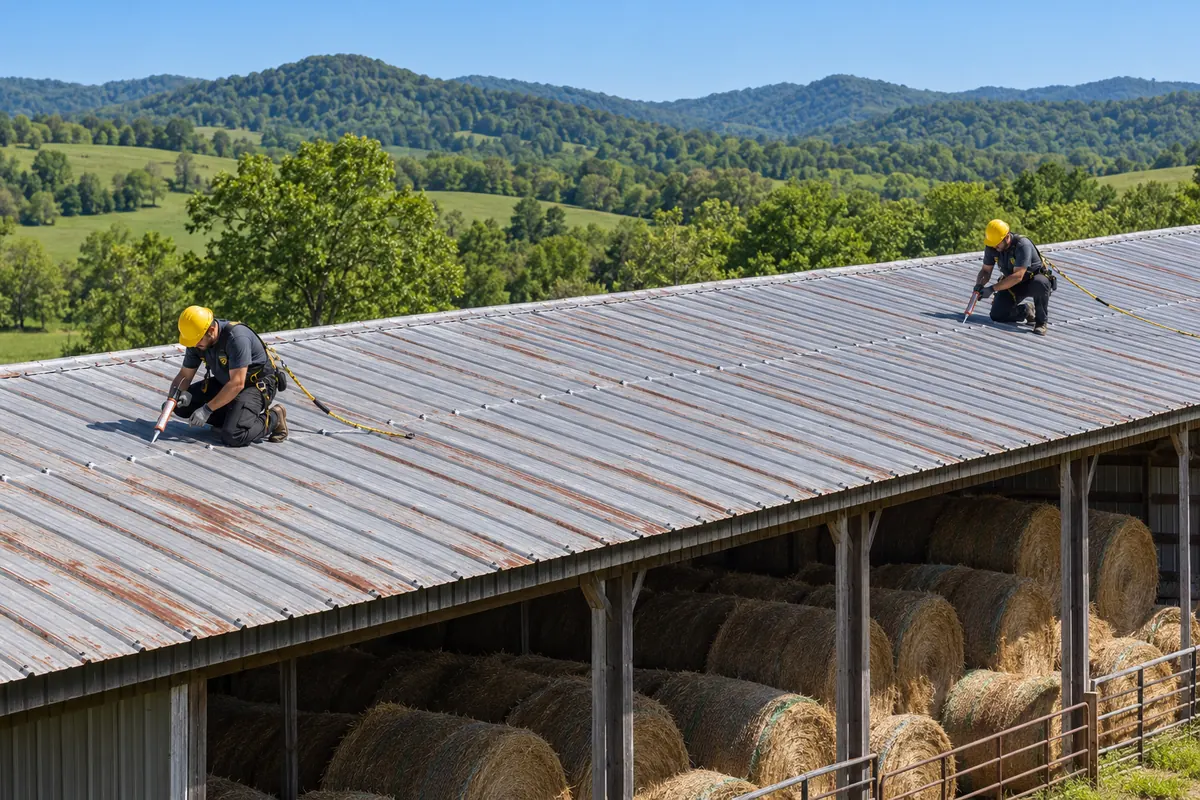
Rake and eave trim are re-fastened, ridge closures replaced, and loose edge screws swapped before any cleaning or coating.
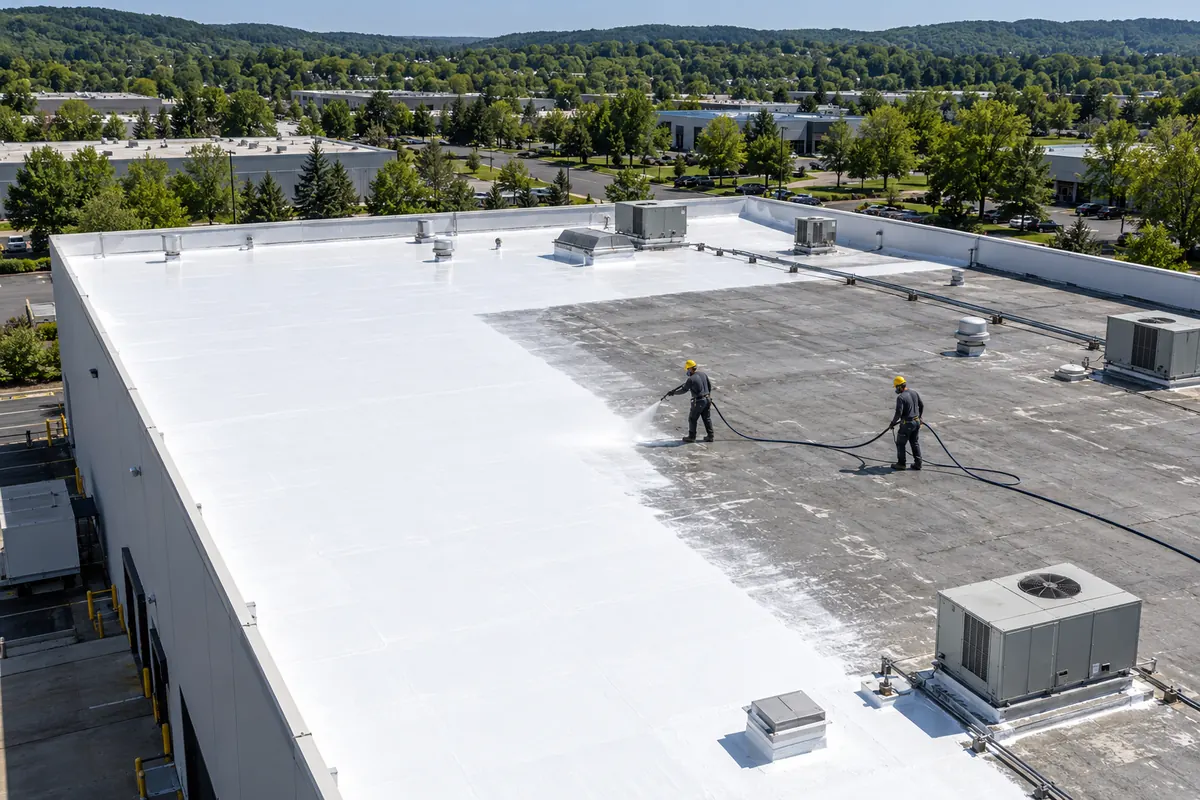
Coating is rolled near edges and sprayed in the field only when wind stays low, and fresh coats are timed to set before evening dew.
Along with Villa Hills, our coating jobs cover Erlanger and five nearby towns. For anywhere else, call us or send us a message.
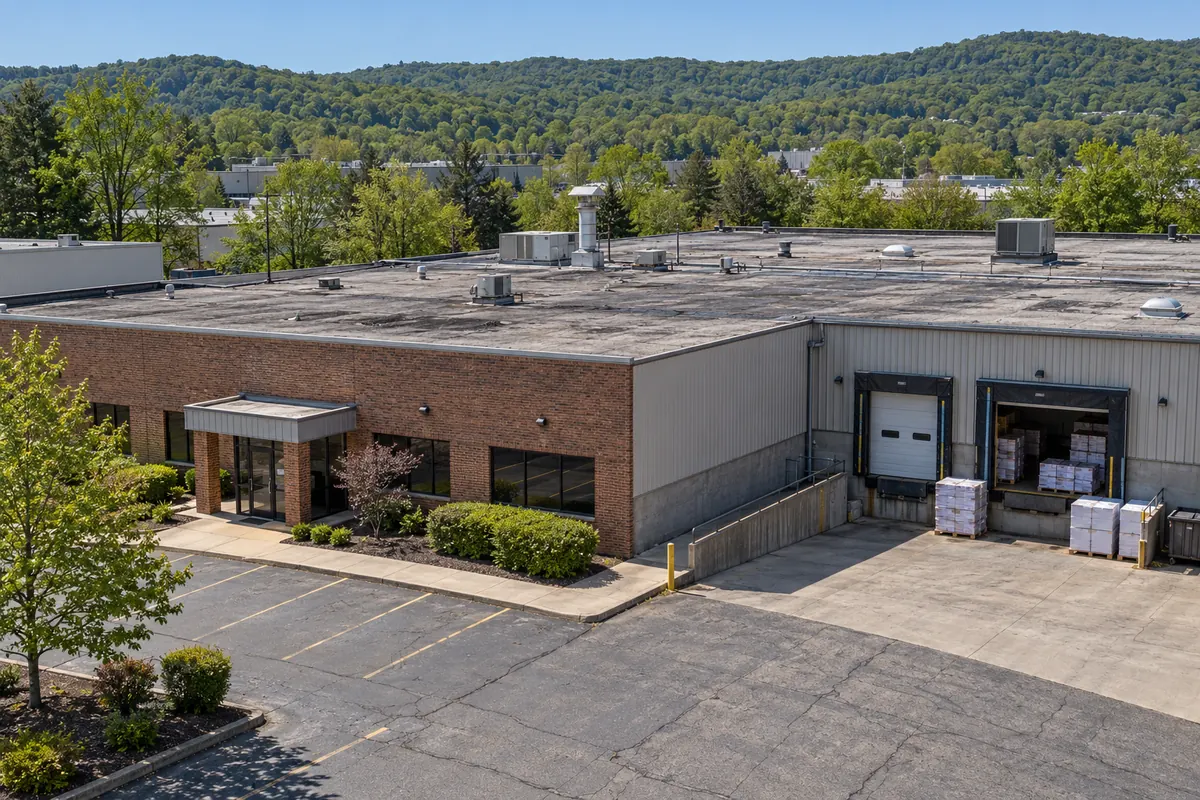
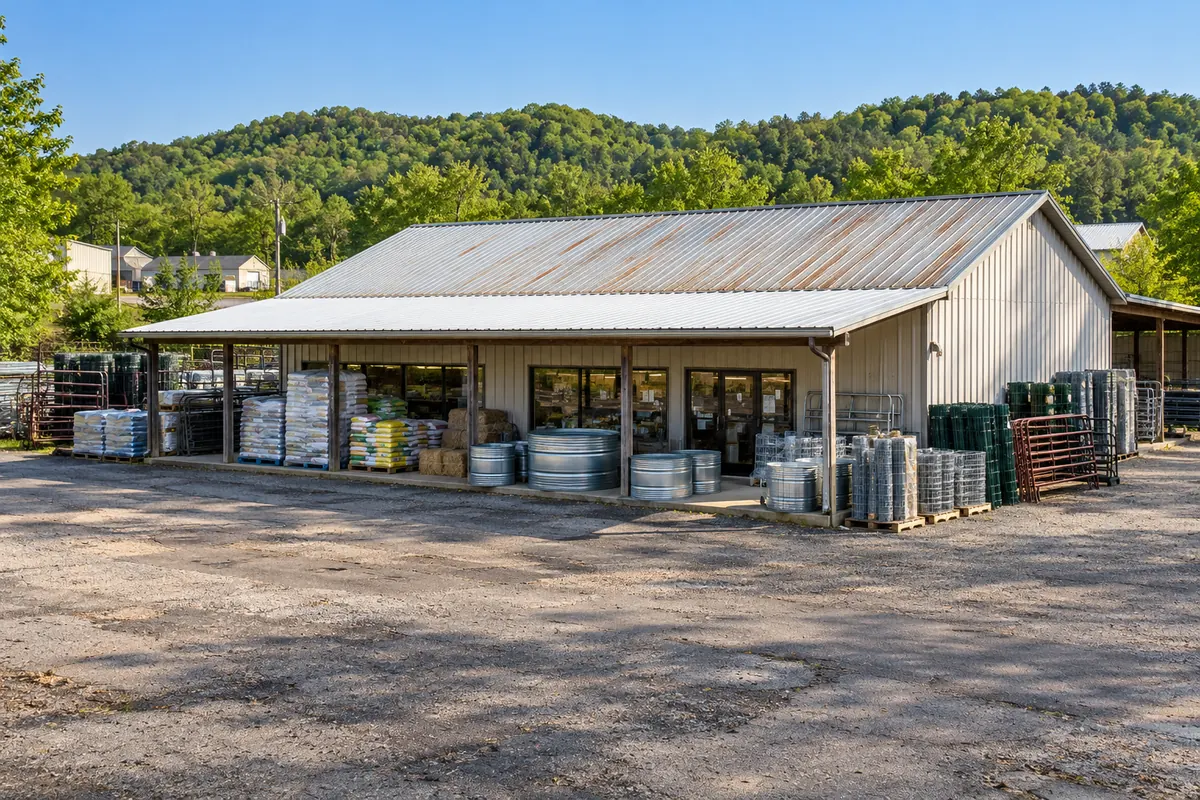
Retail accent roofs, canopies, and multi-building campuses.
Metal roof coating in Crestview Hills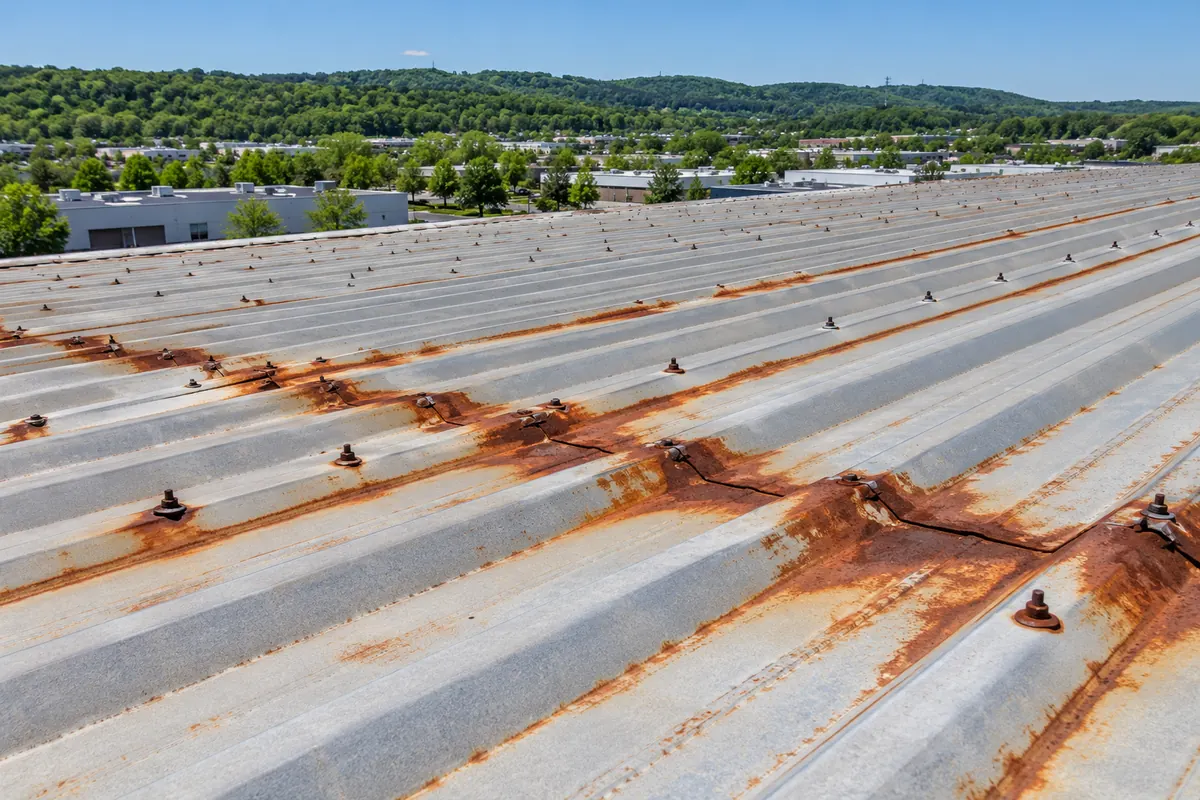
Church shingle roofs and the metal garages behind them.
Metal roof coating in Lakeside Park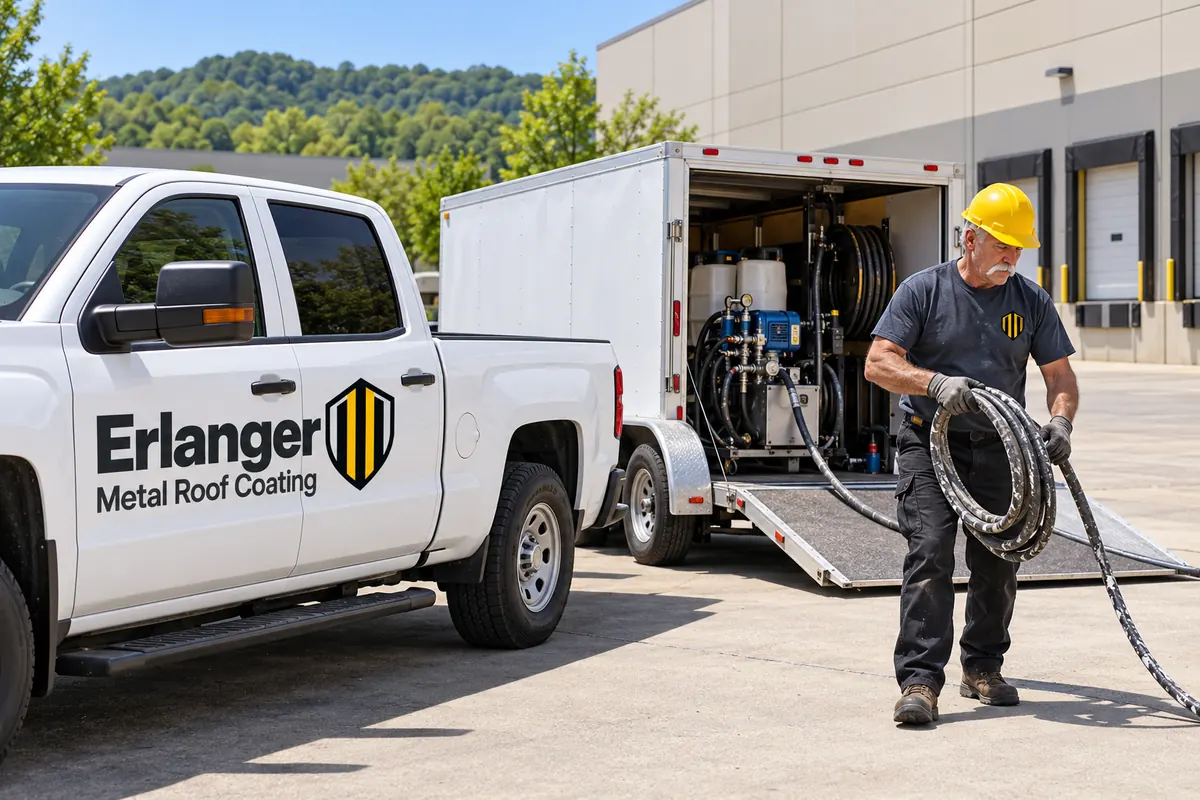
Flex buildings with road film and units that drip.
Metal roof coating in Crescent SpringsAnswers for owners of exposed and hard-to-reach buildings on the Villa Hills slopes.
Yes, more than buildings on sheltered lots, so edge trim, ridge caps, and fasteners get extra attention before coating. Loose rake and eave trim is re-fastened, and ridge caps are checked for missing closures and lifted ends.
Spraying is limited to calm days, with rolling near edges. A coating seals the roof but adds no hold-down strength; the fastening does that.
With lifts set on level ground, roof anchors for fall protection, and hoses run up from a staging area that can sit well downhill.
Steep grades put the lift on the uphill side or in the lot, tall gables and steeples get anchors and roof ladders, and tight driveways get smaller equipment with staged deliveries. We map all of it on the first visit.
No. A coating seals seams and fasteners, but the screws and trim are what hold panels down.
That is why fastening comes before coating on every exposed Villa Hills roof, and panels that have already lifted get re-seated or replaced first.
Villa Hills building permits go through Planning and Development Services of Kenton County.
Replacing panels or adding anchors can change what the job needs on paper, so we describe the full scope to PDS before work starts and keep the result with your records.
Some of it can. Fastening trim and checking ridge caps happens in moderate wind with fall protection, but spraying stops when wind picks up, and coating near edges switches to rollers.
Days with steady wind off the river get used for prep instead.
Tell us about the building and its access, or call to describe the lot and the roof.
Leave your name and number and we will call you about your commercial roof.
Or call now: (859) 204-8079