Pitched Panels That Drain
- Slope
- Visible pitch, water runs off
- Water
- Gone within hours of rain
- Rust
- Light bloom or white rust
- Nearby
- Offices with fresh-air intakes
- Plan
- Clean, prime, seal, two coats
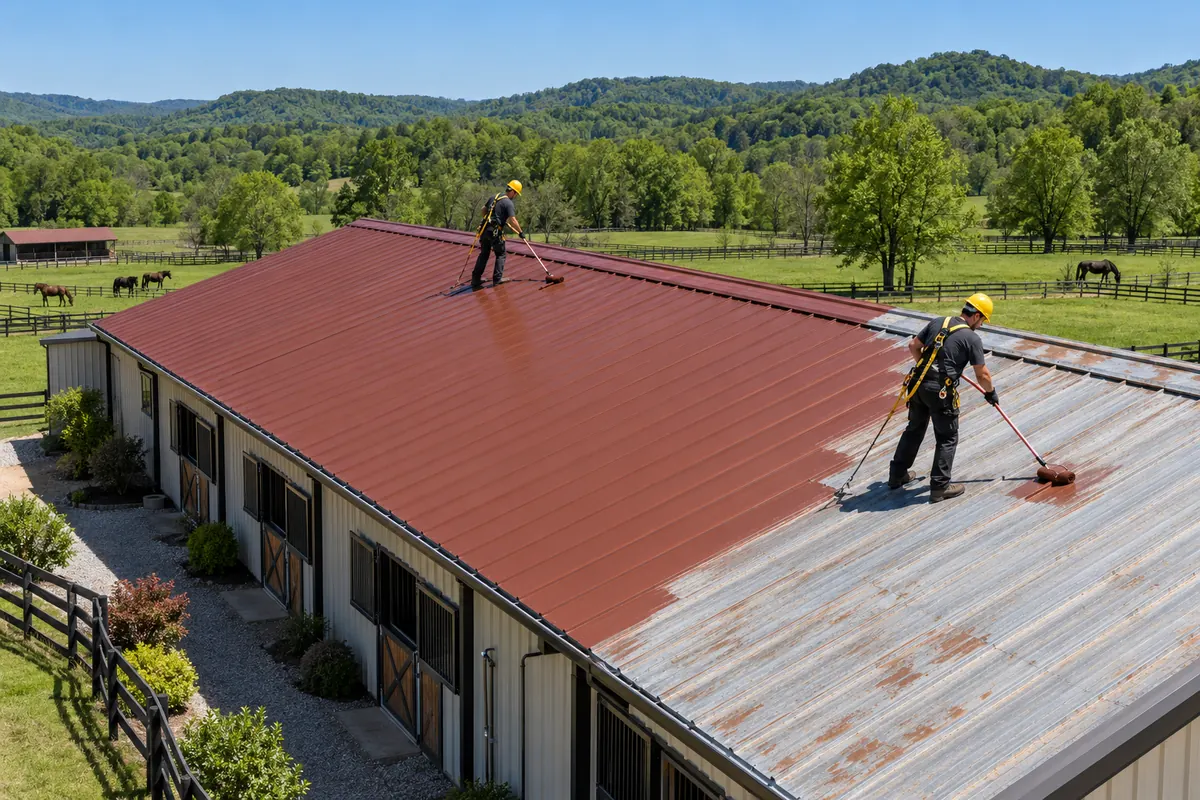
Acrylic roof coating for Erlanger buildings whose roofs shed water fast. We inspect the panels and laps first, then roll or spray low-odor acrylic in dry weather.
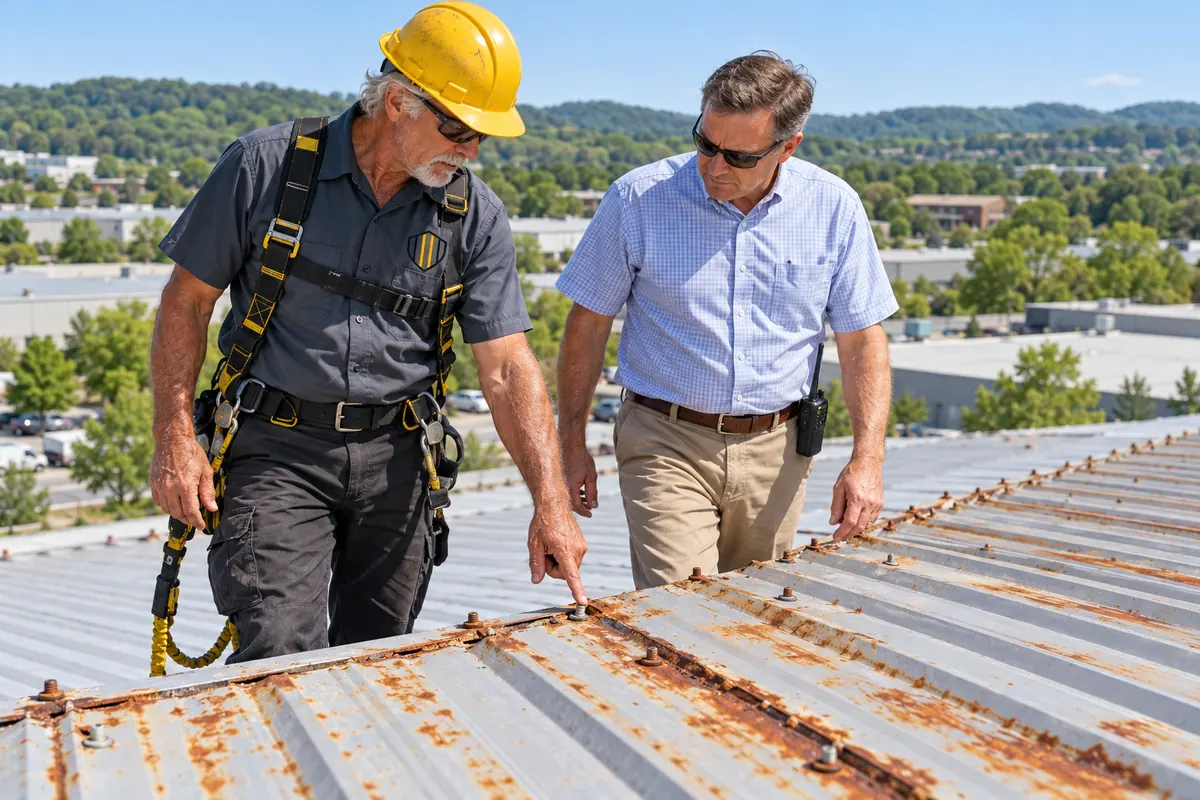
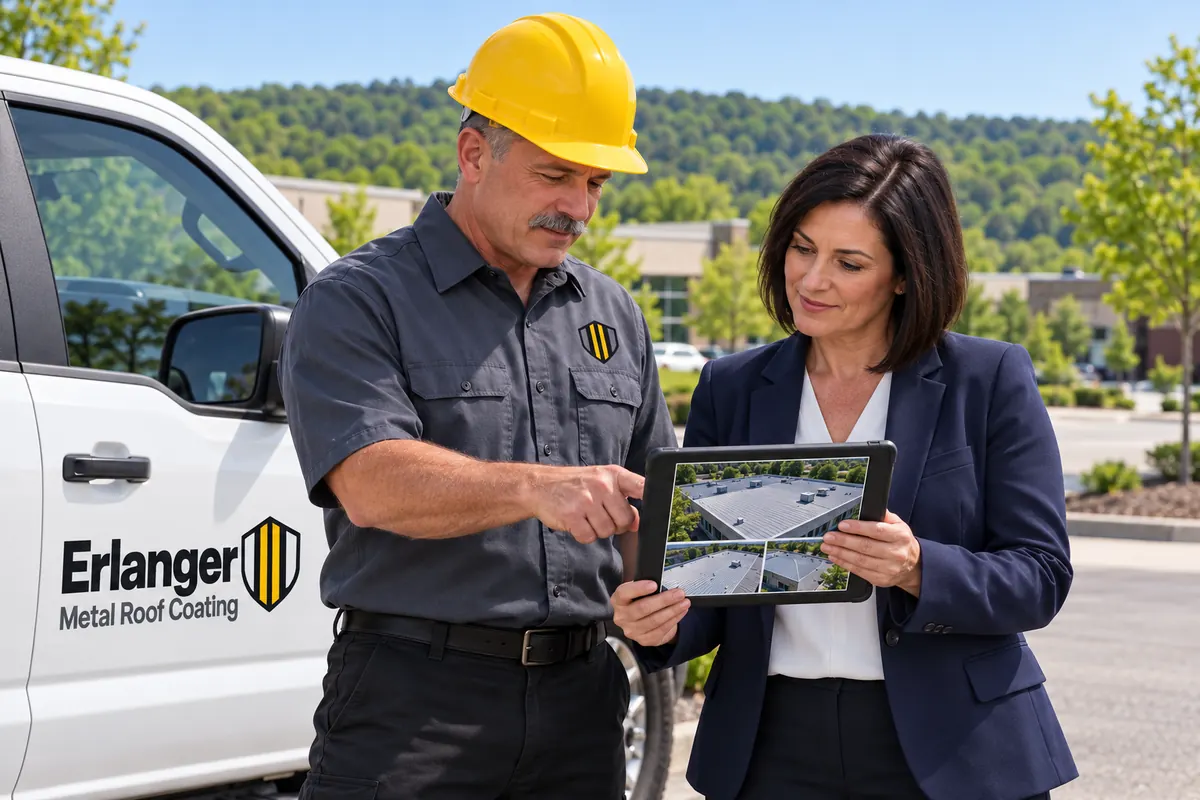
1Inspect The Roof
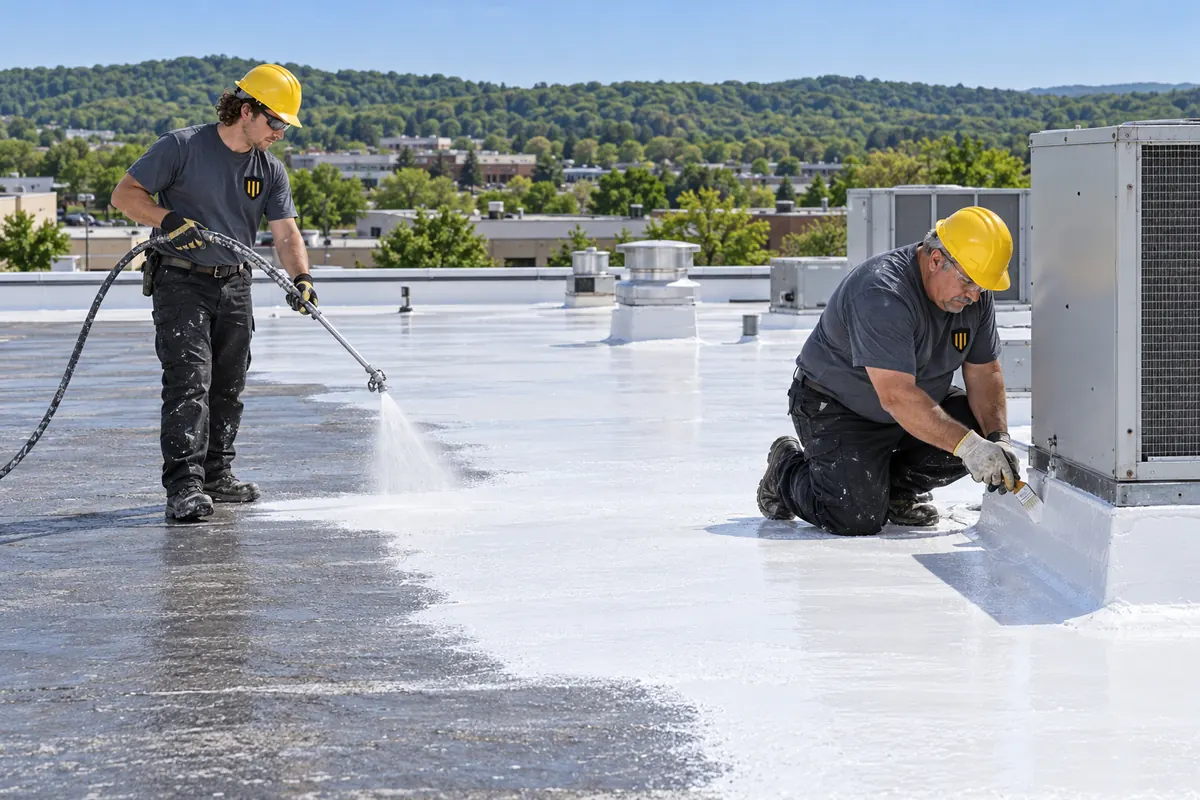
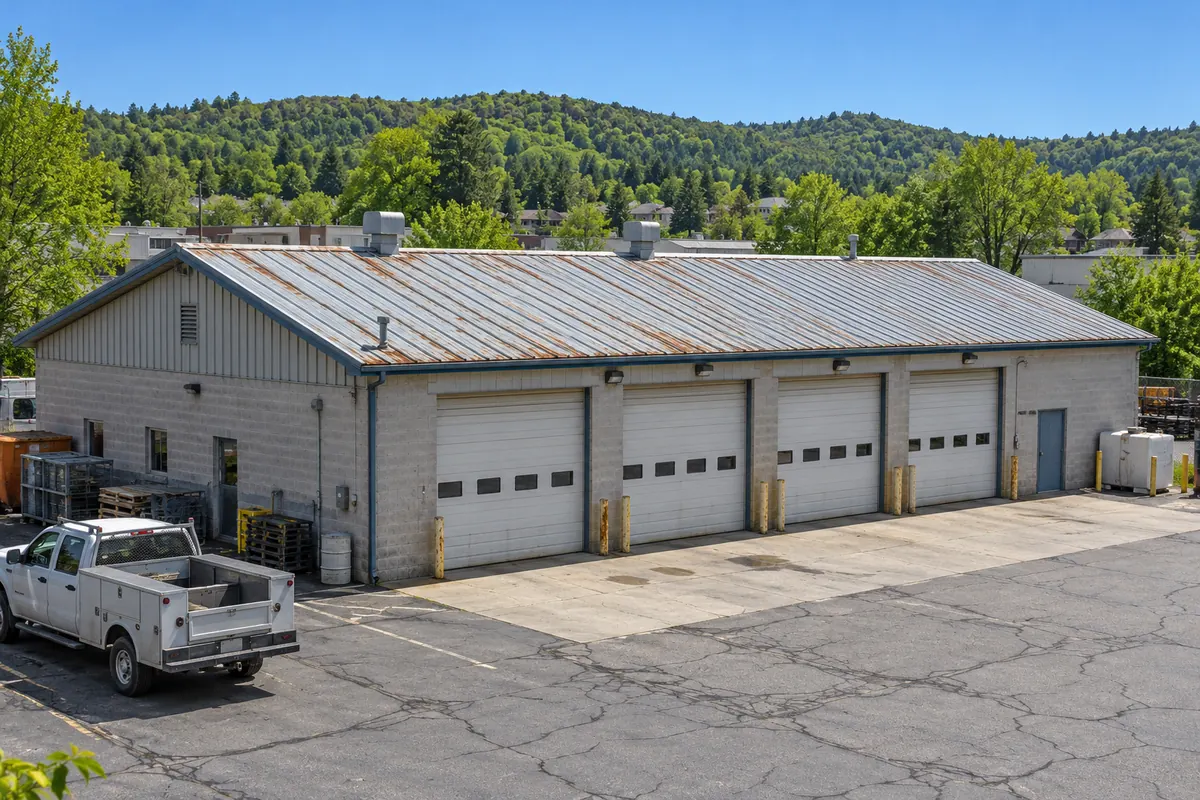
2Roll The AcrylicAcrylic needs water to leave the roof quickly. The roof on the right holds puddles, so it needs drainage work or a different coating.


Constant water softens acrylic, so a roof that ponds behind its units usually moves to silicone roof coating.
On a pitched metal roof, these five spots decide whether acrylic lasts. Each gets prep before the first coat is rolled.
Galvanized and Galvalume panels grow chalky white rust where moisture sat in the laps. Acrylic grips poorly on that residue until it is washed and primed with a galvanized-rated product.
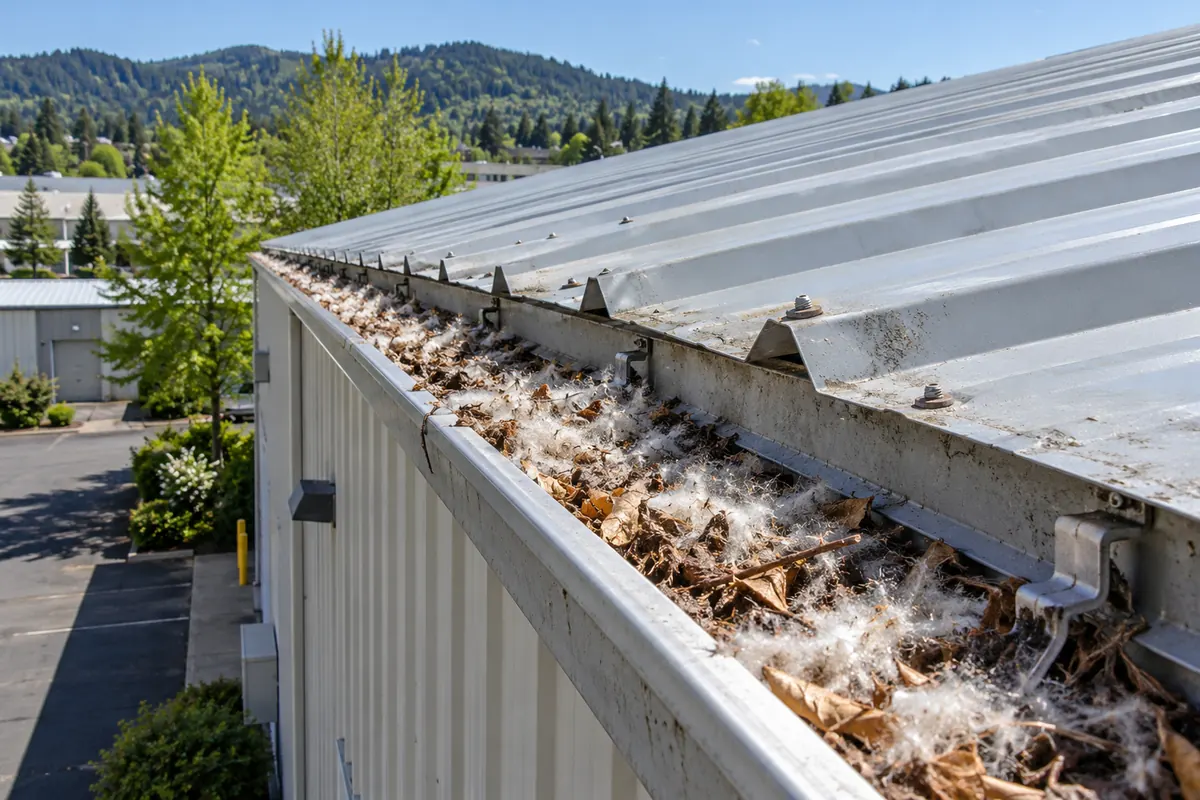
Water collects at the low end of each panel run and in the gutter. Rotted gutter sections get replaced so nothing sits on the acrylic for long.
Every side lap on a pitched R-panel roof is a joint that moves. Each one gets seam tape or fabric so the acrylic bridges a reinforced edge.
Skylight panels are masked and left uncoated, while their side laps and fasteners get the same seam work as the steel. Brittle panels get replaced.
Rooftop intakes pull outside air into offices. Water-based acrylic keeps odor low, and intakes near priming work are covered or shut down with staff.
Acrylic is one of four coatings for commercial metal roofs. This is where each one fits on a pitched roof.
| Option | Best On | Watch For | Recoat With |
|---|---|---|---|
| Acrylic | Pitched roofs that drain fast | Cold or rainy cure windows | More acrylic |
| Silicone | Low spots that hold water | Recoats need silicone | Silicone or a special primer |
| Urethane Basecoat Under Acrylic | Roofs walked often by service techs | Stronger odor while curing | Acrylic |
| Spray Foam With Acrylic Topcoat | Shops that need insulation | Trim and gutters adjusted | Acrylic over the foam |
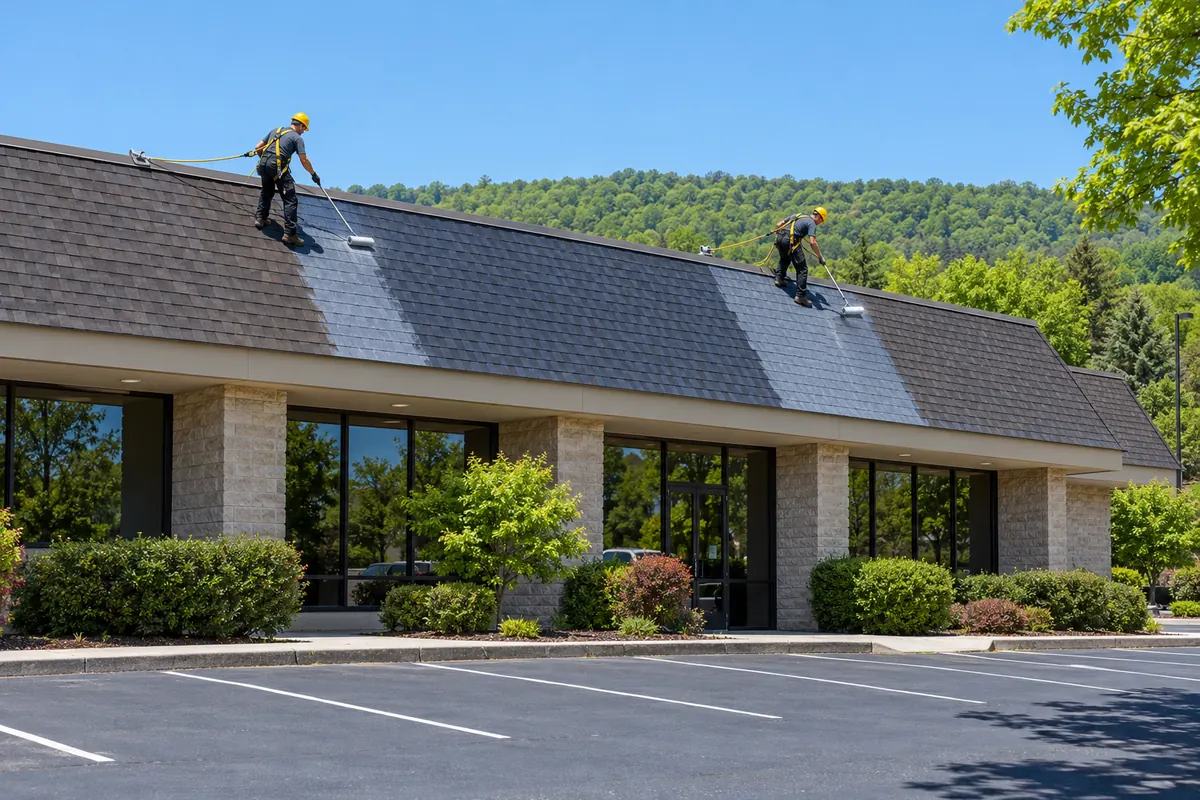
Shingle sections on the same building can often take acrylic too. See shingle roof coating for the checks they need.
These benefits hold on a pitched metal roof that drains and has been primed for its type of rust.
Fresh acrylic sticks well to old acrylic, so when the topcoat wears thin years from now, a clean roof takes another coat instead of a new system.
Water-based acrylic carries a mild smell compared with solvent products, which matters when rooftop units feed air into occupied rooms.
Acrylic stays cleaner looking than silicone and reflects sunlight off the panels, lowering surface temperature on summer afternoons.
Coating a firm pitched roof avoids new panels, tear-off, and disposal, so it tends to cost less than re-roofing the building.
Acrylic needs warm, dry days to cure. Get an estimate now, and the roof can be lined up for the right stretch of weather.
Five steps, each timed around the weather, since acrylic cures by drying.

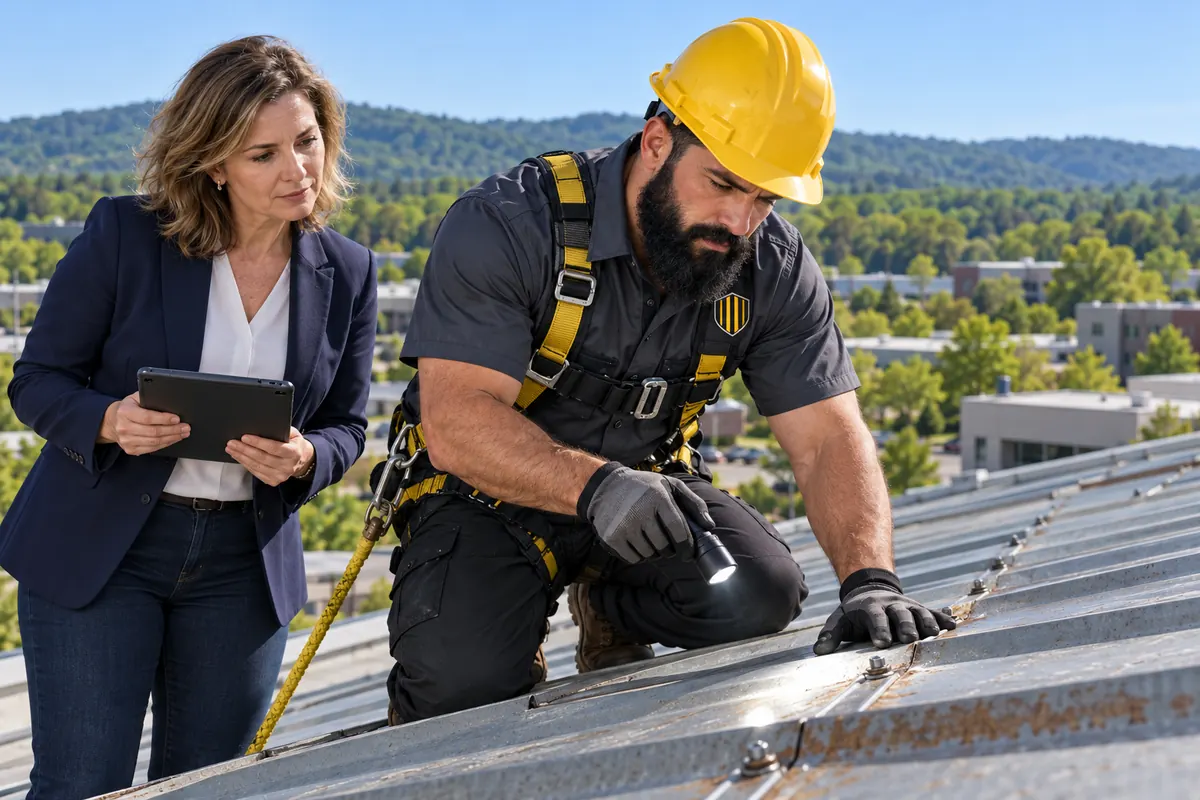
We check how fast water leaves the roof, look for white rust in the laps, and test fasteners. Panels that hold water point us toward silicone instead.

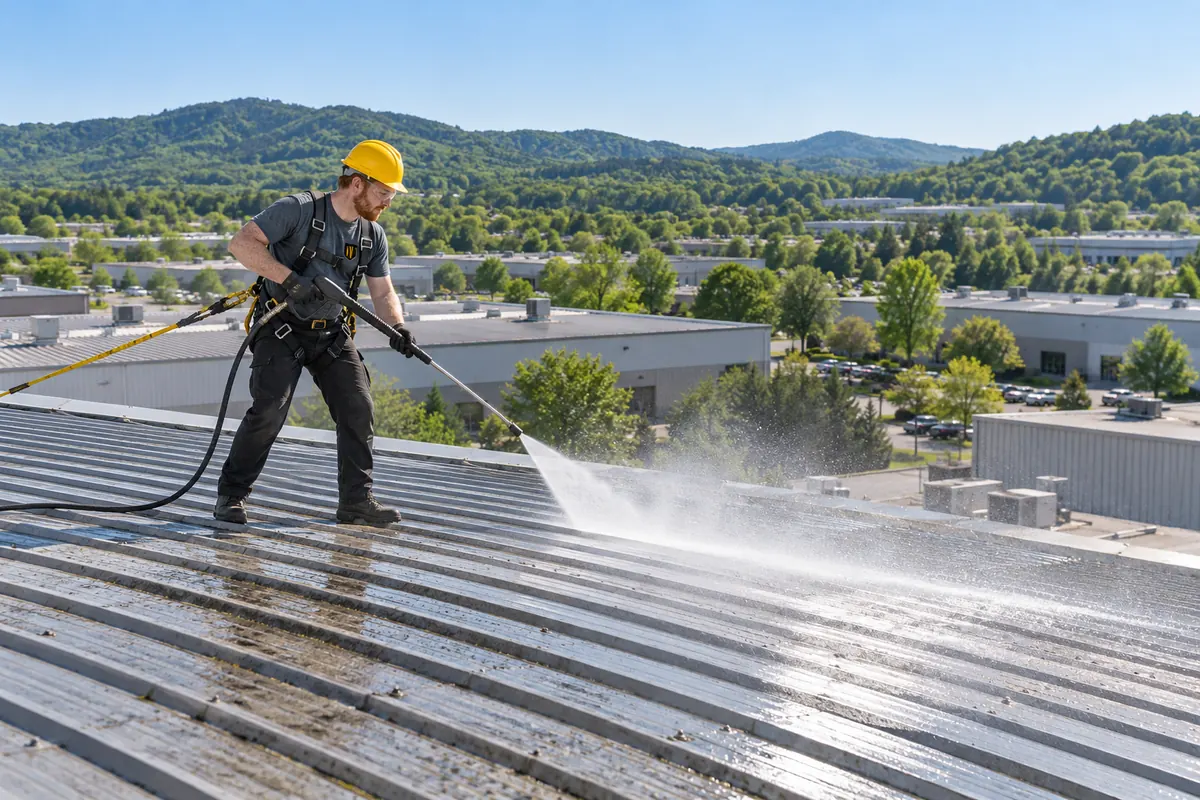
An approved cleaner removes dirt and chalk, and light scrubbing clears white rust powder from laps and flutes before a galvanized-rated primer goes on.

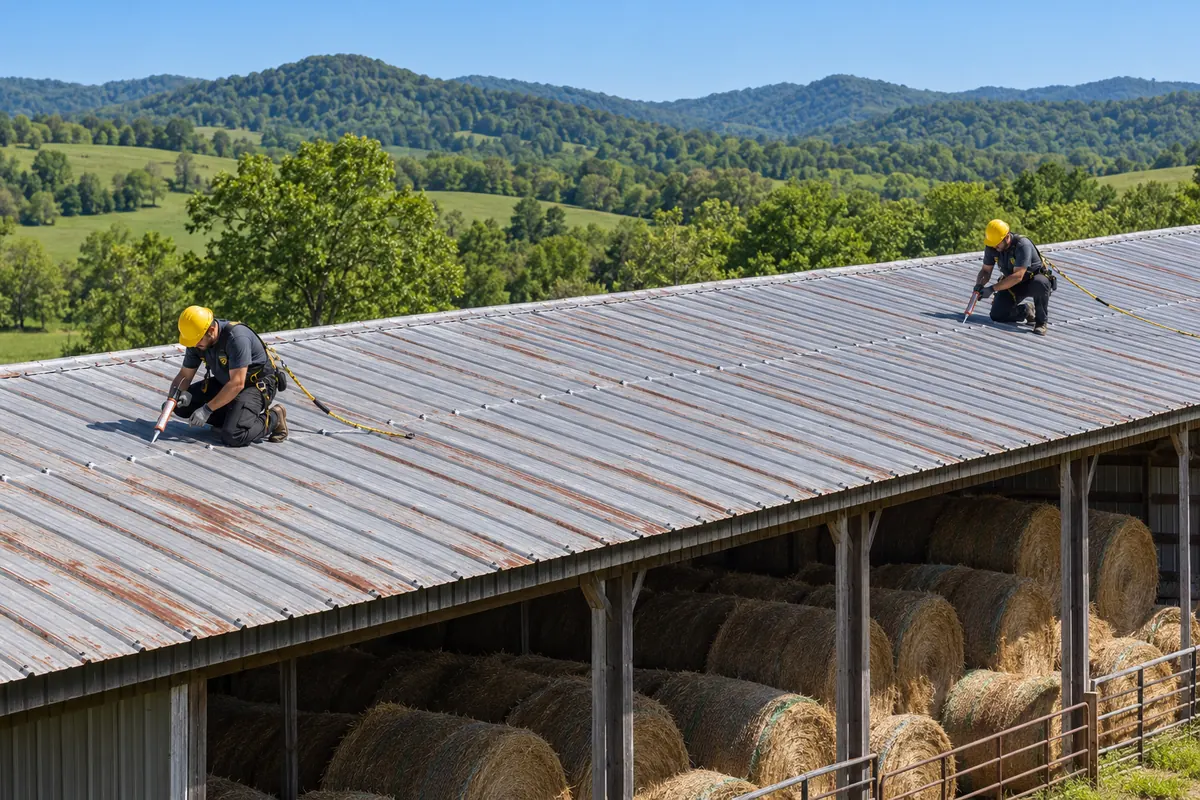
Side laps, end laps, and ridge caps get seam tape or fabric. Fasteners are tightened, replaced where stripped, and capped.

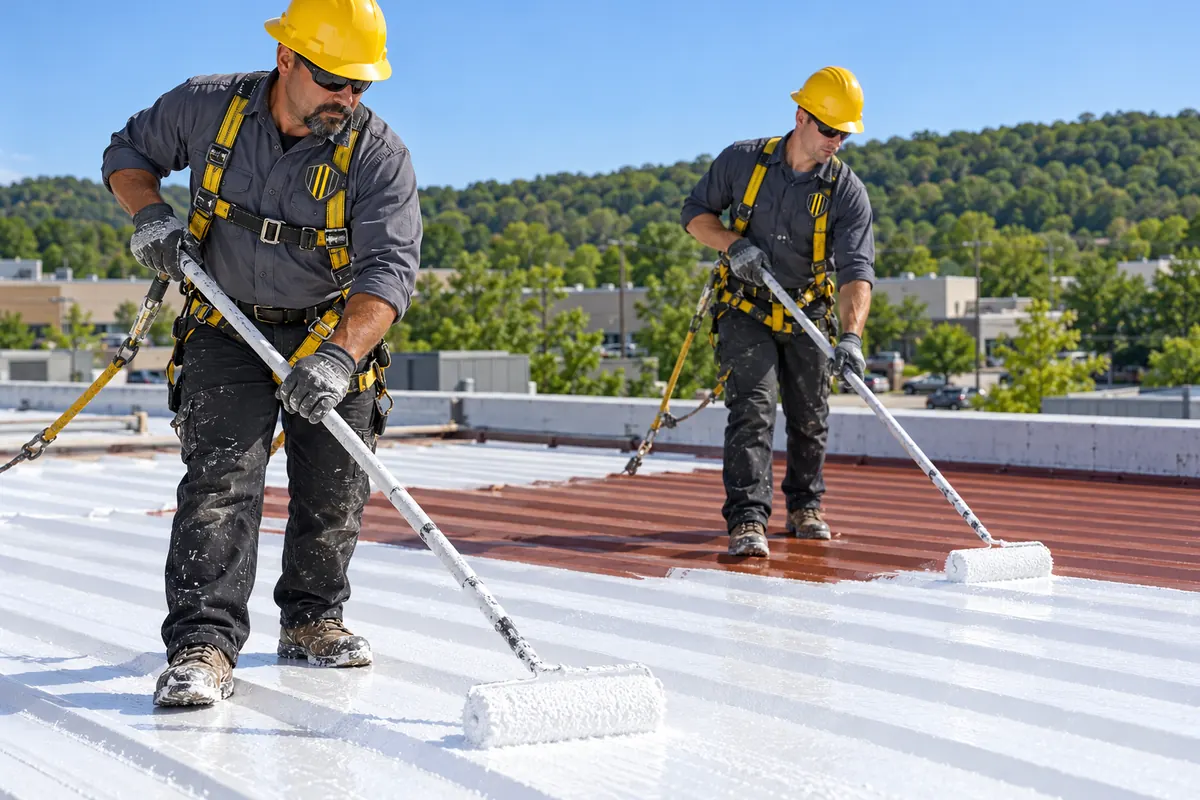
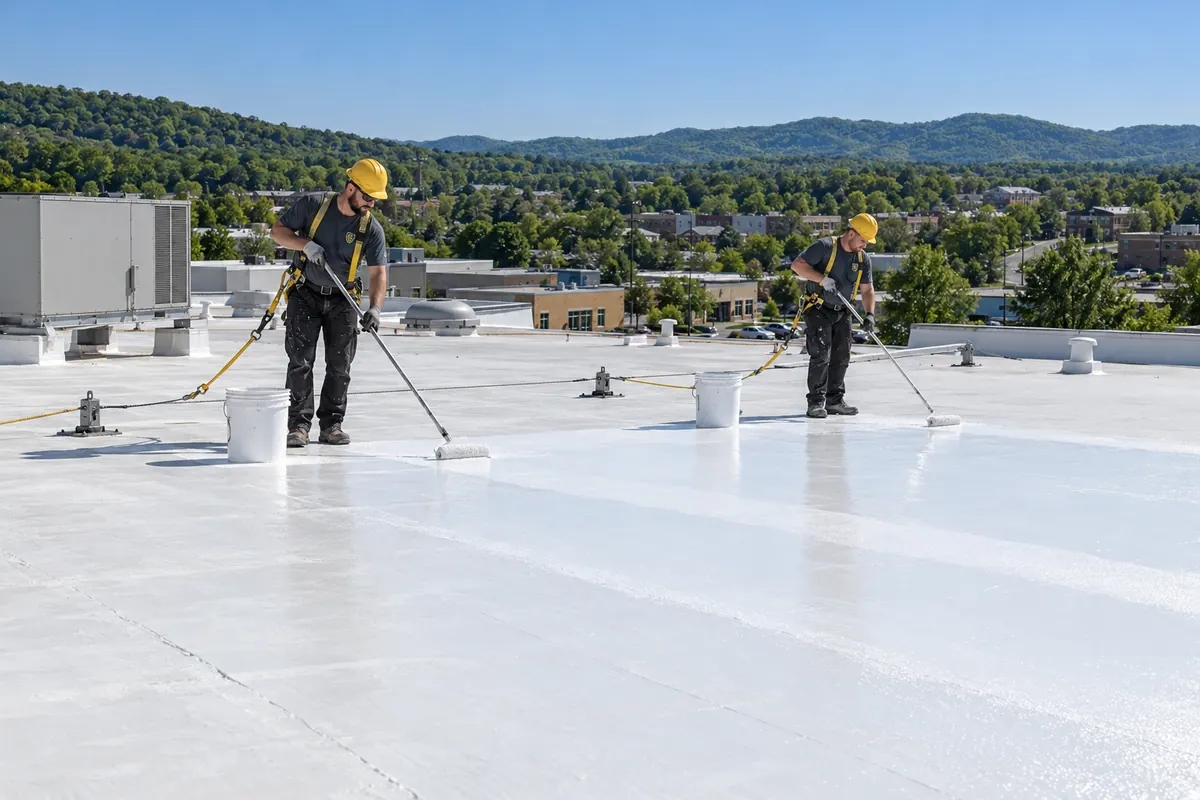
Acrylic goes on in two coats when the forecast holds dry. Each coat skins over before evening dew, and the second runs crosswise to the first.

Wet-film readings from each section go into your records with the product data sheets and photos of the lap work.
Acrylic covers pitched roofs that drain. These services fit the rest of the building.

Exposed-fastener roofs get the full metal prep first: fasteners, laps, and rust primer. Acrylic is one of the topcoats that follows.
Metal roof coating in Erlanger
Roofs where water sits behind units or at end laps get silicone, which handles standing water better than acrylic.
Silicone roof coating in Erlanger
Pitched shingle sections that still lie flat can take a coating approved for asphalt shingles, often in the same visit.
Shingle roof coating in ErlangerAnswers about drainage, white rust, weather, and coats for acrylic on commercial metal roofs.
On sloped metal roofs that shed water fast. Exposed-fastener R-panel on pitched warehouses, shops, and barns drains well enough that water never sits on the coating.
Owners get water-based cleanup, low odor near offices, a bright white finish, and easy recoats with more acrylic. Low spots near gutters, behind units, or over sagging purlins need correcting or a different coating.
White rust is powdery corrosion on galvanized or Galvalume panels, and yes, it needs cleaning and primer. It forms where moisture sat in laps or on sheets stacked damp before installation, often on newer roofs.
Prep means an approved cleaner, light scrubbing of laps and flutes, and a primer rated for that steel, then a test patch to confirm adhesion.
Late spring through early fall. Coatings need surface and air temperatures above a set minimum and dry weather to cure.
National Weather Service May normals for the Cincinnati area run about 75°F for a high and 54°F for a low, with about 4.7 inches of rain, so we watch for dry windows after the morning dew and stop early enough for the coat to skin over.
Two, in most systems, with the total thickness set by the product data sheet. The base coat goes on after the laps and fasteners are detailed, and the topcoat follows once the first has dried.
Splitting the thickness into two coats helps each one dry fully before evening dew.
Cold nights slow drying, so we wait for a stretch of mild days and nights. Water-based acrylic needs the temperatures listed on its data sheet through the cure, and a coat that stays wet into a cold, damp evening can wash off or turn milky.
Spring and early fall jobs start mid-morning and stop early.
Share the roof size and condition, or call and tell us how fast water leaves the panels.
Leave your name and number and we will call you about your commercial roof.
Or call now: (859) 204-8079